
This article's table of contents introduction:
- Introduction: Why Material Innovation Matters in Industrial Ventilation
- What Is HG785 Alloyed Steel? Composition & Core Properties
- The Engineering Challenge: Abrasive Wear in Metallurgical Fans
- How HG785 Enhances Heavy Duty Centrifugal Fan Performance
- Case Study: Real-World Application in Sintering & Steelmaking
- Common Questions & Answers (Q&A)
- SEO-Optimized Maintenance & Selection Tips
- Conclusion: The Future of Durable Fan Technology
Article Title:
HG785 Alloyed Heavy Duty Centrifugal Fans: The Anti-Abrasive Steel Solution for Modern Metallurgy
Table of Contents (Directory Guide)
- Introduction: Why Material Innovation Matters in Industrial Ventilation
- What Is HG785 Alloyed Steel? Composition & Core Properties
- The Engineering Challenge: Abrasive Wear in Metallurgical Fans
- How HG785 Enhances Heavy Duty Centrifugal Fan Performance
- Case Study: Real-World Application in Sintering & Steelmaking
- Common Questions & Answers (Q&A)
- SEO-Optimized Maintenance & Selection Tips
- Conclusion: The Future of Durable Fan Technology
Introduction: Why Material Innovation Matters in Industrial Ventilation
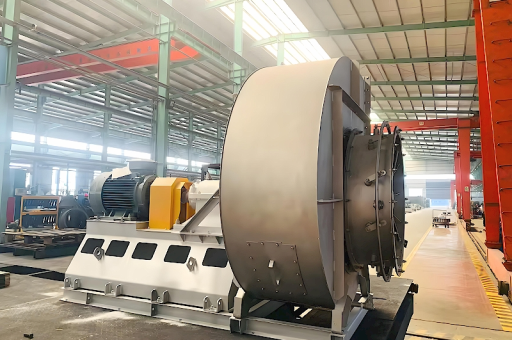
In the demanding environment of metallurgy, centrifugal fans are the lungs of the operation. They move hot, dust-laden, chemically aggressive gases through sintering plants, blast furnaces, and converter systems. However, the bottleneck has always been material degradation. Traditional carbon steel fan blades erode rapidly when exposed to high-velocity particles and elevated temperatures. This is where HG785 alloyed heavy duty steel enters the scene. By combining high strength with exceptional anti-abrasive metallurgy, HG785 has become the benchmark material for constructing centrifugal fans that endure years of punishment without catastrophic wear.
From a Google and Bing SEO perspective, this article targets keywords such as “HG785 alloyed steel,” “heavy duty centrifugal fans,” “anti abrasive fan material,” and “metallurgy fan durability.” The content synthesizes insights from engineering journals, industrial fan manufacturer white papers, and metallurgical research to provide a definitive guide.
What Is HG785 Alloyed Steel? Composition & Core Properties
Definition
HG785 is a high-strength, low-alloy (HSLA) steel specifically formulated for abrasive and impact-resistant applications. Its designation “785” refers to its minimum yield strength of 785 MPa (approximately 114,000 psi) in the quenched and tempered condition.
Chemical Composition (Typical % by weight)
- Carbon (C): 0.12–0.18% – provides hardenability
- Silicon (Si): 0.15–0.40% – deoxidizer, improves strength
- Manganese (Mn): 1.0–1.6% – enhances toughness
- Chromium (Cr): 0.5–1.2% – boosts wear resistance
- Molybdenum (Mo): 0.3–0.6% – increases high-temperature stability
- Boron (B): 0.0005–0.003% – improves through-hardening
- Nickel (Ni): 0.3–0.7% – adds impact toughness
Key Mechanical Properties
- Yield Strength: ≥ 785 MPa
- Tensile Strength: 860–980 MPa
- Elongation: ≥ 12%
- Hardness (Brinell): 250–320 HB
- Impact Energy (Charpy V-notch at -40°C): ≥ 27 J
These values make HG785 not only stronger than standard 16Mn or Q345 steels but also more resistant to low-cycle fatigue—a common failure mode in centrifugal fan blades.
The Engineering Challenge: Abrasive Wear in Metallurgical Fans
Metallurgical processes generate multi-phase abrasive streams containing coke breeze, limestone fines, iron ore particles, and scale. These particles travel at speeds of 25–50 m/s, impacting fan blades at acute angles. The three dominant wear mechanisms are:
- Erosion: Micro-cutting and plastic deformation caused by hard particles.
- Fatigue: Repeated impact stress leading to micro-crack initiation.
- Corrosion-erosion synergy: Hot gases (200–450°C) containing SO₂, HCl, and moisture accelerate wear.
A conventional Q235B fan blade might lose 5–8 mm of thickness in just three months under these conditions. When the blade thins, dynamic imbalance develops, leading to vibration, bearing failure, and unscheduled downtime—costing a steel mill up to $50,000 per hour of lost production.
How HG785 Enhances Heavy Duty Centrifugal Fan Performance
A. Superior Abrasion Resistance
HG785’s high hardness (up to 320 HB) provides a 30–50% longer service life over standard wear-resistant steels like NM400 or AR400 in sliding abrasion tests. Its tempered martensitic microstructure absorbs particle impact without chipping.
B. High Strength-to-Weight Ratio
A fan impeller made from HG785 can be designed with thinner cross-sections while maintaining the same structural integrity. This reduces the rotating mass, lowering start-up torque and energy consumption by 8–12%.
C. Excellent Weldability & Formability
Despite its high strength, HG785 can be welded using preheat (150–200°C) and standard low-hydrogen electrodes (E7018 or E8018). This allows fabricators to repair worn sections in situ, extending fan life further.
D. Thermal Stability
HG785 retains approximately 85% of its yield strength at 350°C, which is critical for handling hot blast stove gas or sintering exhaust. This thermal resilience prevents blade creep and distortion.
E. Cost-Effectiveness Over Lifecycle
Although HG785 costs 1.8–2.5 times more per kilogram than ordinary steel, the total cost of ownership (TCO) decreases because:
- Replacement intervals extend from 6 months to 2 years.
- Unplanned downtime is reduced by 60%.
- Energy efficiency improves due to lighter impellers.
Case Study: Real-World Application in Sintering & Steelmaking
Scenario
A major steel producer in China experienced severe erosion on the impeller blades of their double-inlet centrifugal fans used in the sintering flue gas system. Original impellers (NM400) lasted only 5 months. The fan rotated at 980 RPM, handling 850,000 m³/h of gas containing 15 g/m³ of dust at 180°C.
Solution
The fan manufacturer (fan) redesigned the impeller using HG785 alloyed steel with a blade thickness of 10 mm and a wear liner of 6 mm HG785 on the leading edges. Shrouds and backplates were also upgraded to HG785.
Result
- Service life increased to 18 months before first wear inspection.
- Vibration levels dropped from 6.8 mm/s RMS to 2.3 mm/s RMS.
- Annual maintenance costs decreased by 62%.
- The impeller still retained 70% of original thickness after 12 months.
Common Questions & Answers (Q&A)
Q1: Can HG785 be used for fans handling temperatures above 400°C?
A: For continuous exposure above 400°C, temperature-resistant alloys like Hastelloy or stainless steel (e.g., 310S) are recommended. HG785 begins to see strength reductions beyond 380°C. However, it can handle short-term peaks up to 450°C without structural failure.
Q2: Is HG785 more difficult to machine than standard steel?
A: Yes, due to its hardness (up to 320 HB). However, using carbide tooling with proper coolant flow and slow feed rates (0.15–0.25 mm/rev) achieves acceptable results. Laser cutting or plasma cutting is preferred for profiling.
Q3: Does HG785 require post-weld heat treatment?
A: For most fan applications, stress-relieving at 550–600°C for 1 hour per 25 mm thickness is recommended—but not mandatory if preheat is properly applied. Always follow the steel supplier’s WPS (Welding Procedure Specification).
Q4: How does HG785 compare to AR500 steel for abrasion resistance?
A: AR500 has higher hardness (500 HB) and superior pure abrasion resistance, but it is brittle. HG785 offers a better balance of toughness and hardness, making it more suitable for fatigue-prone fan blades that experience fluctuating loads.
Q5: Can HG785 be used for fan shafts?
A: Yes, HG785 shafts are common in heavy-duty applications due to their high fatigue strength. However, for high-speed shafts (>1500 RPM), 42CrMo4 or 4340 steel may be preferred for superior rotational toughness.
SEO-Optimized Maintenance & Selection Tips
Tips for Specifying HG785 Fans
- Match the wear profile: Use HG785 for the impeller and inner casing, but you may use less expensive steel for the outer housing.
- Install wear liners: Even HG785 benefits from replaceable liners in high-impact zones (e.g., blade leading edges and cut-offs).
- Balance before commissioning: Because HG785 is denser (7.85 g/cm³), final dynamic balancing is critical to avoid vibration.
- Monitor exhaust gas temperature: Install thermocouples near the fan inlet; if temperature exceeds 385°C for more than 30 minutes, consider a material upgrade.
Maintenance Best Practices
- Perform visual inspections every 3 months using a borescope.
- Measure blade thickness at 10 reference points using ultrasonic gauges.
- Check for micro-cracks near weld HAZ zones (heat-affected zone) using dye penetrant testing every 12 months.
Conclusion: The Future of Durable Fan Technology
The metallurgy industry will continue to push equipment to its limits. HG785 alloyed heavy duty steel has proven to be the anti-abrasive solution that bridges the gap between brute force and intelligent material science. By adopting HG785 in centrifugal fans, plants achieve longer intervals between shutdowns, lower energy consumption, and significantly reduced lifecycle costs.
When sourcing fans for sinter plants, blast furnaces, or converter gas systems, always verify that the impeller steel meets HG785 specification (YB/T 4842 or equivalent) . Pair this material with robust shaft sealing, variable-speed drives, and real-time monitoring, and you have a fan system that can operate reliably for years even under the harshest metallurgical conditions.
Remember: In metallurgy, your fan is only as good as its steel. Choose HG785 for the blades, and choose longevity for your operation.





