
This article's table of contents introduction:
- The "Carbon Steel V-Belt" vs. Standard Belts
- Application Analysis: High Volume Dust Collector Fan Blower
- Potential Problems & Failure Modes
- Key Installation & Maintenance Requirements
- Summary Recommendation
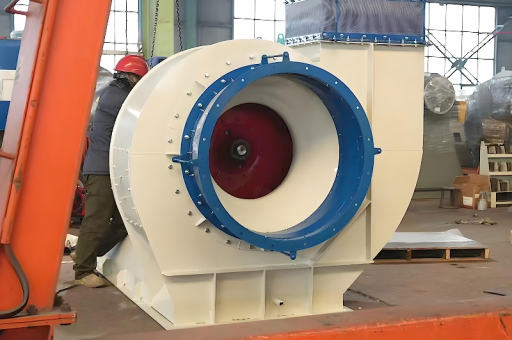
This is a specific mechanical application. To provide a thorough analysis, we need to break down the "Carbon Steel V-belt" driving a "High Volume Dust Collector Fan Blower." This is a common setup in industrial environments (woodworking, metalworking, cement, grain handling).
Here is the critical analysis regarding the materials, the application, and the potential issues.
The "Carbon Steel V-Belt" vs. Standard Belts
The Critical Distinction: You must ensure you mean Carbon Steel Reinforced V-belts, not Solid Steel V-belts.
- Standard V-belts: Made of rubber (EPDM, Neoprene) with tensile cords (usually polyester, aramid, or fiberglass).
- Carbon Steel Reinforced (or Wire Reinforced): These belts have carbon steel tensile cords embedded in the rubber. They are extremely strong, have very low stretch (low elongation), and are resistant to high shock loads.
- Solid Steel V-belts: These are rare, rigid, and used only in very specific constant-speed applications (like old line shafts). They do not handle shock, misalignment, or flexing well. They are almost certainly NOT what you want for a dust collector fan.
For a High Volume Dust Collector Fan, you likely mean a Carbon Steel Reinforced V-belt.
- Pros (for this application):
- High Power Transmission: Dust collectors (especially centrifugal fans) have high starting inertia and need to transmit significant power.
- Low Stretch: Minimal maintenance for re-tensioning compared to standard polyester cords. This keeps the fan speed constant.
- High Temperature Resistance: Many dust collection systems deal with hot air or sparks. Carbon steel cords handle heat better than standard rubber belts (though the rubber cover still has limits).
- Cons:
- Stiffer: Less forgiving of misalignment.
- Noise: Can be slightly noisier than fabric-reinforced belts.
- Corrosion: If the environment is wet or highly corrosive (chemical dust), the steel cords can rust from the inside, causing catastrophic failure.
Application Analysis: High Volume Dust Collector Fan Blower
This is a High Inertia Load with Cyclic Duty.
- High Starting Torque: Centrifugal fans require high torque to get the heavy wheel spinning (off the line).
- Constant Torque (Once Running): Once at speed, the torque required is relatively constant, proportional to the airflow and static pressure.
- Potential for Imbalance: Dust loading on the fan blades causes imbalance, which creates dynamic loads on the belt drive. The more dust, the worse the vibration.
Potential Problems & Failure Modes
Here are the specific problems you will encounter with this combination (carbon steel belt + dust collector fan):
| Problem | Cause | Result | Solution |
|---|---|---|---|
| Rapid Belt Wear / Fraying | Dust & debris (silica, wood dust) acts as an abrasive between belt and sheave. | Belt loses cross-section, slips, and fails. | Install belt guards that are sealed or have positive air pressure. Use chevron-style or wrapped belts (oil/heat resistant). |
| Sheave (Pulley) Groove Wear | Hard steel cords in the belt grind against the cast iron sheave. | Sheave grooves become "crowned" or "dished," causing belt misalignment and rapid wear. | Use hardened steel sheaves instead of standard cast iron. Replace sheaves with every belt change. |
| Vibration / Noise | Belt stiffness and fan imbalance. | Bearing failure on the fan shaft or motor. Loose foundation bolts. | Install vibration dampeners on the base plate. Use a predicted maintenance system (vibration analysis). |
| Static Electricity | Carbon steel is conductive, but the rubber cover is not. If the belt is not grounded, friction generates static. | Spark ignition of combustible dust (wood, grain, metal). This is a safety hazard. | Ground the belt drive system. Use a static-conductive belt (carbon-loaded rubber) and ensure the motor and fan are grounded. |
| Corrosion | Moisture + carbon steel cords. | Rust inside the belt, weakening the tensile cords. Belt snaps without warning. | Use galvanized or stainless steel reinforced belts if the environment is high-humidity or chemical. |
Key Installation & Maintenance Requirements
For a Carbon Steel V-belt on a Dust Collector Fan, you must follow these rules:
- Tensioning: Do not overtension. Carbon steel belts have very low stretch, so they do not need the initial high tension of standard belts. Over-tensioning will destroy the fan bearings (which are already under load from the heavy wheel).
- Method: Use a belt tension gauge (e.g., Gates Sonic Tension Meter). Do not rely on "feel" (deflection method).
- Alignment: Must be laser-aligned. The rigid steel cords cannot accommodate misalignment. Misalignment will cause rapid belt failure and sheave wear.
- Guard Design: The guard must be dust-tight to prevent abrasive dust from getting onto the belt. Use a mesh that allows air circulation but blocks particles.
- Sheave Condition: The sheaves must be in perfect condition. Any wear (grooves) will cause the steel-reinforced belt to ride incorrectly and break.
Summary Recommendation
| Consideration | Recommendation |
|---|---|
| Belt Type | Use Carbon Steel Reinforced (Wire) V-Belt (e.g., Gates Super HC PowerBand or similar). |
| Application Suitability | Good for high power, high heat, low stretch. Not for dirty or dusty environments without a sealed guard. |
| Primary Risk | Abrasive dust (silica, wood) will kill the belt quickly. Static ignition is a fire/explosion risk. |
| Alternative | Consider Kevlar / Aramid Reinforced Belts. They are very strong, high heat resistant, and less abrasive to sheaves. They are also non-conductive (but must be made static-conductive). |
| System Design | Must have: Sealed guard + Grounding + Hardened sheaves + Laser alignment. |
Final Verdict: A Carbon Steel V-belt is a technically correct choice for a High Volume Dust Collector Fan if the system is designed correctly (sealed, grounded, aligned). However, in many dust collection environments, Aramid (Kevlar) reinforced belts are preferred because they are stronger, more flexible, less abrasive to sheaves, and inherently more resistant to shock loads from fan imbalance.
The most common failure is not the belt itself, but the system's inability to keep dust out of the drive.





