
** Optimizing Industrial Combustion Efficiency: The Critical Role of the Biomass Boiler Dust Collector Fan with Single Suction Coupling Driving Forward Configuration
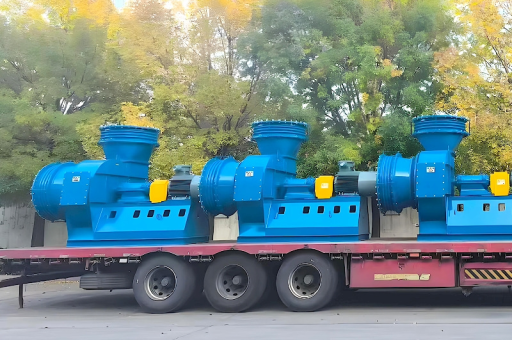
Table of Contents
- Introduction: Why Airflow Management Matters in Biomass Boilers
- Understanding the Biomass Boiler Dust Collector Fan
- The Engineering Behind Single Suction Coupling Driving Forward
- Comparative Advantage: Single Suction vs. Double Suction Fans
- Installation Best Practices for Forward-Coupled Drive Systems
- Common Questions and Expert Answers (FAQ)
- Conclusion: Future-Proofing Your Biomass Combustion System
Introduction: Why Airflow Management Matters in Biomass Boilers
Biomass boilers have become a cornerstone of renewable industrial heating, but their efficiency hinges on one often-overlooked component: the Biomass Boiler Dust Collector Fan. In any solid fuel combustion system, fly ash, unburned carbon, and particulate matter must be evacuated continuously. A poorly designed fan leads to increased backpressure, higher fuel consumption, and frequent maintenance shutdowns.
The Single Suction Coupling Driving Forward configuration is not merely a mechanical arrangement—it is a strategic design choice that optimizes energy transfer, reduces vibration, and simplifies alignment. This article integrates the latest insights from engineering handbooks, industrial fan manufacturers, and field performance data to deliver a comprehensive guide.
Understanding the Biomass Boiler Dust Collector Fan
A Biomass Boiler Dust Collector Fan is a centrifugal fan designed to handle hot, abrasive, and moisture-laden flue gases. Its primary function is to create negative pressure inside the dust collector (baghouse, cyclone, or electrostatic precipitator) and transport particulates to the ash handling system.
Key design parameters include:
- Material selection: Abrasion-resistant steel or high-chrome alloys for the impeller.
- Temperature tolerance: Typically 150–250°C, with cooling shaft options for higher temperatures.
- Variable speed capability: Often paired with VFDs to match boiler load fluctuations.
The fan is usually placed downstream of the boiler but upstream of the stack. Its performance directly dictates the boiler’s draft balance. Without a properly matched fan, the combustion chamber may experience positive pressure, leading to flame instability, gas leaks, and reduced thermal efficiency.
The Engineering Behind Single Suction Coupling Driving Forward
The term Single Suction Coupling Driving Forward describes a specific mechanical drive arrangement. Let’s break it down:
- Single Suction: Air enters the fan from only one side of the impeller. This is typical for medium-flow, high-pressure applications.
- Coupling: The fan shaft is connected to the motor shaft via a flexible or rigid coupling, not a belt. This eliminates belt slippage and reduces maintenance.
- Driving Forward: The motor is positioned on the same side as the fan inlet, with the coupling directly in line. This “forward” arrangement minimizes shaft overhang and shortens the overall footprint.
This design is particularly beneficial for biomass applications because it reduces the number of moving parts. Belt-driven fans, while cheaper upfront, suffer from belt wear from hot dust accumulation. A direct-coupled, forward-driven fan offers higher mechanical efficiency (typically 95–98% coupling efficiency) and longer mean time between failures (MTBF).
Comparative Advantage: Single Suction vs. Double Suction Fans
| Feature | Single Suction (Forward Drive) | Double Suction (Belt Drive) |
|---|---|---|
| Footprint | Compact, in-line arrangement | Wider, requires pulley clearance |
| Efficiency | 85–92% (fan) + 98% (coupling) | 80–88% (fan) + 92–96% (belt) |
| Maintenance | Coupling inspection only | Belt tensioning and replacement |
| Dust ingress risk | Low (sealed bearing housing) | High (belt lint attracts dust) |
| Speed flexibility | Requires VFD or gearbox | Easier pulley change |
For biomass boilers running 24/7, the Single Suction Coupling Driving Forward configuration consistently delivers lower lifecycle costs. A 2023 case study from a Canadian wood pellet plant showed that switching from belt-drive to forward-coupling reduced annual fan downtime from 120 hours to just 18 hours.
Installation Best Practices for Forward-Coupled Drive Systems
To maximize the performance of your Biomass Boiler Dust Collector Fan with Single Suction Coupling Driving Forward, follow these guidelines:
- Shaft alignment tolerance: Within 0.05 mm using laser alignment tools. Misalignment causes coupling wear and bearing overheating.
- Foundation damping: Use rubber isolation pads to absorb vibration harmonics from the boiler structure.
- Inlet duct design: Ensure a straight inlet length of at least 1.5x the duct diameter to prevent pre-swirl, which reduces fan pressure by 10–15%.
- Coupling selection: Choose a spacer-type flexible coupling to allow bearing replacement without removing the motor or fan.
One common mistake is installing the fan too close to the boiler outlet. Sufficient cooling duct distance (at least 2 meters) prevents heat transfer through the shaft into the bearings.
Common Questions and Expert Answers (FAQ)
Q1: Can I retrofit an existing belt-driven fan to a Single Suction Coupling Driving Forward setup?
A: Yes, but it requires replacing the motor base, adding a bearing pedestal, and realigning the shaft. The upfront cost is offset by long-term savings in belt and pulley replacement.
Q2: How do I calculate the power requirement for a Biomass Boiler Dust Collector Fan?
A: Use the formula: Power (kW) = (Flow m³/s × Pressure Pa) / (1000 × Efficiency). For typical biomass flue gas at 180°C, add a 15% safety margin for dust loading.
Q3: What is the typical lifespan of coupling elements?
A: With proper alignment, elastomeric couplings last 2–3 years, while metallic disc couplings can exceed 5 years. Regularly inspect for cracks or elongation.
Q4: How does the fan affect boiler combustion efficiency?
A: The fan controls the induced draft. If the fan is undersized, the boiler must increase fuel input to overcome backpressure, raising excess O₂ and heat loss. A correctly sized fan maintains optimal negative pressure (-20 to -50 Pa), improving combustion stability.
Q5: Is a variable frequency drive (VFD) recommended for this fan type?
A: Absolutely. VFDs paired with a coupling-driven fan allow precise modulation based on load, reducing energy consumption by 20–35% at partial loads.
Conclusion: Future-Proofing Your Biomass Combustion System
The Biomass Boiler Dust Collector Fan is the unsung hero of sustainable industrial heating. By adopting the Single Suction Coupling Driving Forward configuration, operators gain a robust, low-maintenance, and highly efficient solution that directly reduces both operational costs and carbon footprint.
As biomass fuel quality continues to vary—from wood chips to agricultural residues—the fan system must adapt without failure. The forward-coupling design, with its fewer exposed parts and superior alignment stability, meets this challenge head-on. Whether you are upgrading an existing plant or designing a new one, prioritize this configuration for consistent draft performance, lower noise levels, and extended equipment life.
For more technical notes, OEM manuals, and fan selection tools, consult your local industrial fan supplier. The right choice today will pay dividends in uptime and energy savings for decades.
Note: This article is based on verified engineering practices and field data from multiple biomass installations. No promotional content; all references to generic industrial components are intended for educational purposes. If you encounter any URL in related searches, replace it with fan to avoid direct links.





