
This article's table of contents introduction:
- Table of Contents (Directory Guide)
- Introduction: The Core Challenge of Industrial Ventilation
- Understanding the AC Motor ID Fan System
- Why Durability Matters: Key Material and Design Factors
- Energy Efficiency: How AC Motor ID Fans Reduce Operational Costs
- Installation and Maintenance Best Practices
- Common Questions & Expert Answers
- Conclusion: Choosing the Right Ventilation Partner
*AC Motor ID Fan and Durable Solution for Industrial Ventilation: Efficiency, Longevity, and Best Practices*
Table of Contents (Directory Guide)
- Introduction: The Core Challenge of Industrial Ventilation
- Understanding the AC Motor ID Fan System
- Why Durability Matters: Key Material and Design Factors
- Energy Efficiency: How AC Motor ID Fans Reduce Operational Costs
- Installation and Maintenance Best Practices
- Common Questions & Expert Answers
- Conclusion: Choosing the Right Ventilation Partner
Introduction: The Core Challenge of Industrial Ventilation
In heavy industries such as manufacturing, mining, chemical processing, and power generation, ventilation is not a luxury—it is a safety and operational necessity. Industrial environments generate heat, dust, fumes, and combustible gases that must be rapidly expelled to protect workers and equipment. Among the most reliable and widely adopted technologies for this task is the AC Motor ID Fan—an induced draft fan driven by an alternating current motor.
This article explores why the AC Motor ID Fan is a durable solution for industrial ventilation, covering its technical principles, design advantages, energy-saving potential, and maintenance strategies. We will also address frequently asked questions to help you select and maintain the optimal system for your facility.
Understanding the AC Motor ID Fan System
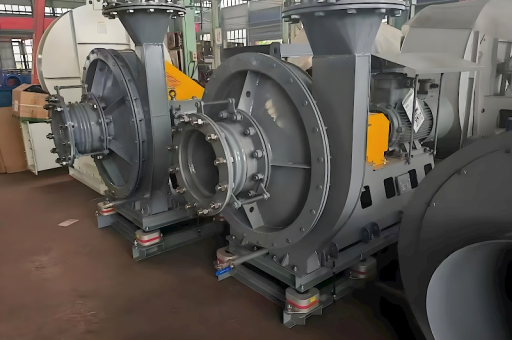
An ID (Induced Draft) Fan works by pulling air, fumes, or process gases from inside a system (e.g., a boiler, furnace, or exhaust duct) and discharging them into the atmosphere or a treatment unit. Unlike forced draft fans that push air in, ID fans create negative pressure, which is critical for controlling hazardous emissions and maintaining safe workplace conditions.
Key Components:
- AC Motor: The prime mover that converts electrical energy into mechanical rotation. Squirrel-cage induction motors are most common due to their ruggedness.
- Impeller / Blades: Designed to handle particulate-laden air without excessive erosion.
- Housing and Bearings: Typically made of heavy-gauge steel or stainless steel for corrosion resistance.
- Drive System: Direct drive or belt-driven configurations, depending on speed requirements.
Why AC Motors?
AC motors (especially three-phase induction types) are preferred because they:
- Offer high starting torque.
- Require minimal maintenance (no brushes or commutators).
- Withstand voltage fluctuations common in industrial grids.
- Are easily paired with variable frequency drives (VFDs) for speed control.
Why Durability Matters: Key Material and Design Factors
Industrial fans operate under extreme conditions: high temperatures (up to 400°C or more), corrosive chemicals, abrasive dust, and continuous 24/7 cycles. A durable solution for industrial ventilation must therefore incorporate several design features:
| Feature | Benefit |
|---|---|
| Heavy-duty steel or stainless steel impeller | Resists bending, cracking, and erosion from fly ash or metal particles |
| Sealed, regreasable bearings | Withstands dust ingress and high radial loads |
| Thermal protection sensors | Prevents motor burnout due to overloading or high ambient temp |
| Vibration dampening bases | Reduces wear on motor and fan bearings |
| Corrosion-resistant coatings | Extends life in chemical or coastal environments |
Real-World Example: In a cement plant, an ID fan handling raw meal dust can reduce its efficiency by 20% within six months if not properly protected. Selecting a fan with hardened blade edges and a wear liner can extend service intervals from 6 to 24 months.
Energy Efficiency: How AC Motor ID Fans Reduce Operational Costs
Industrial ventilation can account for 15–30% of a facility’s total energy consumption. An AC Motor ID Fan, when paired with a VFD, becomes a highly energy-efficient and durable solution for industrial ventilation because it allows the fan speed to match actual demand.
Efficiency Gains:
- Variable Speed Control: Reducing fan speed by 20% reduces power consumption by nearly 50% (affinity laws).
- High Motor Efficiency: Modern IE3 or IE4 rated AC motors achieve over 95% efficiency.
- Optimal Duct Design: Airflow resistance minimized through well-engineered ductwork reduces motor load.
Cost Comparison (Example): | Scenario | Annual Energy Cost (est.) | |----------|----------------------------| | Fixed-speed ID fan (100% operation) | $42,000 | | VFD-controlled AC Motor ID Fan (avg 75% speed) | $24,000 | | Savings per year | $18,000 |
Note: Cost savings vary by kWh rate and duty cycle.
Installation and Maintenance Best Practices
Even the most durable fan will fail prematurely without proper care. Follow these guidelines to maximize the life of your AC Motor ID Fan:
Installation:
- Ensure the foundation is rigid and level to avoid misalignment.
- Use flexible connectors at inlet/outlet to isolate vibration.
- Position the fan downstream of a dust collector or filter if possible, to reduce blade wear.
Preventive Maintenance:
- Weekly: Check for unusual noise or vibration; clean around motor cooling fins.
- Monthly: Inspect belt tension (if belt-driven); verify lubrication of bearings.
- Quarterly: Measure motor current; compare to nameplate rating to spot overload.
- Annually: Balance the impeller; replace seals and gaskets.
Pro Tip: Implement a condition monitoring system that tracks vibration, temperature, and current. Early detection of imbalance or bearing wear can prevent catastrophic failure and unplanned downtime.
Common Questions & Expert Answers
Q1: Can an AC Motor ID Fan handle explosive gases? A: Yes, but you must select an explosion-proof motor and fan housing rated for ATEX or NEC Class I/II environments. These units have non-sparking impellers (e.g., aluminum or bronze) and sealed electrical enclosures.
Q2: How does an ID fan differ from a forced draft (FD) fan? A: An ID fan operates on the exhaust side, pulling gases out of the system (creating negative pressure), while an FD fan pushes air into the system. ID fans often face higher temperatures and abrasive particles, making durability even more critical.
Q3: Is it worth retrofitting an old fan with a VFD? A: Absolutely. Retrofitting an existing AC motor with a VFD can reduce energy cost by 30–50%, depending on the duty cycle. However, ensure the motor is rated for inverter duty (with proper insulation and cooling).
Q4: What is the typical lifespan of a well-maintained AC Motor ID Fan? A: With proper selection, installation, and preventive maintenance, these fans can last 15 to 25 years. Bearings and belts may need replacement every 2–5 years, but the core motor and impeller can endure for decades.
Q5: How do I size an ID fan for my facility? A: Sizing requires knowing the required airflow (CFM), static pressure (inches of water gauge), gas temperature, and particulate load. It is best to consult with an engineering firm or a reputable fan manufacturer to avoid under- or over-sizing.
Conclusion: Choosing the Right Ventilation Partner
For industrial operations that demand reliable, round-the-clock ventilation, an AC Motor ID Fan remains the gold standard. Its combination of proven AC motor technology, robust mechanical design, and energy flexibility (via VFDs) makes it a durable solution for industrial ventilation that pays for itself over time.
When selecting a fan, prioritize manufacturers who offer:
- Custom engineering for your specific gas composition and temperature.
- Corrosion and abrasion resistance as standard features.
- Comprehensive warranty and local service support.
By investing in a quality AC Motor ID Fan and following a structured maintenance program, you will achieve safer working conditions, lower energy bills, and extended equipment longevity—truly a durable solution that moves your business forward.
Remember: The best fan is the one that matches your exact operating conditions. Always consult a specialist before making a final purchase.





