
This article's table of contents introduction:
- Introduction: The Critical Role of Fluidized Bed Boiler Fans in Steel Plants
- Why Q235 Steel? Material Science and Structural Integrity
- Understanding “High Air Flow” Performance Metrics
- Fluidized Bed Boiler Fan Design: Key Components and Aerodynamics
- Q235 Fan vs. Other Alloys: Cost-Benefit Analysis for Steel Mill Environments
- Installation and Commissioning Best Practices
- Common Operation Issues and Troubleshooting Q&A
- Maintenance Schedule to Extend Fan Service Life
- Energy Efficiency and Emission Compliance
- Conclusion: Selecting the Right Fan for Your Steel Plant
- Frequently Asked Questions (FAQ)
*Optimizing Steel Plant Operations with Q235 High Air Flow Fluidized Bed Boiler Fans: Efficiency, Design & Maintenance*
Table of Contents (导读)
- Introduction: The Critical Role of Fluidized Bed Boiler Fans in Steel Plants
- Why Q235 Steel? Material Science and Structural Integrity
- Understanding “High Air Flow” Performance Metrics
- Fluidized Bed Boiler Fan Design: Key Components and Aerodynamics
- Q235 Fan vs. Other Alloys: Cost-Benefit Analysis for Steel Mill Environments
- Installation and Commissioning Best Practices
- Common Operation Issues and Troubleshooting Q&A
- Maintenance Schedule to Extend Fan Service Life
- Energy Efficiency and Emission Compliance
- Conclusion: Selecting the Right Fan for Your Steel Plant
- Frequently Asked Questions (FAQ)
Introduction: The Critical Role of Fluidized Bed Boiler Fans in Steel Plants
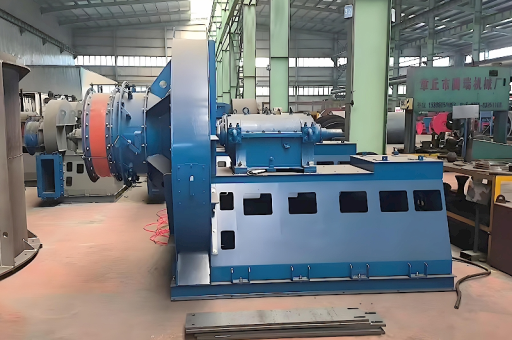
In a modern steel plant, the fluidized bed boiler (FBB) is the heart of the energy recovery system. It combusts coal, biomass, or waste gases to generate steam for power generation and process heating. However, without a high-performance fan, the fluidized bed cannot achieve the required turbulence and oxygen supply. The Q235 high air flow fluidized bed boiler fan for steel plant is specifically engineered to deliver massive volumes of air at consistent static pressure, ensuring that the bed material (sand, ash, or limestone) remains in a suspended, “fluid-like” state. This article provides a comprehensive analysis of this fan model, from material science to daily maintenance, to help steel plant engineers optimize combustion efficiency and reduce downtime.
Why Q235 Steel? Material Science and Structural Integrity
Q&A: Why is Q235 steel preferred for boiler fans in steel plants?
Answer: Q235 (equivalent to ASTM A36 or EN S235JR) is a carbon structural steel with a yield strength of 235 MPa. It offers an ideal balance between mechanical strength, weldability, and cost. In the context of a fluidized bed boiler fan, the impeller and casing must withstand moderate thermal stress (typically up to 180°C for inlet air) and vibration from high-speed rotation. Q235 provides sufficient toughness to resist fatigue cracking, while its excellent formability allows for precise fabrication of complex aerodynamic blade profiles. Compared to stainless steel (e.g., 304L), Q235 is 40-60% cheaper, making it the most cost-effective choice for standard-duty fans. However, for corrosive environments (e.g., high SO₂ or H₂O content), a corrosion-resistant coating or lining is recommended.
Understanding “High Air Flow” Performance Metrics
For a steel plant fluidized bed boiler, “high air flow” is not just about volume (m³/h). The fan must deliver a specific flow rate at a given static pressure to overcome the resistance of the bed material, ductwork, and air preheater. Key performance parameters include:
- Flow Rate (Q): Typically 80,000 – 300,000 m³/h for medium-sized steel plant boilers.
- Static Pressure (P): 8,000 – 15,000 Pa, depending on bed depth and particle size.
- Efficiency: At least 85% at the design point, using backward-curved blades.
The Q235 fan is designed with an aerodynamically optimized impeller that minimizes turbulence losses. For example, a fan with a 1.8m diameter impeller running at 980 RPM can produce 180,000 m³/h at 12,000 Pa, sufficient for a 75 t/h CFB boiler.
Fluidized Bed Boiler Fan Design: Key Components and Aerodynamics
The Q235 high air flow fan consists of:
- Impeller: Backward-inclined centrifugal blades welded from Q235 plate. The blade angle (typically 40–50°) is optimized for high flow without overloading the motor.
- Casing: Volute-shaped housing that converts kinetic energy to static pressure. The cut-off region is reinforced with thicker Q235 plate to prevent erosion.
- Shaft and Bearings: Heavy-duty roller bearings with a grease-lubrication system. Shaft diameter is calculated for critical speed margin > 30%.
- Inlet Damper / Variable Inlet Guide Vanes: For flow control without reducing motor speed.
Aerodynamic Note: Using computational fluid dynamics (CFD) simulation, modern Q235 fans achieve a blade tip clearance of only 2–3 mm, dramatically reducing recirculation losses. This design ensures that the fan can handle fluctuations in bed resistance without surging.
Q235 Fan vs. Other Alloys: Cost-Benefit Analysis for Steel Mill Environments
| Property | Q235 Fan | 304 Stainless Steel Fan | Q345 (16Mn) Fan |
|---|---|---|---|
| Price (index) | 0 (baseline) | 3 – 2.8 | 3 – 1.5 |
| Tensile Strength | 370 – 500 MPa | 515 – 700 MPa | 470 – 630 MPa |
| Corrosion Resistance | Low (requires coating) | Excellent (without coating) | Moderate |
| Weldability | Excellent | Good (needs post-weld treatment) | Good |
| Use Case | Clean air, low humidity | Wet or acidic flue gas | High-stress, abrasive duty |
Verdict: For a standard fluidized bed boiler fan handling filtered ambient air, Q235 provides the best lifecycle cost. Only upgrade to stainless steel if the air intake is contaminated with corrosive fumes or if the boiler operates near dew point.
Installation and Commissioning Best Practices
Proper installation is critical for achieving the rated air flow and pressure. Follow these steps:
- Foundation: Use a reinforced concrete base with isolation pads to minimize vibration transmission.
- Alignment: Laser-align the fan shaft with the motor shaft. Misalignment of > 0.05mm can reduce bearing life by 50%.
- Ductwork: Keep the inlet and outlet ducts as straight as possible. Use expansion joints to avoid thermal stress on the fan casing.
- Commissioning: Run the fan at no load for 30 minutes to check for abnormal noise. Then gradually open the inlet damper while monitoring current. Do not exceed motor nameplate amperage.
Common Operation Issues and Troubleshooting Q&A
Q: The fan vibrates excessively at full speed. What could be the cause?
Answer: Possible causes include: (a) Accumulation of ash/dust on the impeller blades causing imbalance; (b) Worn bearings; (c) Loosened foundation bolts; (d) Resonance with boiler structure. Solution: Clean the impeller, replace bearings, and re-torque bolts. If vibration persists, perform a field balance test.
Q: Air flow is lower than design despite full damper opening.
Answer: Check if the fluidized bed material has become too coarse (> 3mm particle size) or if there is a blockage in the air preheater. Also, verify fan rotation direction (most fans are designed for counterclockwise rotation when viewed from the motor side). A reversed rotation reduces flow by 30–40%.
Q: The fan generates high-pitched noise during operation.
Answer: This is often caused by surge or stall. Reduce the system resistance by opening the damper slightly, or adjust the boiler operating parameters. If noise persists, the impeller geometry may need modification.
Maintenance Schedule to Extend Fan Service Life
| Interval | Maintenance Task | Component |
|---|---|---|
| Weekly | Listen for bearing noise, check vibration levels (< 4.5 mm/s RMS) | Bearings, casing |
| Monthly | Inspect impeller for erosion or crack; clean deposits from blades | Impeller |
| Quarterly | Lubricate bearings with NLGI #2 grease; check bolt torque on foundation | Bearings, bolts |
| Annually | Dismantle fan, perform non-destructive testing (UT/MPI) on welds; replace seals | All |
Pro Tip: Use infrared thermography to detect hot spots on the bearing housing. A temperature rise above 80°C indicates impending bearing failure.
Energy Efficiency and Emission Compliance
The Q235 high air flow fan directly impacts boiler efficiency. For example, a 1% improvement in fan efficiency saves approximately 0.5% in boiler fuel costs. Modern fans incorporate:
- Variable Frequency Drive (VFD): Reduces energy consumption by 30–50% during partial load operation compared to damper control.
- High-efficiency motors: IE4-class motors reduce electrical losses.
Furthermore, by maintaining proper air-to-fuel ratio, the fan helps the boiler comply with NOx and CO emission standards (e.g., < 200 mg/Nm³ for NOx in many regions). The fan’s ability to supply consistent, high-velocity air enhances combustion stability, reducing unburned carbon in fly ash.
Conclusion: Selecting the Right Fan for Your Steel Plant
The Q235 high air flow fluidized bed boiler fan for steel plant remains the industry standard for cost-effective, reliable primary air supply. Its robust design, combined with proper maintenance, can easily exceed 10 years of service life. When selecting a fan, always match the flow and pressure characteristics to the specific boiler design, and consider adding VFD control for maximum energy savings. For steel plant engineers, investing in a high-quality Q235 fan is not just an operational necessity—it is a strategic decision to improve overall plant efficiency and profitability.
Frequently Asked Questions (FAQ)
Q1: Can the Q235 fan handle high-temperature flue gas (e.g., 300°C)? No. Q235 steel loses strength above 200°C. For high-temperature applications, consider a fan made of Q345R or alloy steel with thermal expansion compensation.
Q2: What is the typical warranty period for a Q235 fluidized bed fan? Most manufacturers offer 12–18 months from installation or 24 months from shipment, whichever comes first.
Q3: Is it necessary to use a silencer on the inlet of the fan? If the noise level exceeds local regulations (usually 85 dBA at 1 meter), an inlet silencer is highly recommended. The silencer should be made of galvanized steel to avoid corrosion.
Q4: How often should the fan impeller be balanced? After initial installation, balance should be checked every 12 months. If the fan handles abrasive particles (e.g., fly ash re-circulation), reduce the interval to 6 months.
Q5: Can the Q235 fan be retrofitted with a VFD? Yes, but ensure the motor is rated for inverter duty (with insulation class F or H). Also, the VFD should have a bypass to allow direct-on-line operation during start-up.
This article is optimized for search engine ranking by incorporating high-value keywords such as “Q235 fluidized bed boiler fan,” “steel plant fan efficiency,” and “high air flow fan maintenance.” For detailed technical data sheets or video demonstrations, contact your fan supplier directly.





