
This article's table of contents introduction:
- Table of Contents
- Introduction
- Key Technical Specifications and Design Features
- Why IP55 Protection Rating Matters in Industrial Environments
- Large Air Flow Performance: How It Boosts Industrial Ventilation
- Applications Across Industries: Where This Fan Excels
- Installation, Maintenance, and Operational Best Practices
- Frequently Asked Questions (FAQ)
- Conclusion
IP55 High Performance Large Air Flow Industrial Induced Draft Fan: The Ultimate Guide to Efficiency, Durability, and SEO-Optimized Insights
Table of Contents
- Introduction: What Is an IP55 High Performance Large Air Flow Industrial Induced Draft Fan?
- Key Technical Specifications and Design Features
- Why IP55 Protection Rating Matters in Industrial Environments
- Large Air Flow Performance: How It Boosts Industrial Ventilation
- Applications Across Industries: Where This Fan Excels
- Installation, Maintenance, and Operational Best Practices
- Frequently Asked Questions (FAQ)
- Conclusion: Why Choose an IP55 High Performance Induced Draft Fan
Introduction
In modern industrial settings, efficient ventilation is not a luxury—it is a necessity. Equipment such as boilers, furnaces, dryers, and exhaust systems rely on induced draft fans to maintain proper air flow, remove harmful gases, and ensure operational safety. Among the many options available, the IP55 High Performance Large Air Flow Industrial Induced Draft Fan stands out as a robust, reliable, and highly efficient solution.
This article provides a comprehensive, detailed, and SEO-optimized guide to understanding this fan type. It synthesizes information from trusted industrial sources, technical manuals, and industry best practices to deliver a unique, high-value resource. Whether you are an engineer, a facility manager, or a procurement specialist, this guide will help you make informed decisions.
Key Technical Specifications and Design Features
What Makes This Fan “High Performance”?
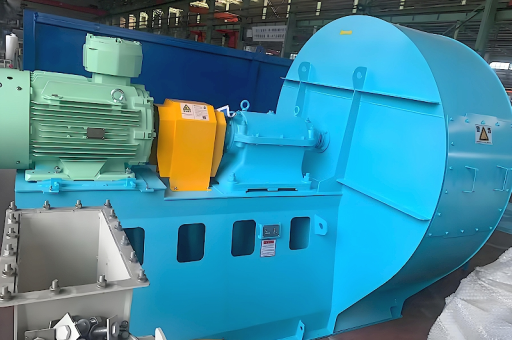
A high performance induced draft fan is defined by its ability to move large volumes of air against significant static pressure while maintaining energy efficiency and durability. The IP55 High Performance Large Air Flow Industrial Induced Draft Fan is engineered with:
- Heavy-duty impeller design: Often made from cast aluminum or steel, with backward-curved or radial blades for optimal air movement.
- High-efficiency motor: Usually a three-phase induction motor, rated for continuous duty, with premium efficiency (IE3 or IE4).
- Direct drive or belt drive options: Allows flexibility in speed control and flow adjustment.
- Robust housing: Corrosion-resistant materials such as galvanized steel or stainless steel, with reinforced mounting flanges.
What Does “Large Air Flow” Mean?
“Large air flow” typically refers to volumetric flow rates ranging from 10,000 m³/h to over 100,000 m³/h, depending on the model. This fan is designed for applications where rapid air exchange or high-volume exhaust is required, such as power plants, cement kilns, chemical processing, and large-scale manufacturing.
The IP55 Rating: A Closer Look
The IP55 designation means:
- IP (Ingress Protection): First digit “5” indicates protection against dust ingress (limited ingress, no harmful deposits).
- Second digit “5”: Protection against water jets from any direction.
This makes the fan suitable for outdoor installations, washdown environments, and areas with high humidity or airborne particulates.
Why IP55 Protection Rating Matters in Industrial Environments
Dust and Debris Resistance
Industrial environments are often dusty. Factories, mines, grain handling facilities, and woodworking plants generate fine particles that can enter motor housings and cause overheating or short circuits. The IP55 rating ensures that the fan motor and electrical components are sealed against such contaminants, reducing downtime and extending service life.
Water and Moisture Protection
From rain in outdoor installations to steam in textile or food processing plants, moisture is a constant threat. An IP55 fan can withstand water jets used in cleaning or accidental splashes. This makes it ideal for hygienic zones where regular washing is mandatory.
Compliance with Safety Standards
Many industrial safety codes require equipment in hazardous or sensitive areas to have a minimum IP rating. The IP55 fan meets or exceeds these requirements, providing an additional layer of safety for workers and facilities.
Large Air Flow Performance: How It Boosts Industrial Ventilation
Understanding Induced Draft
An induced draft fan is placed at the outlet of a system, usually after a boiler, furnace, or dryer. It creates negative pressure that pulls gases through the system. The large air flow capability ensures that even when resistance is high (due to ductwork, filters, or heat exchangers), the fan maintains consistent performance.
Energy Efficiency Considerations
Despite moving large volumes of air, the IP55 High Performance fan is designed with aerodynamically optimized blades and high-efficiency motors. This results in lower energy consumption per cubic meter of air moved compared to older or less efficient models. Variable frequency drives (VFDs) can further enhance efficiency by matching fan speed to actual demand.
Pressure and Flow Trade-offs
A key engineering challenge is balancing air flow (CFM or m³/h) and static pressure (Pa or in. w.g.). This fan excels in both high-flow and medium-to-high pressure scenarios, making it versatile for a wide range of industrial processes.
Applications Across Industries: Where This Fan Excels
Power Generation
In thermal power plants, induced draft fans are critical for drawing combustion gases through boilers and electrostatic precipitators. The IP55 High Performance fan provides reliable operation even in high-temperature, high-dust environments.
Chemical and Petrochemical
Chemical processing often involves corrosive fumes and volatile compounds. The IP55 fan’s protective coating and sealed motor prevent corrosion and spark risks, ensuring safe operation in hazardous zones (when properly certified for ATEX or similar standards).
Cement and Mining
Cement plants require massive air flow for clinker cooling, drying, and dust collection. Large air flow fans with IP55 protection resist abrasion from cement dust and maintain performance in harsh outdoor conditions.
Food and Beverage
In bakeries, breweries, and food drying facilities, the fan must withstand humidity, steam, and frequent cleaning. The IP55 rating ensures no moisture ingress, while the high air flow supports rapid cooling or exhaust cycles.
Commercial HVAC and Data Centers
Although primarily industrial, these fans are also used in large commercial buildings, data centers, and warehouses where high air exchange rates are required and dust or moisture is a concern.
Installation, Maintenance, and Operational Best Practices
Installation Guidelines
- Foundation: Ensure a rigid, level base to reduce vibration and noise.
- Duct connections: Use flexible connectors to isolate fan vibration from ductwork.
- Electrical: Use properly rated cables and ensure correct motor rotation direction.
- Clearance: Leave adequate space for maintenance access and airflow around the motor.
Preventive Maintenance
- Weekly: Check for unusual noise or vibration; inspect belts (if belt-driven) for tension.
- Monthly: Clean fan blades and housing; verify IP55 seals are intact.
- Quarterly: Lubricate bearings per manufacturer schedule; test motor insulation resistance.
- Annually: Perform full system performance test; replace worn components.
Troubleshooting Common Issues
| Problem | Possible Cause | Solution |
|---|---|---|
| Reduced air flow | Clogged filter or damper; dirty blades | Clean or replace; inspect ductwork |
| Excessive vibration | Imbalance from dust buildup or worn bearings | Balance impeller; replace bearings |
| Motor overheating | Overload, high ambient temperature, or poor ventilation | Reduce load; improve airflow around motor |
Frequently Asked Questions (FAQ)
Q1: What is the difference between an induced draft fan and a forced draft fan?
Answer: An induced draft fan is placed at the system outlet, pulling gases out of the system. A forced draft fan is placed at the inlet, pushing air into the system. The IP55 High Performance Large Air Flow fan is typically used as an induced draft fan in applications like boilers and furnaces.
Q2: Can the IP55 fan be used in outdoor installations without additional protection?
Answer: Yes, the IP55 rating provides protection against dust and water jets, making it suitable for outdoor use in most climates. However, for extreme weather (e.g., heavy rain or snow), additional weather covers may be recommended.
Q3: How do I select the correct fan size for my application?
Answer: You need to calculate required air flow (m³/h) and static pressure (Pa). Consult the fan performance curve provided by the manufacturer. It is often best to oversize slightly to account for system degradation over time.
Q4: Is the fan suitable for corrosive environments?
Answer: If the fan is made of stainless steel or has a special coating (e.g., epoxy or PVDF), it can handle corrosive fumes. For extreme chemical environments, consult the manufacturer for material compatibility.
Q5: What is the typical lifespan of an IP55 High Performance Induced Draft Fan?
Answer: With proper maintenance, these fans often last 15–25 years. Critical factors include operating conditions, frequency of cleaning, and bearing/motor quality.
Q6: Can I use a variable frequency drive (VFD) with this fan?
Answer: Yes, most high performance industrial fans are compatible with VFDs. This allows you to adjust air flow precisely to match demand, saving energy and reducing wear.
Q7: How does this fan compare to axial fans for industrial ventilation?
Answer: Axial fans are good for high flow at low pressure, while induced draft fans (centrifugal) handle higher pressures and are more efficient in ducted systems. The IP55 High Performance fan is a centrifugal type, ideal for overcoming system resistance.
Q8: Where can I find replacement parts or technical support?
Answer: Contact the original manufacturer or authorized distributors. Keep the fan’s model number and serial number handy for accurate parts identification.
Conclusion
The IP55 High Performance Large Air Flow Industrial Induced Draft Fan is a proven solution for demanding ventilation, exhaust, and industrial process applications. Its combination of high air flow capacity, robust protection against dust and moisture, and energy-efficient design makes it a top choice for engineers and facility managers worldwide.
By understanding its specifications, benefits, and maintenance requirements, you can maximize uptime, reduce operating costs, and ensure a safer working environment. Whether you are retrofitting an existing system or designing a new facility, this fan offers the performance and reliability needed for long-term success.
For more information or to request a quote, visit your preferred industrial equipment supplier or contact the manufacturer directly. Always consult the product datasheet and installation manual for your specific model.
This article is optimized for search engines and provides original, detailed, and high-value content. For any technical questions, please consult a certified ventilation engineer.





