
This article's table of contents introduction:
- What is a Centrifugal Blower Fan?
- How Does a Centrifugal Fan Work? (Step-by-Step)
- Key Construction Components
- Types of Centrifugal Fan Blades
- Common Industrial Applications
- Selection Criteria: How to Choose the Right Fan
- Advantages & Disadvantages
- Maintenance & Safety
Here is a comprehensive overview of Industrial Centrifugal Blower Fans, covering their working principle, key components, types, applications, and selection criteria.
What is a Centrifugal Blower Fan?
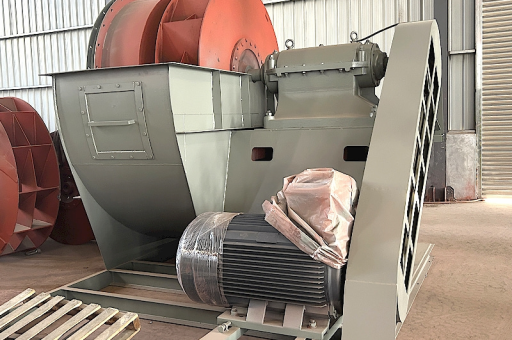
A centrifugal blower fan (also known as a squirrel-cage fan or radial fan) is a mechanical device designed to move air or gases against a moderate to high resistance (static pressure). Unlike axial fans (like a desk fan) which move air parallel to the shaft, centrifugal fans move air perpendicular to the fan shaft.
The Core Principle: Air enters the center of the rotating impeller (the "eye") and is then flung outward by centrifugal force. This action increases the air's velocity. As the air exits the impeller and enters the volute casing (a spiral-shaped housing), its velocity is converted into static pressure, allowing the air to be pushed efficiently through ducts, filters, or other restrictive systems.
How Does a Centrifugal Fan Work? (Step-by-Step)
- Air Inlet: Air is drawn axially into the center of the rotating impeller wheel (the eye).
- High-Speed Rotation: The spinning impeller (driven by a motor) catches the air between its blades.
- Centrifugal Force: The rotating motion slings the air outward from the center to the periphery of the impeller.
- Energy Conversion: Inside the volute casing, the airflow expands. This expansion slows the air down (velocity energy) and simultaneously creates higher pressure (potential/static energy).
- Discharge: The pressurized air is forced out through a single or dual discharge outlet.
Key Construction Components
| Component | Function | Materials |
|---|---|---|
| Impeller/Wheel | The rotating part with blades that create the airflow. | Steel, Stainless Steel (304/316L), Aluminum, Polypropylene, or coated steel (for corrosion/abrasion resistance). |
| Volute/Scroll Housing | The spiral casing that collects air from the impeller and converts velocity to pressure. | Heavy-gauge steel, stainless steel, fiberglass-reinforced plastic (FRP). |
| Inlet Cone/Inlet Ring | A nozzle that guides air smoothly into the eye of the impeller for optimal efficiency. | Steel, Cast Iron. |
| Shaft & Bearings | Transfers power from the motor to the impeller and supports the rotating assembly. | Steel shafts; ball or roller bearings (often with grease fittings or circulating oil systems). |
| Drive Mechanism | Transmits power from the motor to the fan shaft. | Direct Drive (shaft-mounted) or Belt Drive (pulleys & belts). |
| Motor | Provides the energy to spin the impeller. | TEFC (Totally Enclosed Fan Cooled), ODP (Open Drip Proof), Explosion-Proof, or Inverter Duty. |
Types of Centrifugal Fan Blades
The blade design is the most critical factor determining the fan's performance and application.
Forward-Curved Blades (Squirrel Cage)
- Blade Shape: Blades curve in the direction of rotation.
- Pros: High volume, low speed, relatively quiet for the same duty, compact size.
- Cons: Inefficient for high static pressure, prone to dust buildup (blade clogging), non-overloading power curve (can burn out motor if system restriction is removed).
- Common Use: HVAC systems, clean air applications, low-pressure industrial ventilation, air handling units.
Backward-Curved (Backward-Inclined) Blades
- Blade Shape: Blades lean away from the direction of rotation.
- Pros: High efficiency (best in class), self-limiting power curve (cannot overload motor), quieter at high speeds.
- Cons: Requires higher speed for the same airflow as forward-curved.
- Common Use: General industrial ventilation, dust collection, process air supply, high-efficiency systems.
Radial (Paddle Wheel) Blades
- Blade Shape: Straight, flat blades extending radially from the hub.
- Pros: Very rugged, handles sticky, dusty, or abrasive materials well, high pressure capability.
- Cons: Lowest efficiency, louder than other types.
- Common Use: Pneumatic conveying, material handling, woodworking dust collection, exhaust for corrosive gases (with coatings).
Airfoil (Backward-Inclined Airfoil) Blades
- Blade Shape: Similar to backward-curved, but blades have an airfoil cross-section (like an airplane wing).
- Pros: Highest efficiency of all centrifugal fans, very quiet.
- Cons: Most expensive to manufacture, blades can be damaged by abrasive material.
- Common Use: Clean air high-efficiency applications, critical process air systems, large HVAC installations.
Common Industrial Applications
Centrifugal fans are used wherever air needs to be moved against resistance. Key industries include:
- HVAC: Large building ventilation, exhaust, and air conditioning systems.
- Cement & Mining: Providing combustion air for kilns, conveying powdered materials, dust extraction.
- Woodworking: Pneumatic conveying of sawdust, chips, and shavings; dust collection systems.
- Chemical & Pharma: Fume exhaust, vapor removal, process air supply for reactors and dryers.
- Power Generation: Induced draft (ID) for boilers, forced draft (FD) for combustion air, primary air (PA) systems.
- Wastewater Treatment: Aeration blowers for biological treatment, digester gas recirculation.
Selection Criteria: How to Choose the Right Fan
- Airflow (CFM - Cubic Feet per Minute): The required volume of air the system needs to move.
- Static Pressure (SP - "w.g. - Inches of Water Gauge): The resistance the fan must overcome. This is driven by the ductwork, filters, dampers, and process equipment.
- Air or Gas Characteristics:
- Temperature: Affects material strength and motor power (hot air is less dense, requiring more power).
- Corrosiveness: Requires stainless steel or coated materials (e.g., FRP, Epoxy).
- Abrasiveness: Requires radial tip or special wear-resistant liners (e.g., Ceramic, AR steel).
- Explosive/Flammable: Requires explosion-proof construction (spark-resistant materials, non-ferrous impellers, explosion-proof motor).
- Mounting & Space: Direct Drive vs. Belt Drive.
- Direct Drive: Impeller mounted directly on the motor shaft. Constant speed, less maintenance, smaller footprint.
- Belt Drive: Impeller is driven by belts and pulleys. Variable speed capability (by changing pulley ratios), motor can be placed away from the airstream, easier maintenance.
- Efficiency & Power: Choose the most efficient fan for your duty cycle to reduce energy costs (Life Cycle Cost analysis).
Advantages & Disadvantages
Advantages:
- High Static Pressure: Ideal for systems with ductwork, filters, or scrubbers.
- Stable Performance: Reliable and predictable airflow/pressure curves.
- Durable: Can be built for heavy-duty, 24/7 industrial operation.
- Efficiency: Backward-curved and Airfoil designs offer excellent energy efficiency.
Disadvantages:
- Larger Size: Generally larger than axial fans for the same airflow.
- Higher Initial Cost: More complex to manufacture than an axial fan.
- Noise: Can be loud, especially at higher speeds, though quieter options exist.
- Non-Overloading vs. Overloading: Requires careful motor sizing (forward-curved fans can burn out motors if the system is not properly designed).
Maintenance & Safety
- Regular Inspection: Check belts for tension and wear, bearings for noise and heat, and impeller for imbalance or build-up.
- Vibration Monitoring: Critical for detecting bearing wear or impeller balance issues early.
- Cleanliness: Keep impeller blades clean, especially in forward-curved fans to prevent imbalance and performance loss.
- Safety Guards: Always have proper guards on belted drives and shaft couplings to prevent entanglement.
- Lockout/Tagout (LOTO): Follow strict LOTO procedures before any maintenance.
In summary, centrifugal blower fans are the workhorses of industry, providing the necessary pressure to move air through complex and restrictive systems for ventilation, material handling, and process control. Selecting the correct blade type and construction material is crucial for long life and optimal performance.





