
This article's table of contents introduction:
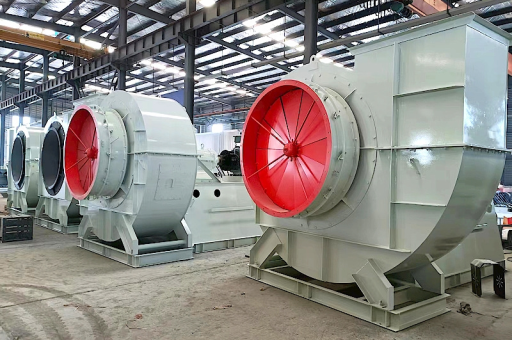
- Type of Centrifugal Fan: The "Wheel" is Everything
- Critical Performance Metrics for Large Areas
- The "High Performance" Component List
- Control: The Key to "Optimal"
- Specific Product Recommendations (Examples)
- Installation Considerations for Large Areas
- Final Verdict & Actionable Checklist
This is a highly specific and technical product request. To deliver the best recommendation, we need to move beyond a generic definition and deconstruct what "High Performance," "Centrifugal," and "Optimal Airflow for Large Areas" actually mean in an industrial or commercial context.
Here is a detailed breakdown of what you should be looking for and the key specifications that define a High Performance Centrifugal Flow Fan for large-area applications.
Type of Centrifugal Fan: The "Wheel" is Everything
For large areas, the type of impeller (wheel) determines the performance. You have two primary choices, and one is clearly superior for your stated goal:
The Winner: Backward-Curved or Airfoil (BC/BI) Blades
- Why: These are the most efficient centrifugal fans (often >85% static efficiency). They handle large volumes of air at moderate to high static pressures (ductwork, long throws).
- Characteristic: They are non-overloading. Power draw peaks at the "duty point" and decreases if the system pressure drops. This protects the motor from burning out if filters are clean or ducts are open.
- Use Case: Large HVAC systems, clean rooms, industrial ventilation, and any system requiring long duct runs or high-velocity discharge.
The Contender: Forward-Curved (FC) Blades
- Why: Lower cost, smaller footprint for the same airflow at low pressure.
- Characteristic: Overloading motor – if the static pressure drops (e.g., a filter falls out), the motor can pull excessive amperage and trip or fail.
- Use Case: Small residential furnaces, low-pressure commercial units. Avoid for "High Performance" large areas.
Our Recommendation: Demand a Backward-Inclined (BI) or Airfoil (AF) fan. Airfoil blades are slightly quieter and more efficient than backward-inclined blades.
Critical Performance Metrics for Large Areas
"Optimal Airflow" is not just about Volume (CFM). For large open spaces, you need Velocity (FPM) and Coverage.
- CFM (Cubic Feet per Minute): The raw volume. For a large warehouse (say 50,000 sq ft), you could need 60,000 to 100,000 CFM for general ventilation or spot cooling.
- Static Pressure (SP) in Inches w.g. (water gauge): This is the friction it must overcome.
- Short Throw (open area): 0.5" – 1.0" SP.
- Long Duct Run with Diffusers: 2.0" – 4.0" SP.
- Outlet Velocity (FPM): High velocity is critical for "throwing" air across a large area. Look for an outlet velocity of 3,000 – 5,000 FPM or higher. A fan that just moves 50,000 CFM but has a large outlet (low velocity) will only affect the area immediately in front of it.
- Air Throw Distance (Feet): This is the most important spec for large areas. Ask the manufacturer for the "Effective Throw" (often measured at 150 FPM terminal velocity). For a 100ft long warehouse, you need a throw of at least 80-100ft.
The "High Performance" Component List
A high-performance fan is built from specific components:
| Component | Standard Fan | High Performance Fan |
|---|---|---|
| Motor | TEFC, Standard Efficiency | Premium Efficient (IE4/NEMA Premium) or EC (Electronically Commutated) . EC motors offer 30-50% part-load efficiency gains. |
| Drive System | Standard V-belt | Cogged V-belt (0.5% more efficient) or Direct Drive (zero belt loss, lower maintenance). |
| Bearings | Standard triple-lip seal | Sealed, regreasable spherical roller bearings with a minimum L10 life of 100,000 hours. |
| Housing | Basic rolled steel | Reinforced, welded steel with a bearing splitter (for easy removal without disassembling the wheel). |
| Inlet Cone | Standard | Venturi-style inlet cone that perfectly mates with the wheel inlet for smooth, non-turbulent entry. |
| Wheel Material | Mild Steel | Aluminum or Stainless Steel for balance and corrosion resistance (or steel with epoxy paint). |
| Vibration Cutoff | None | Hermetically sealed vibration switches (critical for large, expensive equipment). |
Control: The Key to "Optimal"
For large areas, the load changes. You need control.
- VFD (Variable Frequency Drive): Essential. A centrifugal fan with a VFD allows you to modulate airflow from 0-100% by changing the motor speed. This is the most energy-efficient way to optimize airflow for different conditions (e.g., morning vs. afternoon heat, different occupancy levels).
- Bypass Damper: Sometimes, a VFD is too expensive for a simple job. A bypass damper (or inlet vane damper) is less efficient but still allows modulation.
Specific Product Recommendations (Examples)
These are not endorsements but represent the category of "High Performance Centrifugal Fan."
- Greenheck: Model BSB (SWSI - Single Width Single Inlet) or BSW (DWD - Double Width Double Inlet). Look for the "Q" or "ARI" certified lines. Their Vektor line is high-performance but for fume exhaust.
- New York Blower (NYB): The General Industrial Fans (GI) line is the gold standard for ruggedness, but look at their High Pressure (HP) or Class I, II, III fans.
- Twin City Fan: Models XL, QS, or TE. They specialize in high-velocity, high-pressure fans for long throws.
- Howden / Robinson Fans: Heavy industrial; if you need a massive fan (100,000+ CFM), they are the leaders.
Installation Considerations for Large Areas
- Location: Mount the fan outside the building if possible (roof curb or wall mount). This eliminates noise and heat inside the conditioned space.
- Discharge Cone / Nozzle: If throwing air into an open space, install a discharge nozzle (a converging cone) on the fan outlet. This converts velocity pressure into static pressure, dramatically increasing the throw distance.
- Sound Attenuator: High-performance fans are loud. An inlet or discharge sound attenuator (silencer) is mandatory in occupied spaces.
- Isolation: Use spring isolators and a flexible connector on the ductwork to prevent vibration transmission into the building structure.
Final Verdict & Actionable Checklist
To purchase a High Performance Centrifugal Flow Fan for Optimal Airflow in Large Areas, provide the following to a manufacturer:
- Airflow: X,XXX CFM (e.g., 60,000 CFM).
- Static Pressure: X.XX" w.g. (e.g., 2.5" w.g.).
- Wheel Type: Backward-Inclined (BI) or Airfoil (AF) .
- Motor: EC or Premium Efficient (IE4) with VFD.
- Application: Large warehouse / hangar / factory (specify length: e.g., 150ft long).
- Requirement: Effective Throw of at least 80% of the building length.
Do not buy a generic "HVAC" centrifugal fan. Ask specifically for an industrial process or commercial high-velocity centrifugal fan with a heavy-duty bearing frame and a non-overloading wheel curve.





