
This article's table of contents introduction:
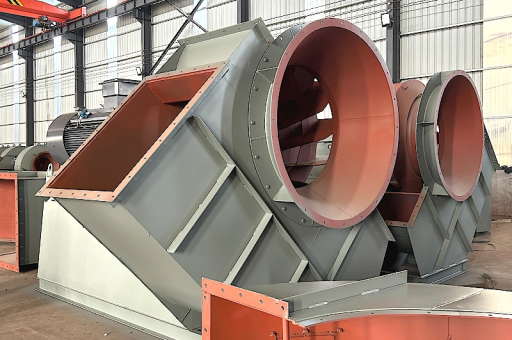
It looks like you are trying to describe or source a specific industrial centrifugal blower. Let me break down the specifications you provided to clarify what they mean and help you identify the correct part.
Here is a translation and technical analysis of your request:
"380V AC" (Power Supply)
- Meaning: This is a three-phase industrial voltage standard (common in Europe, Asia, and many industrial facilities).
- Action: Ensure your facility has a 3-phase power supply. A single-phase 380V is rare for industrial blowers of this size.
"Impeller 540-3211 mm" (A likely typo or range)
- Critical Check: This range is enormous.
- 540 mm (21.2 inches) is a medium-sized industrial impeller.
- 3211 mm (10.5 feet / 126 inches) is a massive heavy-duty mining or wind tunnel fan.
- Most likely scenario: You meant 540 mm and the "3211" is a model number, part number, or air performance code (often related to pressure class or RPM).
- Alternative: It could be the cast number of the impeller (e.g., a foundry pattern number).
- Action required: Check your specification sheet. Is the impeller diameter 540 mm? If it is 3211 mm, you are looking at a very large, custom, heavy-duty unit.
"Overhang Temperature"
- Meaning: This likely refers to Overhang Temperature Class or a High-Temperature Application.
- Technical Detail: "Overhang" in a blower usually refers to the impeller overhung from the bearing support (a common, simple design).
- Temperature: This is critical. It means the blower is designed to handle hot air or gases. You need to specify the operating temperature (e.g., 80°C, 150°C, 350°C).
- Consequences: High-temp blowers require:
- Heat-resistant bearings (often with external cooling fins or oil systems).
- A flexible coupling (to prevent heat transfer to the motor).
- A shaft cooling fan on the motor side.
- Specific impeller materials (e.g., stainless steel for high temps >300°C).
"Dust"
- Meaning: This is a Dust-Laden Air or Pneumatic Conveying application.
- Design features required:
- Abrasion-resistant lining (e.g., AR plate, ceramic tiles, or high-chrome cast iron).
- Heavy-duty shaft and bearings to handle imbalanced loads from dust buildup.
- Dust-tight housing seals (to prevent leakage of hazardous dust).
- Often a backward-curved impeller (less prone to clogging than forward-curved).
"Centrifugal Blowers"
- Meaning: This is the correct type for high pressure, ducted systems, and material handling.
"Industrial"
- Meaning: It is built for 24/7 operation, heavy gauge steel, and meets safety standards (e.g., ATEX if combustible dust is present).
Is this a specific part number?
There is a good chance 540-3211 is a Manufacturer's Part Number (e.g., from a company like Cincinnati Fan, New York Blower, Elektror, Nicotra Gebhardt, or Ziehl-Abegg).
To help you find the exact blower, please provide the following missing information:
- Exact Impeller Diameter: Is it 540 mm or something else?
- Operating Temperature: What is the maximum temperature of the air/gas entering the blower? (e.g., 80°C, 120°C, 350°C)?
- Airflow & Pressure: What is the required air volume (m³/h or CFM) and static pressure (Pa, mmH₂O, or inches w.g.)?
- Motor Power: Is there a motor specified? (e.g., 5.5 kW, 11 kW, 30 kW?)
- Dust Type: What is the material being moved? (e.g., wood chips, cement dust, plastic pellets, toxic fumes?)
- Manufacturer: Do you have any logo, nameplate, or previous brand name?
Next Steps for Sourcing:
- If you have the old unit: Look for a nameplate on the motor or blower housing. It will list the exact model number.
- If you are designing a system: You need to contract a manufacturer with a particle handling and high-temperature design team.
- Typical search terms:
- "High temperature centrifugal fan for dust"
- "Material handling fan 380V"
- "Industrial blower abrasion resistant"
- "540 mm impeller centrifugal fan"
Warning: Do NOT use a standard air-handling fan for dust, as sparks from dust striking the impeller or bearing failure can cause fires/explosions. Ensure any blower is rated for your specific dust type (particularly if it is combustible like grain, metal, or wood dust).





