
This article's table of contents introduction:
- Introduction: The Core of Modern Airflow Management
- What Are Industrial Centrifugal Fans With Adjustable Air Volume?
- Technical Principles: How Air Volume Adjustment Works
- The Critical Range: Why 200-20000 m³/h Matters
- Key Components and Design Variations
- Application Scenarios Across Industries
- Benefits vs. Fixed-Speed Fans: An Efficiency Comparison
- Q&A: Common Concerns Solved
- How to Select the Right Fan for Your System
- Maintenance and Performance Optimization
- Conclusion: The Future of Adjustable Airflow
** Mastering Industrial Centrifugal Fans With Adjustable Air Volume 200-20000m³/h: Efficiency, Applications, and Selection Guide
Table of Contents / Directory Guide
- Introduction: The Core of Modern Airflow Management
- What Are Industrial Centrifugal Fans With Adjustable Air Volume?
- Technical Principles: How Air Volume Adjustment Works
- The Critical Range: Why 200-20000 m³/h Matters
- Key Components and Design Variations
- Application Scenarios Across Industries
- Benefits vs. Fixed-Speed Fans: An Efficiency Comparison
- Q&A: Common Concerns Solved
- How to Select the Right Fan for Your System
- Maintenance and Performance Optimization
- Conclusion: The Future of Adjustable Airflow
Introduction: The Core of Modern Airflow Management
In the landscape of industrial ventilation, precision is no longer a luxury—it is a requirement. From dust extraction in woodworking to fume removal in chemical processing, the demand for Industrial Centrifugal Fans With Adjustable Air Volume 200-20000m3/h has surged. This article provides a comprehensive examination of these powerful machines, dissecting their mechanisms, operational benefits, and the critical factors influencing their performance. By understanding these fans, engineers and facility managers can optimize energy consumption, extend equipment life, and ensure regulatory compliance.
What Are Industrial Centrifugal Fans With Adjustable Air Volume?
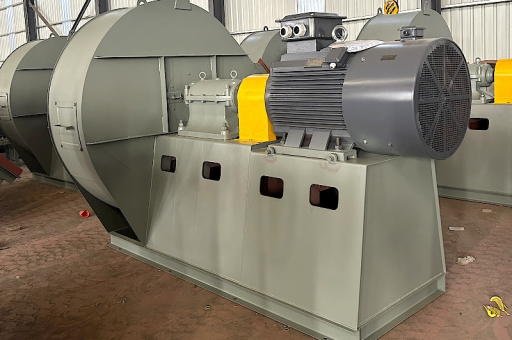
An industrial centrifugal fan with adjustable air volume is a mechanical device designed to move air or gases through a system at variable flow rates. Unlike fixed-speed fans, which operate at a constant capacity, these units utilize mechanisms such as variable frequency drives (VFDs), inlet vanes, or adjustable blade pitch to modulate airflow within a defined range.
The "200-20000 m³/h" specification denotes the fan’s operational envelope—from a modest 200 cubic meters per hour (suitable for small extraction points) up to 20,000 m³/h (adequate for large-scale industrial ventilation). This broad spectrum makes them versatile workhorses in factories, power plants, and commercial HVAC systems.
Technical Principles: How Air Volume Adjustment Works
The ability to adjust air volume relies on three primary technologies, each with distinct advantages:
- Variable Frequency Drive (VFD): The most common method. By altering the electrical frequency supplied to the motor, the fan speed changes proportionally. According to fan affinity laws, reducing speed by 20% cuts power consumption by nearly 50%. This offers the highest energy efficiency across the full range.
- Inlet Guide Vanes (IGVs): Pre-rotation of incoming air reduces the effective work done by the impeller. While slightly less efficient at low flows than VFDs, IGVs are robust for high-temperature or particulate-laden gases.
- Outlet Dampers: Mechanical louvers at the discharge adjust airflow by increasing system resistance. This method is simplest but least efficient, as it wastes energy by throttling.
For the Industrial Centrifugal Fans With Adjustable Air Volume 200-20000m3/h, VFDs are the industry standard due to their superior part-load efficiency and quiet operation.
The Critical Range: Why 200-20000 m³/h Matters
This specific range fills a vital niche in industrial applications:
- Low end (200–5,000 m³/h): Ideal for single-point extraction, laboratory fume hoods, and small paint booths. It allows precise control for delicate processes.
- Mid range (5,000–12,000 m³/h): Commonly used in manufacturing workshops, warehouse ventilation, and material conveying systems.
- High end (12,000–20,000 m³/h): Required for central dust collection units, large-scale drying systems, and boiler forced-draft applications.
By covering this span, the fan eliminates the need for multiple fixed-speed units, reducing capital costs and maintenance complexity.
Key Components and Design Variations
A typical industrial centrifugal fan in this category comprises:
- Impeller: Usually backward-curved or radial-bladed. Backward-curved impellers are energy-efficient and non-overloading, while radial designs handle dust and sticky materials better.
- Housing: A spiral volute converts kinetic energy to static pressure. Material choices include carbon steel, stainless steel (for corrosion), and fiberglass (for chemical fumes).
- Motor & Drive: Direct-drive (less maintenance, compact) or belt-driven (allows speed changes via pulley ratios) are both available. With VFDs, direct-drive is favored.
- Adjustment Mechanism: VFD panel (located remotely or integrated) or IGV actuator.
Fan sizes vary from compact 200 mm inlet diameters to larger 630 mm or more, ensuring the 200-20000 m³/h range is achievable with appropriate static pressure (typically 500–4,000 Pa).
Application Scenarios Across Industries
Industrial Centrifugal Fans With Adjustable Air Volume 200-20000m3/h serve in diverse environments:
- Woodworking: Dust extraction from saws, sanders, and CNC routers. Adjustable volume allows matching airflow to machine usage.
- Chemical Processing: Exhaust of corrosive vapors. Low flow settings during idle periods save energy and reduce scrubber load.
- Wastewater Treatment: Aeration of biological tanks. VFD control adapts to changing oxygen demand.
- Printing & Packaging: Drying of inks and coatings. Precise volume reduces paper curl and energy waste.
- HVAC: Large commercial buildings use these fans for variable air volume (VAV) systems.
Benefits vs. Fixed-Speed Fans: An Efficiency Comparison
The table below highlights key operational advantages:
| Parameter | Adjustable Air Volume Fan (200-20000 m³/h) | Fixed-Speed Fan |
|---|---|---|
| Energy Consumption | ~30-70% less at partial load | 100% at all times |
| Noise Level | Lower at reduced speed | Constant high noise |
| Process Control | Precise match to demand | On/off only |
| Wear & Tear | Reduced due to soft starts | Higher due to abrupt starts |
| Initial Cost | Higher (VFD included) | Lower |
| ROI Period | Typically 6-18 months | Not applicable |
For any facility operating under varying loads (common in manufacturing), the adjustable fan pays for itself within two years through electricity savings alone.
Q&A: Common Concerns Solved
Q1: Can an industrial centrifugal fan with adjustable air volume handle high temperatures?
A1: Yes, with correct material selection. High-temperature models use aluminum impellers or stainless steel housings and can operate up to 400°C (752°F). VFDs should be derated to avoid overheating in hot environments.
Q2: How accurate is the airflow adjustment?
A2: With a quality VFD and feedback from a pressure or flow sensor, accuracy is ±2-5% of setpoint. This is sufficient for most industrial processes.
Q3: Is the 200-20000 m³/h range suitable for cleanrooms?
A3: Yes, but the fan must be equipped with HEPA filtration and sealed to prevent particle ingress. Backward-curved impellers minimize turbulence.
Q4: What maintenance do these fans require?
A4: Periodic cleaning of the impeller (especially for sticky dust), bearing lubrication (if belt-driven), and VFD firmware updates. Check belt tension every 3 months for belt-driven models.
Q5: Can I retrofit an existing fixed-speed fan with VFD?
A5: Often yes, provided the motor is inverter-duty rated (check nameplate). For older motors, consider replacement to avoid insulation breakdown.
How to Select the Right Fan for Your System
Choosing the optimal Industrial Centrifugal Fans With Adjustable Air Volume 200-20000m3/h involves these steps:
- Determine System Resistance (Static Pressure): Use duct length, diameter, and fitting losses. The fan’s pressure curve must intersect the system curve at the desired flow.
- Analyze Operating Profile: If the fan runs at 70% flow for 60% of the time, VFD savings are maximized.
- Consider Air Quality: For clean air, backward-curved fans offer peak efficiency. For dust-laden air, radial or paddle-wheel designs are better.
- Evaluate Ambient Environment: ATEX (explosive atmosphere) certification may be required in chemical or grain handling sectors.
- Select Fan Supplier: Ensure the supplier provides performance curves, warranty, and local service support.
Example Calculation:
For a workshop requiring 8,000 m³/h at 1,500 Pa, a 5.5 kW motor with VFD is typical. Expect efficiency around 78-82%.
Maintenance and Performance Optimization
To keep your adjustable volume fan running efficiently:
- Monitor VFD Parameters: Check motor current, DC bus voltage, and fault logs monthly.
- Inspect Impeller Balance: Unbalanced impellers cause vibration and bearing failure. Schedule dynamic balancing every 2 years.
- Clean Inlet Screens: Clogged screens increase static pressure, forcing the fan to work harder.
- Lubricate Bearings: For belt-driven fans, use high-temperature grease. For direct-drive, sealed bearings (maintenance-free) are common.
- Verify Airflow: Use an anemometer or pitot tube at the outlet to confirm the fan delivers rated performance.
Conclusion: The Future of Adjustable Airflow
The Industrial Centrifugal Fans With Adjustable Air Volume 200-20000m3/h represent a mature yet evolving technology. As Industry 4.0 advances, these fans are increasingly integrated with IoT sensors and predictive analytics. Future developments include smarter VFDs with self-tuning algorithms and composite impellers that reduce weight by 30%.
For professionals seeking to reduce operational costs, meet emission standards, and prolong equipment lifespan, investing in an adjustable centrifugal fan is not merely an upgrade—it is a fundamental step toward intelligent manufacturing. Whether you are retrofitting an old system or designing a new plant, the 200-20000 m³/h adjustable air volume fan remains a cornerstone of efficient industrial ventilation.
Remember to consult with your fan supplier to ensure perfect integration with your specific process demands. The right fan does not just move air—it drives productivity.





