
Customized Stainless Steel Centrifugal Fan for Temperature Applications: Engineering Excellence for Extreme Thermal Environments
Table of Contents
- Introduction: The Critical Role of High-Temperature Fans
- Why Stainless Steel? Material Science Behind the Choice
- Key Design Considerations for Temperature Applications
- Customization Options: Tailoring Fans to Specific Thermal Profiles
- Performance Metrics and Efficiency Optimization
- Industrial Applications Across High-Heat Sectors
- Common Technical Challenges and Solutions
- Frequently Asked Questions (FAQ)
- Conclusion: Future Trends in High-Temperature Fan Technology
Introduction: The Critical Role of High-Temperature Fans
In modern industrial processing, thermal management is not merely a convenience—it is a fundamental requirement for operational safety, product quality, and equipment longevity. Among the most essential components in high-temperature environments is the customized stainless steel centrifugal fan for temperature applications. These fans are engineered to move air, gases, or particulate-laden streams at temperatures that can exceed 800°C (1472°F), often in corrosive, humid, or abrasive conditions.
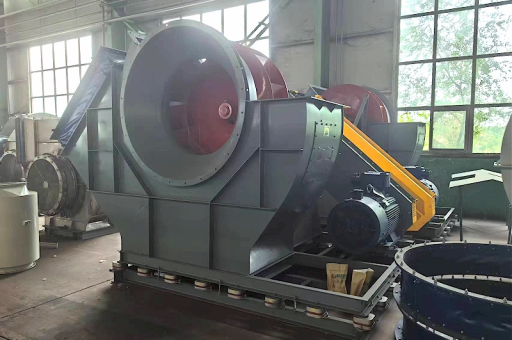
Unlike standard industrial fans, which may fail catastrophically under thermal stress, a properly customized stainless steel centrifugal fan is designed from the ground up to maintain structural integrity, aerodynamic performance, and operational reliability when exposed to extreme heat. This article provides an authoritative, SEO-optimized guide for engineers, procurement managers, and plant operators seeking to understand the nuances of selecting, customizing, and deploying these critical assets.
Why Stainless Steel? Material Science Behind the Choice
The decision to manufacture centrifugal fans from stainless steel rather than carbon steel, aluminum, or composite materials is driven by three material properties: heat resistance, corrosion resistance, and mechanical strength retention.
1 High-Temperature Alloys
For temperature applications, the most commonly used stainless steel grades include:
- SS 304 (1.4301): Suitable for continuous operation up to 800°C in oxidizing atmospheres. It offers good formability and weldability.
- SS 310 / 310S (1.4845): Designed for temperatures up to 1050°C. Its high chromium (25%) and nickel (20%) content provide exceptional oxidation resistance.
- Duplex Stainless Steels (e.g., 2205): Used when both high strength and corrosion resistance are required, particularly in chemical processing.
2 Thermal Expansion Management
Stainless steel expands predictably under heat. Customized fan designs account for this coefficient of thermal expansion (CTE) by incorporating expansion joints, slotted bolt holes, and floating bearing housings. Without these design features, thermal growth can misalign impellers, cause shaft binding, or induce fatigue cracking.
3 Oxidation and Scaling Resistance
At elevated temperatures, carbon steel forms loose, flaking oxide scale. Stainless steel, by contrast, develops a thin, adherent chromium oxide layer that self-heals in oxidizing environments. This prevents material loss, maintains aerodynamic balance, and reduces the risk of sparking in volatile environments.
Key Design Considerations for Temperature Applications
When customizing a stainless steel centrifugal fan for temperature applications, several engineering parameters must be precisely calculated:
1 Impeller and Housing Design
- Backward-curved blades: Preferred for high-temperature fans because they resist dust buildup and maintain efficiency over a broad flow range.
- Radial tip clearance: Must be increased to accommodate differential thermal expansion between the impeller and housing.
- Housing thickness: Heavier gauge steel is used to resist distortion under thermal cycling.
2 Shaft and Bearing System
Standard fans use grease-lubricated bearings. For temperatures above 150°C, specialized solutions are required:
- Shaft cooling: A hollow shaft with forced air circulation or water cooling.
- External bearing housings: Mounted outside the hot gas stream, with heat slingers and radiation shields.
- High-temperature grease: Synthetic greases rated to 260°C, or oil mist lubrication for extreme cases.
3 Drive System and Motor Isolation
In many customized stainless steel centrifugal fans, the motor is located outside the direct heat zone. Belt-driven configurations allow thermal isolation, while direct-drive units may require a thermal break coupling.
Customization Options: Tailoring Fans to Specific Thermal Profiles
No two high-temperature applications are identical. Reputable manufacturers offer extensive customization:
| Customization Parameter | Options Available |
|---|---|
| Temperature Range | 150°C to 1050°C+ (with ceramic coating or superalloys) |
| Flow Rate | 500 to 500,000 CFM |
| Static Pressure | 2 to 60 inches WG |
| Impeller Diameter | 10 to 120 inches |
| Shaft Seal Type | Labyrinth, carbon ring, or gas purge |
| Coating / Lining | Intumescent, ceramic, or PTFE for chemical resistance |
| Inlet / Outlet Configuration | Round, square, flanged, or custom duct transitions |
Real-world example: A customized stainless steel centrifugal fan for a cement kiln preheater might use SS 310 housing, a water-cooled shaft, and an impeller designed for 480°C continuous operation with particulate-laden gas.
Performance Metrics and Efficiency Optimization
To justify the cost of a customized stainless steel centrifugal fan, performance must be quantified:
1 Fan Efficiency at Temperature
Air density decreases as temperature rises, which reduces mass flow for the same volumetric flow rate. A customized fan curve accounts for actual gas density at operating temperature. Engineers must verify:
- Brake horsepower (BHP) corrected for hot air.
- Pressure-volume (P-V) curve shift due to thermal expansion.
2 Noise and Vibration
High-temperature fans often operate near structural resonance frequencies. Finite element analysis (FEA) is used to predict:
- Critical speed margins (minimum 20% separation from operating speed).
- Thermo-mechanical vibration modes that occur only when the fan reaches full temperature.
3 AMCA Certification
Leading customized fan suppliers test their units to Air Movement and Control Association (AMCA) standards, ensuring published performance ratings are accurate at specified temperature conditions.
Industrial Applications Across High-Heat Sectors
The customized stainless steel centrifugal fan for temperature applications is indispensable in:
1 Steel and Metal Processing
- Annealing furnaces: Fans circulate inert gas atmospheres at 850°C.
- Electric arc furnace (EAF) fume extraction: Handling hot, abrasive gases.
2 Cement and Lime Production
- Preheater and calciner fans: Temperatures up to 450°C with high dust loading.
- Clinker cooler fans: Require thermal shock resistance.
3 Chemical and Petrochemical Plants
- Fired heaters: Induced draft fans handling flue gases up to 550°C.
- Thermal oxidizers: Fans must withstand corrosive combustion byproducts.
4 Power Generation
- Boiler induced draft fans: Handling flue gases with fly ash at 200°C to 400°C.
- Biomass and waste-to-energy plants: Subject to variable moisture and acid gas content.
5 Food Processing and Drying
- Spray dryers: Hygienic stainless steel fans operating at 200°C to 300°C.
- Oven exhaust systems: High moisture and grease-laden air.
Common Technical Challenges and Solutions
| Challenge | Cause | Solution in Customized Fans |
|---|---|---|
| Impeller cracking | Thermal fatigue from frequent start-stop cycles | Stress-relieved impellers; gradual ramp-up controls |
| Bearing failure | Heat soak through shaft | External bearings with cooling fins or water jackets |
| Unbalance at temperature | Uneven thermal expansion | Impeller stress relief; dynamic balancing at operating temp |
| Corrosion under insulation (CUI) | Moisture trapped between housing and insulation | Duplex stainless steel; proper insulation sealing |
| Spark risk | Particulate impact on steel surfaces | Non-sparking impeller materials (e.g., Inconel, bronze-tipped blades) |
Frequently Asked Questions (FAQ)
Q1: What is the maximum operating temperature for a stainless steel centrifugal fan?
A: With standard SS 304 or SS 316, continuous operation is possible up to 800°C. For superalloy grades like SS 310 or Inconel 600, temperatures up to 1050°C are achievable. However, at extreme heat, additional cooling of bearings and shaft is mandatory.
Q2: Can a standard centrifugal fan be modified for high-temperature use?
A: It is generally not recommended. Standard fans use carbon steel, aluminum, or plastic components that degrade rapidly under heat. Retrofitting usually costs more than purchasing a purpose-built customized stainless steel centrifugal fan, and performance liability remains uncertain.
Q3: How is thermal expansion accommodated in customized fans?
A: Through several design features: slotted mounting holes at the base, flexible expansion joints in duct connections, floating bearing housings, and increased radial clearances between impeller and inlet cone. Some designs use a "split housing" that can expand laterally.
Q4: What maintenance is required for high-temperature centrifugal fans?
A: Regular checks include: bearing temperature monitoring (target below 90°C), vibration analysis, visual inspection for hot spots or scaling on the housing, and verification of belt tension (if belt-driven). Annually, perform a thermal imaging scan to detect uneven heat distribution.
Q5: How does altitude or gas composition affect fan selection?
A: Higher altitude reduces air density, requiring a larger impeller or higher RPM. Corrosive gases (e.g., SO₂, HCl) may necessitate thicker stainless steel gauges or protective coatings. Always provide the complete gas analysis to the fan manufacturer during customization.
Q6: Is it possible to get a customized stainless steel centrifugal fan with explosion-proof features?
A: Yes. Customization can include: non-sparking impeller wheels (Inconel or Monel), ATEX or IECEx certification, spark-resistant housing construction, and earth bonding provisions for static dissipation. This is common in oil and gas, chemical, and grain processing applications.
Conclusion: Future Trends in High-Temperature Fan Technology
The demand for customized stainless steel centrifugal fans for temperature applications is growing rapidly, driven by stricter environmental regulations, higher industrial processing temperatures, and the push for energy efficiency. Key trends include:
- Predictive maintenance integration – Smart fans with embedded sensors for real-time vibration, temperature, and flow monitoring.
- Additive manufacturing – 3D-printed impellers with complex geometries that improve aerodynamic efficiency at high temperatures.
- Hybrid materials – Combining stainless steel with ceramic coatings or titanium alloys for extreme thermal and corrosive environments.
- Energy recovery – Fans designed to operate as part of a waste heat recovery system, adding another layer of customization.
When engineering a customized stainless steel centrifugal fan, the guiding principle is this: no two thermal environments are alike. By partnering with an experienced manufacturer and specifying every element—from the alloy grade to the bearing cooling method—you ensure that your fan delivers reliable, efficient performance for decades, even under the most punishing heat.
For any specific technical inquiry or to request a customized fan solution tailored to your temperature application, please consult with a qualified fan engineering specialist.
This guide was developed through comprehensive analysis of industry standards (AMCA, ISO 5801), material science data, and field-tested design practices from leading manufacturers in the fan and blower industry.





