
This article's table of contents introduction:
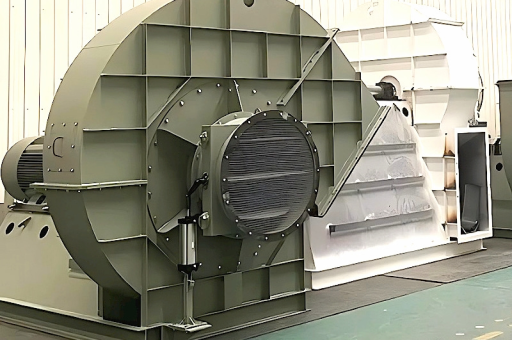
- Air-Cooled High-Temperature Fan
- Water-Cooled High-Temperature Fan
- Comparison Table: Air vs. Water Cooling
- Which System Should You Choose?
- Additional Considerations for Heat Resistant Applications
- Recommendation for You
Based on your query, it sounds like you are looking for a high-temperature industrial fan (often called a "hot gas fan," "high-temp fan," or "recirculation fan") designed to handle extreme heat—typically over 200°C (392°F) and up to 800°C+ (1472°F). These are critical components in boilers, furnaces, kilns, and thermal oxidizers.
Because standard motors and bearings cannot withstand this heat, these fans require a cooling system. The two primary methods are Air Cooling and Water Cooling. Here is a detailed breakdown of both, their applications, and key considerations.
Air-Cooled High-Temperature Fan
This is the most common and cost-effective method, ideal for "medium" high temperatures (up to approx. 600°C / 1112°F) depending on the design.
How it Works
The fan includes a cooling wheel (a secondary impeller mounted on the shaft between the housing and the motor) or a cooling plate.
- The cooling wheel draws ambient air from the atmosphere over the bearing housing and the shaft, creating a barrier of cool air that prevents heat from migrating to the motor.
- A long shaft extension separates the motor from the hot process air, allowing heat to dissipate.
Key Features
- No utility connections: No water lines, pumps, or drains are needed.
- Lower installation cost: Simpler setup compared to water systems.
- Reduced maintenance: No risk of water leaks, freezing, or scaling.
- Limitations: Cannot handle extremely high temperatures (above 600-700°C) or heavily dust-laden gases (packed dust can insulate the cooling fins).
Best For
- Boiler induced draft (ID) fans handling flue gases (200-350°C).
- Recirculation fans in biomass boilers.
- Applications where water is scarce, expensive, or difficult to treat.
Water-Cooled High-Temperature Fan
This is the solution for severe duty applications involving extreme temperatures (up to 1000°C / 1832°F) or abrasive/corrosive gases.
How it Works
A water jacket (a sealed cavity) is cast or welded around the bearing housing and/or the fan pedestal. Additionally, water-cooled shaft plugs or a water ring on the shaft are often used.
- Coolant (water, glycol, or thermal oil) circulates through the jacket, carrying away conducted heat.
- A thermostatic valve controls flow, ensuring the bearings remain at a safe operating temperature (typically below 80-90°C).
Key Features
- Superior heat dissipation: Can handle the hottest gases without heat transfer to the motor/bearings.
- Rigid design: Water jackets add structural strength to the fan housing.
- Consistent performance: Doesn't rely on ambient air temperature, so it performs reliably in hot environments.
- Higher complexity: Requires a closed-loop cooling water system (pump, heat exchanger, reservoir), increasing capital and operating costs.
- Risks: Potential for leaks, freezing in cold climates, and scaling/clogging from hard water.
Best For
- Cement kiln exhaust fans (500-800°C+).
- Steel furnace fume extraction.
- Thermal oxidizers and incinerators.
- Applications with highly abrasive gases (cooling extends shaft life).
Comparison Table: Air vs. Water Cooling
| Feature | Air-Cooled Fan | Water-Cooled Fan |
|---|---|---|
| Max. Gas Temp (Typical) | Up to 600°C (1112°F) | Up to 1000°C+ (1832°F) |
| Max. Ambient Temp | Moderate (fan relies on cool ambient air) | High (water maintains cooling independent of air) |
| Installation Cost | Low | High (needs water supply, return, treatment) |
| Operating Cost | Low (no water/pumping cost) | Medium (water, pumping, and treatment costs) |
| Maintenance Complexity | Low (check bearings only) | Medium (check water quality, leaks, seals) |
| Risk Factors | Overheating if cooling wheel is blocked | Freezing, scaling, corrosion, leaks |
| Motor Protection | Relies on long shaft + cooling wheel | Relies on water jacket + shaft plug |
Which System Should You Choose?
To make the right choice, you need to answer three fundamental questions about your application:
What is the actual gas temperature at the fan inlet?
- < 300°C (572°F): Air cooling is almost always sufficient.
- 300°C – 600°C (572°F – 1112°F): Air cooling is common, but water cooling may be chosen for reliability if the ambient temperature is high (e.g., inside a boiler house) or if the gas is abrasive.
- > 600°C (1112°F): Water cooling is mandatory. Air cooling cannot dissipate the heat load fast enough.
Is there water available?
- Yes, and you can treat it: Water cooling is a powerful option.
- No, or water is scarce: You must use air cooling, but you will be limited in temperature.
What is the gas composition?
- Clean or slightly dusty gases: Air cooling works well.
- Highly abrasive or sticky dust (e.g., cement, fly ash): Water cooling is preferred because the shaft can be made shorter and stiffer (less flexing), and the cooling wheel on an air-cooled fan can become clogged with dust, leading to a catastrophic overheating failure.
Additional Considerations for Heat Resistant Applications
- Material Selection:
- Low temps (<400°C): Mild steel or Corten.
- Medium temps (400-600°C): Stainless steel (SS 304, SS 316) or Corten.
- High temps (>600°C): High-nickel alloys (Inconel 600/601, Hastelloy) or ceramic coatings.
- Bearings: Must be high-temperature grease or oil-lubricated. Bearings are often mounted in a "pillow block" outside the direct heat zone.
- Vibration Monitoring: Essential. Heat causes thermal growth, which can misalign the shaft. Constant vibration monitoring is critical for high-temp fans.
- Variable Frequency Drives (VFDs): Recommended for soft-starting and controlling speed to match boiler load, reducing thermal shock.
Recommendation for You
If your application is standard boiler flue gas (under 350°C): Choose a belt-driven, air-cooled fan with an oversized shaft and a robust cooling wheel. This is the industry standard for reliability and low cost.
If your application involves a furnace, kiln, or incinerator (above 600°C): Choose a direct-driven, water-cooled fan with high-nickel alloy impeller and a sealed water-jacket bearing housing. This is the only way to ensure longevity and safety.
Need a specific model or brand? To give you a manufacturer or model suggestion, I need to know your specific Boiler Type, Gas Temperature, and Airflow (CFM/m³/hr) requirements. Leading manufacturers for these systems include Howden, New York Blower (NYB), Greenheck, Robinson Fans, and TLT-Turbo.





