
This article's table of contents introduction:
- 1. Introduction: The Role of Tunnel Induced Draft Fans in Modern Ventilation
- 2. Core Technical Specifications: Power Range, Blade Design, and Balancing
- 3. How Backward Curved Blades Improve Performance and Reduce Energy Consumption
- 4. Dynamic Balancing Adjusting: Why It Matters for Longevity and Noise Control
- 5. Performance Optimization: Airflow, Static Pressure, and Efficiency Curves
- 6. Installation and Maintenance Best Practices
- 7. Common Questions and Expert Answers (Q&A)
- 8. Conclusion: Selecting the Right Tunnel Fan for Critical Infrastructure
Efficiency and Precision: The 5.5kW–1500kW Tunnel Induced Draft Fan with Backward Curved Blade and Dynamic Balancing Adjusting**
Table of Contents
- Introduction: The Role of Tunnel Induced Draft Fans in Modern Ventilation
- Core Technical Specifications: Power Range, Blade Design, and Balancing
- How Backward Curved Blades Improve Performance and Reduce Energy Consumption
- Dynamic Balancing Adjusting: Why It Matters for Longevity and Noise Control
- Performance Optimization: Airflow, Static Pressure, and Efficiency Curves
- Installation and Maintenance Best Practices
- Common Questions and Expert Answers (Q&A)
- Conclusion: Selecting the Right Tunnel Fan for Critical Infrastructure
Introduction: The Role of Tunnel Induced Draft Fans in Modern Ventilation
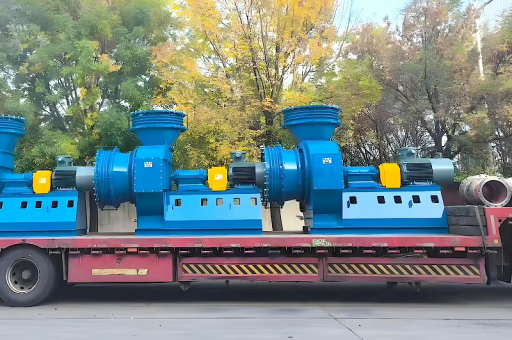
Tunnel ventilation systems are the backbone of underground transportation networks, mining operations, and industrial ducting. Among the most critical components is the tunnel induced draft fan—a high-performance axial or centrifugal unit designed to move large volumes of air against moderate to high resistance. This article focuses on a specific, highly engineered variant: the 5kW–1500kW Tunnel Induced Draft Fan with Backward Curved Blade and Dynamic Balancing Adjusting.
These fans are not merely air movers; they are precision instruments that ensure air quality, temperature control, and safety in enclosed environments. The combination of a backward curved impeller and dynamic balancing adjustment technology makes this fan family suitable for applications ranging from small road tunnels (requiring 5.5kW) to massive railway or mining tunnels (demanding up to 1500kW). By integrating aerodynamic efficiency with vibration control, manufacturers have achieved a solution that reduces operational costs while extending equipment lifespan.
Core Technical Specifications: Power Range, Blade Design, and Balancing
The power range of 5kW to 1500kW is intentionally broad. This allows a single platform design to scale from modest ventilation needs (e.g., a 200-meter pedestrian tunnel) to the immense requirements of a 10-kilometer highway tunnel with heavy traffic.
Key specifications include:
- Motor Power: 5.5kW / 7.5HP (smallest) to 1500kW / 2010HP (largest)
- Blade Type: Backward curved, airfoil section
- Material Options: Steel, stainless steel, or aluminum alloy with corrosion-resistant coating
- Balancing Method: On-site dynamic balancing adjusting via integrated adjustment rings or removable counterweights
- Speed Control: Variable frequency drive (VFD) compatible for modulating airflow
- Noise Level: Typically 75–90 dB(A) at 1 meter, depending on size and speed
The backward curved blade design is not arbitrary; it is a deliberate aerodynamic choice. Unlike forward curved blades, which rely on high speed for pressure, backward curved blades deliver high efficiency across a wide operating range.
How Backward Curved Blades Improve Performance and Reduce Energy Consumption
Backward curved blades (also known as backward inclined blades) are distinguished by their orientation relative to the direction of rotation. The blade tip is angled away from the rotation direction, creating a more gradual air passage. This design yields several advantages:
- Higher Static Efficiency: Efficiency often exceeds 85% at peak point, compared to 70–75% for forward curved alternatives.
- Non-Overloading Power Curve: As airflow increases, power consumption does not rise sharply. This prevents motor overload even if the duct system is partially blocked.
- Self-Cleaning Characteristics: The blade shape reduces dust accumulation, which is critical in tunnel environments with diesel exhaust, particulate matter, or moisture.
For the 5.5kW–1500kW range, the backward curved design enables a flat pressure curve. This means that even if the tunnel resistance fluctuates (due to traffic, wind, or fire conditions), the fan maintains stable airflow without surging. In emergency scenarios such as a tunnel fire, this stability can be lifesaving.
Dynamic Balancing Adjusting: Why It Matters for Longevity and Noise Control
Dynamic balancing is the process of equalizing the mass distribution of a rotating impeller so that vibration is minimized. For a large tunnel induced draft fan—especially one operating at 1500kW—even a small imbalance can generate destructive forces.
Dynamic Balancing Adjusting in these fans is not a one-time factory procedure. It is an adjustable system that allows technicians to fine-tune balance in the field. This is achieved through:
- Balancing Rings: Machined grooves on the impeller hub where precision weights are inserted or removed.
- Adjustable Counterweights: Bolted to the impeller backplate for incremental correction.
- Real-Time Vibration Monitoring: Built-in accelerometer ports allow connection to a portable balancer.
The benefits are tangible:
- Reduced bearing wear by up to 40%
- Lower noise emission (2–5 dB(A) reduction)
- Extended motor and coupling life
- Compliance with ISO 1940 G2.5 or G1.0 balance grade
For tunnel operators, this means fewer unplanned shutdowns and lower total cost of ownership. Dynamic balancing adjusting is particularly valuable after impeller cleaning, blade replacement, or when installing the fan in a new location.
Performance Optimization: Airflow, Static Pressure, and Efficiency Curves
Selecting the correct fan for a tunnel involves analyzing three interdependent variables: airflow (m³/s or CFM), static pressure (Pa or in. w.g.), and fan speed (RPM). The backward curved blade fan offers a steep pressure curve at low flow and a flat curve at high flow, making it ideal for variable resistance systems.
Typical Performance for a Mid-Sized Unit (200kW Example):
- Airflow: 150,000 m³/h (88,000 CFM)
- Static Pressure: 1,200 Pa (4.8 in. w.g.)
- Efficiency: 84%
- Speed: 980 RPM
By adjusting the dynamic balancing, the fan can operate at different speeds without excessive vibration. VFD integration allows precise control: during low-traffic hours, the fan can run at 60% speed, reducing power consumption by nearly 80% (since power is proportional to the cube of speed).
Key Optimization Tip: Always match the fan’s peak efficiency point to the system’s normal operating resistance. Oversizing leads to wasted energy and increased noise.
Installation and Maintenance Best Practices
Proper installation and routine maintenance are essential for the 5.5kW–1500kW tunnel induced draft fan to achieve its rated performance.
Installation Guidelines:
- Use a rigid foundation with vibration isolators to prevent structural resonance.
- Ensure the inlet and outlet ducting are smooth and free of obstructions for at least 2–3 duct diameters.
- Align the motor shaft and fan shaft within 0.05 mm tolerance.
- Apply dynamic balancing after final assembly on site.
Maintenance Schedule:
- Monthly: Inspect blades for dust buildup or corrosion. Clean with compressed air or low-pressure water.
- Quarterly: Check vibration levels using a portable analyzer. If vibration exceeds 4.5 mm/s RMS, rebalance.
- Annually: Replace bearing grease, inspect coupling alignment, and verify balance grade.
- Every 5 Years: Perform a full impeller dynamic balancing check at the factory or using on-site equipment.
Operators should also monitor motor temperature and current draw. A sudden increase may indicate imbalance or bearing failure.
Common Questions and Expert Answers (Q&A)
Q1: What is the difference between a tunnel induced draft fan and a conventional axial fan?
A1: A tunnel induced draft fan is specifically designed for high static pressure and continuous operation in dusty, humid environments. It often includes backward curved blades for efficiency and dynamic balancing features for vibration control, unlike standard axial fans which may use forward curved blades.
Q2: Can the 5.5kW–1500kW fan be used for mining applications?
A2: Absolutely. The backward curved blade design resists dust accumulation, and the dynamic balancing adjusting feature allows maintenance in remote locations. Many mines use these fans for main ventilation shafts.
Q3: How does dynamic balancing adjusting reduce noise?
A3: Unbalance causes the impeller to vibrate, which transfers energy to the fan casing and ductwork, generating low-frequency noise. By correcting the mass distribution, vibration is minimized, reducing airborne and structural noise.
Q4: What fails most often in large tunnel fans?
A4: Bearings and imbalance issues. Dynamic balancing adjusting directly addresses the imbalance, while proper lubrication extends bearing life. Motor failure is rare if overload protection and VFD soft-start are used.
Q5: Is it difficult to adjust dynamic balancing on a 1500kW fan?
A5: With the proper balancing equipment and training, it is manageable. Modern fans include adjustment rings accessible without disassembling the fan. Most manufacturers offer on-site service.
Conclusion: Selecting the Right Tunnel Fan for Critical Infrastructure
The 5kW–1500kW Tunnel Induced Draft Fan with Backward Curved Blade and Dynamic Balancing Adjusting represents the intersection of aerodynamics, mechanical precision, and operational reliability. Whether for a small underground parking garage or a major rail tunnel, this fan family offers proven performance.
When selecting a fan, consider:
- Power requirement based on tunnel length and traffic density
- Blade material for corrosion resistance
- Balancing adjustability to facilitate on-site maintenance
- VFD compatibility for energy savings
By prioritizing a backward curved blade design and dynamic balancing adjusting technology, you invest in a fan that delivers consistent airflow, low vibration, and low operating costs for decades. For detailed specifications, consult a reputable fan manufacturer or ventilation engineer with experience in tunnel infrastructure.





