
This article's table of contents introduction:
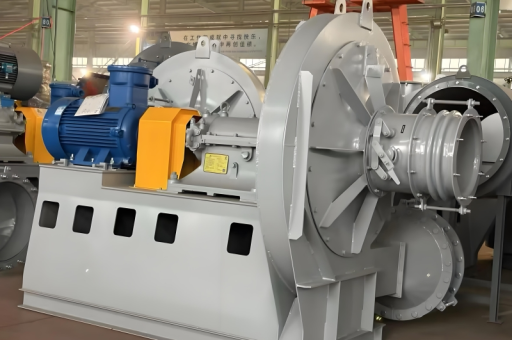
- Introduction: The Unseen Guardians of Hazardous Environments
- Why Standard Fans Fail: The Chemistry of Corrosion and Toxicity
- Engineering the Shield: Materials and Coatings for Corrosion Resistance
- Aerodynamic Design: Balancing Efficiency and Safety in Toxic Gas Flow
- Case Studies: Industrial Deployments of Corrosion Resistant Centrifugal Fans
- Frequently Asked Questions (FAQs)
- Conclusion: The Future of Safe Gas Handling
** The Critical Role of Corrosion Resistant Centrifugal Fans in Transporting Toxic Gases: Design, Safety, and Industrial Applications
Table of Contents
- Introduction: The Unseen Guardians of Hazardous Environments
- Why Standard Fans Fail: The Chemistry of Corrosion and Toxicity
- Engineering the Shield: Materials and Coatings for Corrosion Resistance
- Aerodynamic Design: Balancing Efficiency and Safety in Toxic Gas Flow
- Case Studies: Industrial Deployments of Corrosion Resistant Centrifugal Fans
- Frequently Asked Questions (FAQs)
- Conclusion: The Future of Safe Gas Handling
Introduction: The Unseen Guardians of Hazardous Environments
In industries ranging from chemical processing to wastewater treatment and semiconductor manufacturing, the safe transport of toxic gases is a non-negotiable operational priority. Corrosion resistant centrifugal fans serve as the mechanical lungs of these facilities, pulling acidic vapors, chlorine, hydrogen sulfide, or volatile organic compounds (VOCs) through ductwork and scrubbers. Unlike standard fans that would degrade within weeks, these specially engineered units withstand aggressive chemical attack while maintaining precise airflow control.
The global market for corrosion resistant fans is projected to grow at a CAGR of 4.8% through 2030, driven by stricter environmental regulations in the European Union, the United States, and China. For example, the EPA’s Clean Air Act mandates that any fan exhausting toxic gases must be constructed from materials that prevent leakage and structural failure. A single fan failure in a chlor-alkali plant could release deadly chlorine gas—a scenario that underscores why corrosion resistance is not merely a performance metric but a safety imperative.
Q: What defines a fan as "corrosion resistant" for toxic gases?
A: It must be fabricated from materials that chemically resist the specific gas composition, temperature, and humidity. Polypropylene (PP), PVDF, FRP (fiberglass-reinforced plastic), or Hastelloy alloys are typical. Additionally, seals and bearings must be isolated from gas streams.
Why Standard Fans Fail: The Chemistry of Corrosion and Toxicity
To appreciate the engineering of corrosion resistant centrifugal fans, one must first understand the failure modes of standard galvanized steel or aluminum fans. Toxic gases often combine with atmospheric moisture to form aggressive acids. For instance, hydrogen chloride (HCl) gas reacts with water vapor to form hydrochloric acid, which rapidly attacks carbon steel. Similarly, sulfur dioxide (SO₂) in humid conditions forms sulfurous acid (H₂SO₃), causing pitting corrosion that can crack impellers within 48 hours.
Standard fans also suffer from crevice corrosion under gaskets and stress corrosion cracking around welds. In centrifugal designs, the impeller’s high rotational speed (often >3,000 RPM) accelerates mechanical wear, exposing fresh metal surfaces to continuous chemical attack. A study by the American Society of Mechanical Engineers (ASME) found that 78% of unexpected fan failures in chemical plants between 2018–2023 were directly linked to corrosion.
Q: Why can’t we simply apply a paint coating to a standard fan?
A: Paint coatings chip under vibration and high velocity gas flow. Even pinhole-sized defects expose the underlying metal, leading to localized rapid failure—a phenomenon called “under-film corrosion.” For toxic gases, this creates dangerous leaks.
Engineering the Shield: Materials and Coatings for Corrosion Resistance
Modern corrosion resistant centrifugal fans are built using a hierarchy of material strategies, each tailored to the gas’s chemical nature:
-
Thermoplastic Construction (PP, PVC, CPVC, PVDF): Polypropylene (PP) fans are cost-effective for alkaline gases like ammonia, while PVDF excels in handling wet chlorine and bromine at temperatures up to 140°C. These materials are fusion-welded (not bolted) to eliminate metal-to-gas contact.
-
Fiberglass-Reinforced Plastic (FRP): FRP fans dominate hydrochloric acid and sulfuric acid mist applications. The resin matrix (vinyl ester or polyester) is laminated with glass fibers, providing tensile strength exceeding steel while being inert to most acids. A 3 mm FRP wall can outlast 10 mm of stainless steel in a hydrogen bromide environment.
-
Stainless Steel and High-Nickel Alloys: For extremely high temperatures (200°C–700°C) where thermoplastics soften, alloys like Hastelloy C-276 or AISI 316L are used. These metals form a passive oxide layer that regenerates if scratched—a self-healing property critical for continuous operation.
-
Rubber-Lined and Dual-Laminate Fans: A steel shell lined with 3–6 mm of chlorobutyl rubber, EPDM, or PTFE offers cost savings over solid alloy construction. However, debonding at edges remains a risk; ultrasonic testing every 6 months is recommended.
Q: What coatings are used on impellers?
A: Impellers—the rotating heart of centrifugal fans—often receive a high-performance baked epoxy or PTFE (Teflon) coating. Some manufacturers apply a Halarc® coating (a proprietary fluoropolymer) that withstands HF and phosphoric acid.
Aerodynamic Design: Balancing Efficiency and Safety in Toxic Gas Flow
Transporting toxic gases requires more than material resistance; the fan’s aerodynamic profile must minimize gas residence time, avoid dead zones where corrosive condensates pool, and prevent internal vortex shedding that could trigger resonant vibration.
- Backward-Curved Blades: Standard for toxic gas applications, these blades are less prone to dust accumulation (compared to forward-curved designs) and provide non-overloading power characteristics.
- Wear Plates and Sacrificial Liners: In gas streams containing solid particulates (e.g., incinerator exhaust), stainless steel wear plates are bolted inside the housing to protect the main shell. These are replaced periodically.
- Spiral Housing Design: A logarithmic spiral shape reduces turbulence and noise by 15% while ensuring smooth gas exit—vital when the discharge connects to a scrubber under negative pressure.
Q: How do you prevent toxic gas leaks from the fan shaft?
A: A double mechanical seal with pressurized barrier fluid is common. The barrier liquid (e.g., mineral oil or water) is maintained at 0.5–1.0 bar above the gas pressure, ensuring any leak is of barrier fluid inward, not toxic gas outward. Alternatively, magnetic drive couplings eliminate shaft penetration entirely for smaller fans.
Case Studies: Industrial Deployments of Corrosion Resistant Centrifugal Fans
Case 1: Chlorine Dioxide Exhaust in Pulp Bleaching
A Swedish paper mill replaced steel fans with solid PVDF centrifugal fans after experiencing bi-annual failures. The new fans, operating at 120°C with 5% chlorine dioxide (ClO₂, a potent oxidizer), have now run continuously for 4 years without degradation. Vibration monitoring showed less than 2.5 mm/s—well within safety limits.
Case 2: VOC Extraction in Semiconductor Fab
A Taiwanese chip manufacturer used FRP centrifugal fans to transport n-methylpyrrolidone (NMP) vapors at 180°C from lithography tools. The vinyl ester resin prevented solvent attack and cracking. The fan inlet was fitted with a PTFE mesh pre-filter to stop polymerized solids from impacting the impeller.
Case 3: Sulfuric Acid Mist in Mining
A copper smelter in Chile installed 440-volt rubber-lined centrifugal fans to pull 50,000 CFM of sulfuric acid mist (pH 1.2) from leaching tanks. The fan housing was dual-laminate: an outer steel jacket for structural support and an inner 6 mm chlorobutyl rubber layer. Annual inspection reports confirmed no rubber swelling or delamination after 3 years.
Q: What is the most common failure in FRP fans?
A: Corrosion at the vinylester-to-gelcoat interface due to thermal cycling. Engineers now specify woven glass fabric at the liner layer to resist micro-cracking.
Frequently Asked Questions (FAQs)
Q1: How do I size a corrosion resistant centrifugal fan for hydrochloric acid vapor?
A: Calculate the required static pressure (inches of water gauge) including duct losses, scrubber pressure drop, and the gas density. For HCl, use a safety factor of 1.25 to account for future gas temperature spikes. Select a PVDF or FRP fan with backward-curved blades.
Q2: Can I use a standard fan with a PTFE lining?
A: Only if the lining is continuous (no joints) and the fan operates below the material’s service temperature. PTFE softens at 260°C. Most failures occur at attachment points where the lining cracks. Solid thermoplastic construction is preferred for critical toxic gases.
Q3: How often should I inspect the fan?
A: For continuous duty with toxic gases, perform visual inspection every 3 months and ultrasonic thickness measurement every 6 months. For materials like FRP, check for “whitening” which indicates resin attack.
Q4: What is the difference between a corrosion resistant fan and a fan for flammable gases?
A: Corrosion resistant fans focus on chemical attack. Flammable gas fans (ATEX/IECEx certified) are designed to prevent spark generation using non-ferrous impellers and conductive coatings. Some toxic gases are also flammable—e.g., hydrogen sulfide—requiring both corrosion resistance and explosion-proof construction.
Q5: Are variable frequency drives (VFDs) safe for fans transporting toxic gases?
A: Yes, VFDs improve energy efficiency and allow controlled ramp-up to avoid gas backflow. Ensure the VFD is housed in a purged enclosure if located in a hazardous gas zone.
Conclusion: The Future of Safe Gas Handling
Corrosion resistant centrifugal fans are not a commodity product but a tailored safety component. As industries push towards higher process temperatures, zero-leakage legislation, and operation in explosive atmospheres, material science continues to evolve: nano-composite coatings, 3D-printed impellers from PEKK polymer, and real-time corrosion sensors embedded in FRP walls are emerging. The ultimate goal is a fan that not only resists corrosion but actively reports its structural integrity—a smart fan for the smart factory.
When specifying a fan for your toxic gas application, resist the temptation to optimize on initial capital cost. The cost of one failure—whether it’s a plant shutdown or an environmental fine—far exceeds the premium for a properly engineered corrosion resistant centrifugal fan. Remember: metal is heavy, but a safe fan is priceless.
For further technical guidance on selecting and sizing corrosion resistant centrifugal fans for toxic gases, consult the fan manufacturer’s engineering department or review the AMCA Standard 99 for corrosion-resistant equipment.





