
This article's table of contents introduction:
- Table of Contents
- Introduction: The Critical Role of High Pressure Boiler Fans
- What is a High Pressure Boiler Fan? (50-5000 kg Range)
- Key Specifications and Performance Metrics
- Industrial Applications: Where Are These Fans Used?
- Selection Criteria: How to Choose the Right Fan for Your Boiler System
- Installation Best Practices for High Capacity Fans
- Common Operational Issues and Troubleshooting
- Frequently Asked Questions (FAQs)
- Conclusion: Investing in Reliability and Efficiency
** The Ultimate Guide to High Pressure Boiler Fans (50-5000 kg): Industrial Applications, Selection, and Maintenance
Table of Contents
- Introduction: The Critical Role of High Pressure Boiler Fans
- What is a High Pressure Boiler Fan? (50-5000 kg Range)
- Key Specifications and Performance Metrics
- Industrial Applications: Where Are These Fans Used?
- Selection Criteria: How to Choose the Right Fan for Your Boiler System
- Installation Best Practices for High Capacity Fans
- Common Operational Issues and Troubleshooting
- Frequently Asked Questions (FAQs)
- Conclusion: Investing in Reliability and Efficiency
Introduction: The Critical Role of High Pressure Boiler Fans
In the heart of any industrial boiler system, whether it generates steam for power generation, process heating, or district heating, lies a critical piece of rotating equipment: the High Pressure Boiler Fan. These heavy-duty machines are not simple ventilation devices; they are the "lungs" of the combustion process, responsible for supplying the precise volume of air at the necessary pressure to ensure complete fuel combustion and efficient heat transfer.
For industrial operators, the stakes are high. A fan failure can lead to a complete boiler shutdown, causing production losses that can cost thousands of dollars per hour. The weight range of 50 kg to 5000 kg covers a vast spectrum of industrial needs—from small package boilers in food processing plants to massive utility boilers in power stations. This guide, synthesized from industry best practices, engineering guidelines, and real-world operational data, provides a comprehensive overview of these essential machines. We will explore their design, applications, selection criteria, and maintenance protocols to help you maximize uptime and efficiency.
Key Takeaway: A properly selected and maintained high pressure boiler fan is the cornerstone of boiler efficiency, safety, and reliability.
What is a High Pressure Boiler Fan? (50-5000 kg Range)
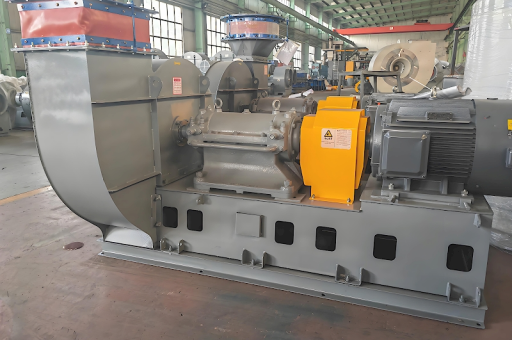
A High Pressure Boiler Fan is a type of industrial fan designed to move large volumes of air against a significant resistance (pressure) within a boiler system. Unlike standard ventilation fans, these units are engineered for continuous, heavy-duty service under harsh conditions, including high temperatures, particulate-laden air, and corrosive gases.
Weight Classification (50-5000 kg):
- 50 – 500 kg: Typically found in small to medium industrial boilers (e.g., coffee roasting, small breweries, or low-capacity steam generators). These are often direct-driven or belt-driven and are generally easier to install and maintain.
- 500 – 2000 kg: Common in medium to large process boilers, district heating plants, and larger package boilers. These units require substantial structural support, often have robust bearing systems, and may feature variable speed drives (VFDs) for precise control.
- 2000 – 5000 kg: Heavy-duty fans for large utility boilers, combined heat and power (CHP) plants, and steel manufacturing. These are massive, custom-engineered machines, often with double-inlet designs, water-cooled bearings, and wear-resistant liners.
Types by Function:
- Forced Draft (FD) Fan: Located at the front of the boiler, it pushes ambient air into the furnace to provide oxygen for combustion. It must overcome the pressure drop across the air heater, burner, and furnace chamber.
- Induced Draft (ID) Fan: Located at the back of the boiler, it pulls hot flue gases out of the furnace and through the pollution control equipment (ESP, baghouse) before expelling them up the stack. ID fans handle the most corrosive and abrasive environment, making their material selection critical.
- Primary Air (PA) Fan: Used in pulverized coal or biomass boilers to dry and transport fuel from the mill to the burner.
- Secondary Air (SA) Fan: Provides the remaining combustion air directly into the flame zone for complete burnout.
Design Features:
- Impeller: Backward-curved centrifugal impellers are standard for high pressure and efficiency. They are self-limiting (non-overloading) on power, preventing motor burnout.
- Housing: Heavy-gauge steel, often with AR (Abrasion Resistant) liners for ID fans. For high-temperature applications, the housing may be insulated or have a cooling air system.
- Shaft & Bearings: Large diameter shafts to minimize deflection. Bearings are typically spherical roller bearings, often with temperature sensors (RTDs) and vibration probes. For the 2000-5000 kg range, oil-lubricated or water-cooled bearings are standard.
Key Specifications and Performance Metrics
Understanding the core specifications is crucial for selection and troubleshooting. The performance of a high pressure boiler fan is defined by:
- Pressure (Static/Total): The resistance the fan must overcome, measured in Pa (Pascals), kPa (Kilopascals), or mmWG (millimeters of water gauge). High pressure for these fans typically ranges from 2000 Pa to over 15000 Pa.
- Flow Rate (Volume): The amount of air the fan moves, measured in m³/s, m³/h, or CFM (Cubic Feet per Minute). This is directly linked to boiler capacity and excess air requirement.
- Power (kW): The mechanical power required at the fan shaft. Calculated using the formula:
Power (kW) = (Flow × Pressure) / (1000 × Efficiency). This specification determines the motor size and electrical infrastructure needed. - Speed (RPM): Fan speed directly affects flow and pressure (Affinity Laws). Typical speeds for these heavy-duty fans range from 750 to 1500 RPM.
- Operating Temperature: Especially critical for ID fans, which handle hot flue gases (often 140°C – 200°C, and up to 400°C in some applications). Materials must be rated for thermal expansion and creep resistance.
- Weight (kg): Determines transportation, foundation requirements, and crane/handling equipment needs. A 5000 kg fan requires a reinforced concrete foundation and a large maintenance access pathway.
Important Note on the 50-5000 kg Range: A fan weighing 50 kg is likely a small, high-speed, direct-drive unit, while a 5000 kg fan is a massive, low-speed, belt-driven or direct-drive machine with a thick-walled housing. The installation, foundation, and vibration isolation requirements are vastly different.
Industrial Applications: Where Are These Fans Used?
The versatility of the High Pressure Boiler Fan (50-5000 kg) makes it indispensable across numerous heavy industries:
- Power Generation: Coal, gas, and biomass power plants rely on large FD and ID fans (2000-5000 kg) to maintain draft and combustion. ID fans in coal plants must be extremely robust to handle fly ash erosion.
- Cement & Lime: Kiln boilers require high-pressure fans for combustion air and for waste heat recovery systems. The dusty environment demands wear-resistant impellers and housings.
- Pulp & Paper: Recovery boilers and power boilers rely on large fans for chemical recovery and process steam generation. The corrosive nature of black liquor gases requires special alloy construction.
- Steel & Metals: Blast furnace gas boilers and electric arc furnace (EAF) off-gas systems use high pressure fans to handle high temperatures and abrasive particles.
- Food & Beverage: Smaller fans (50-500 kg) are used in steam boilers for cooking, sterilization, and cleaning processes. Reliability is key to meet strict production schedules.
- Oil & Gas / Petrochemical: Process heaters and reformers require precise air control. FD fans are often fitted with variable inlet vanes or VFDs for exact burner stoichiometry.
- District Heating & CHP: Medium-sized fans (500-2000 kg) provide combustion air for hot water or steam boilers that feed centralized heating networks.
Selection Criteria: How to Choose the Right Fan for Your Boiler System
Selecting the correct fan is a critical engineering decision. Following a systematic process ensures efficiency, longevity, and safety.
Step 1: Define the Duty Parameters
- Boiler capacity (kW or kg/h steam). This dictates the total air volume required.
- Excess air percentage. More air means larger fan volume.
- System resistance (Pressure drop). Calculate the sum of all pressure drops through the burner, air heater, ductwork, dampers, and furnace. A margin (e.g., 15-20%) should be added.
- Gas/air temperature. Use density correction to convert volume from actual to standard or vice versa.
Step 2: Fan Type Selection
- For clean, cold air (FD & SA): Backward-curved centrifugal or airfoil fans are optimal for high efficiency.
- For hot, dusty flue gas (ID): Paddle-wheel (radial) or backward-inclined fans with wear plates. Consider a "shrouded" design to protect the shaft from erosion.
- For fuel transport (PA): High static pressure with a sharp impeller design is required.
Step 3: Weight and Footprint Assessment (50-5000 kg)
- Lightweight (50-500 kg): Can be mounted on steel frames. May use a floating base with vibration isolators.
- Medium (500-2000 kg): Requires a reinforced concrete foundation. Check door and aisle widths for installation.
- Heavyweight (2000-5000 kg): Requires a deep, engineered concrete foundation. Ensure crane capacity (the fan alone may weigh 5000 kg before motor and base). Consider a dual-inlet design to reduce weight and footprint.
Step 4: Motor and Drive System
- Direct Drive: For high-speed applications (e.g., small PA fans). Lower efficiency at part load.
- Belt Drive: Allows speed changes. Easier maintenance. Used for most FD fans in the 500-2000 kg range.
- VFD (Variable Frequency Drive): The gold standard for modern boilers. Provides infinite turndown, soft start, and major energy savings (up to 30-40%) compared to damper control.
Step 5: Material Construction
- FD Fan: Carbon steel for typical applications. Stainless steel for corrosive environments (e.g., chlorinated fuels).
- ID Fan: Must use SS316 or higher alloy for temperatures above 300°C. For abrasive coal or biomass ash, apply ceramic tile or tungsten carbide hard-facing on the blade leading edges.
Installation Best Practices for High Capacity Fans
Improper installation is the leading cause of premature fan failure. Follow these guidelines for the 50-5000 kg range:
- Foundation: For fans above 2000 kg, use a concrete inertia base. The weight of the foundation should be at least 3-5 times the weight of the fan assembly. This reduces vibration transmission to the building.
- Alignment: Precision laser alignment between the motor and fan shaft is mandatory for belt drive or direct drive. Misalignment causes rapid bearing and coupling failure.
- Vibration Isolation: Use spring isolators for heavy fans (2000-5000 kg) and rubber pads for smaller units (50-500 kg). This protects the structure and reduces noise.
- Inlet & Outlet Ducting: Install a straight section of duct at the fan inlet (at least 1.5 times the diameter) to ensure uniform airflow. Avoid elbows directly at the fan inlet, as they cause turbulence, vibration, and performance loss.
- Access Platforms: For fans over 500 kg, install a dedicated maintenance platform with safe access to the bearings, lubrication points, and inspection doors.
Common Operational Issues and Troubleshooting
Issue 1: High Vibration
- Cause 1: Build-up of debris or dust on the impeller (especially ID fans).
- Solution: Schedule regular cleaning with a water spray or compressed air during shutdowns.
- Cause 2: Bearing wear/damage.
- Solution: Check vibration spectrum for 1x, 2x RPM peaks. Replace bearings every 3-5 years per OEM guidelines.
- Cause 3: Inlet duct distortion or resonance.
- Solution: Check for ductwork contact or structural looseness.
Issue 2: Overheating (Bearing or Motor)
- Cause 1: Over-greasing or under-greasing.
- Solution: Use correct grease type (e.g., high-temp for ID fans) and quantity. Follow the "purge and clean" method.
- Cause 2: Inadequate cooling (for 2000-5000 kg units with water-cooled bearings).
- Solution: Check water flow rate and temperature. Install a flow switch alarm.
Issue 3: Insufficient Air Flow
- Cause 1: Damper sizing or malfunction.
- Solution: Verify dampers are fully open. Consider replacing with VFD for better control.
- Cause 2: Impeller damaged (e.g., cracked blade from erosion).
- Solution: Inspect through access door. Repair or replace the impeller immediately.
Issue 4: Motor Overload
- Cause: Fan running faster than design (belt slip or incorrect VFD setting) or system resistance lower than expected (e.g., open stack without cleaning).
- Solution: Verify motor FLA using a clamp meter. Adjust VFD speed or replace pulley.
Frequently Asked Questions (FAQs)
Q1: What is the difference between a Forced Draft (FD) fan and an Induced Draft (ID) fan in terms of weight and construction? A: Typically, an ID fan for the same boiler capacity will be heavier (e.g., 3000 kg vs 2000 kg for an FD fan) because it is made from thicker steel or alloy to withstand hot, corrosive flue gases. ID fans also often run at lower speeds to minimize erosion, requiring a larger, heavier impeller.
Q2: How often should I replace the bearings on a 5000 kg high-pressure boiler fan? A: Standard industrial practice is every 25,000 to 40,000 operating hours or every 3-5 years, whichever comes first. However, if vibration levels rise above 4.5 mm/s RMS, or if operating temperature exceeds 85°C, you should investigate and potentially replace them sooner. Always follow the OEM manual.
Q3: Can I use a lightweight fan (50 kg) for a high-pressure boiler application? A: No. A 50 kg fan is typically designed for low-pressure ventilation or small combustion systems. For a boiler operating above 2000 Pa, you require a robust, heavy-duty centrifugal fan. Using a light fan will result in structural failure, blade fatigue, and unsafe operation. Always match the fan's weight and design to the required pressure and temperature.
Q4: What are the energy savings of using a VFD (Variable Frequency Drive) on a 2000 kg boiler fan? A: Significant. Boilers frequently operate at less than full load. A VFD allows the fan to run at a lower RPM, reducing power consumption cubically. For a 2000 kg fan that typically uses 250 kW, running at 80% speed can reduce power consumption to 128 kW (saving 122 kW). This results in a payback period of 12-18 months in many industrial settings.
Q5: What is the lifespan of a high pressure boiler fan wheel (impeller) in the 50-5000 kg range? A: It varies heavily by application. For a clean gas FD fan (e.g., natural gas), the impeller can last 10-15 years or more. For a high-dust ID fan (e.g., coal or biomass), the lifespan may be only 2-4 years before requiring hard-facing repair or replacement. Regular inspection and preventative maintenance (like balancing and cleaning) extend life.
Conclusion: Investing in Reliability and Efficiency
The High Pressure Boiler Fan (50-5000 kg) is not a commodity item; it is a precision-engineered component that directly impacts your facility's safety, production output, and energy costs. Whether you are selecting a compact 50 kg fan for a small package boiler or a massive 5000 kg fan for a utility-scale power plant, the principles remain the same: match the fan to the exact system resistance, prioritize robust construction (especially the impeller), and implement a proactive maintenance plan centered on vibration monitoring and bearing care.
Choosing a high-quality fan from a reputable OEM may involve a higher upfront capital cost, but the long-term savings in reduced downtime, lower energy bills, and fewer emergency repairs make it a sound investment. Remember that proper installation and ongoing maintenance are the keys to unlocking the full potential of your high pressure boiler fan, ensuring years of reliable, efficient service.
For more detailed technical specifications or to request a fan selection consultation, contact your local industrial fan supplier. Remember to always consult with a professional engineer for critical boiler applications.





