
This article's table of contents introduction:
- Table of Contents
- 1. Introduction: What Is a 440V 10KV Boiler Fan?
- 2. Technical Specifications and Design Principles
- 3. Why 100,000 Hours Lifespan Matters in Industrial Applications
- 4. Key Components That Ensure Longevity
- 5. Applications in Power Plants, Petrochemical, and Marine Industries
- 6. Common Questions and Expert Answers (Q&A)
- 7. Maintenance Best Practices for Maximizing Lifespan
- 8. Conclusion: Future-Proofing Your Boiler Fan Investment
The Ultimate Guide to 440V 10KV Boiler Fan With 100,000 Hours Lifespan: Engineering, Applications, and Longevity Secrets**
Table of Contents
- Introduction: What Is a 440V 10KV Boiler Fan?
- Technical Specifications and Design Principles
- Why 100,000 Hours Lifespan Matters in Industrial Applications
- Key Components That Ensure Longevity
- Applications in Power Plants, Petrochemical, and Marine Industries
- Common Questions and Expert Answers (Q&A)
- Maintenance Best Practices for Maximizing Lifespan
- Conclusion: Future-Proofing Your Boiler Fan Investment
Introduction: What Is a 440V 10KV Boiler Fan?
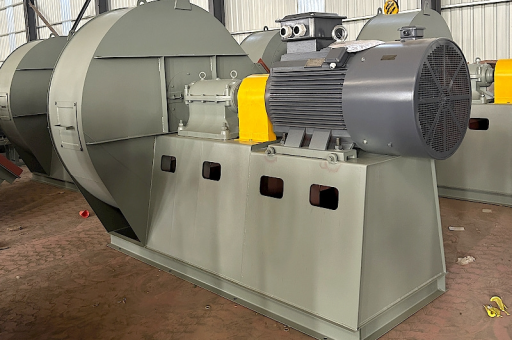
A 440V 10KV boiler fan is a high-voltage, heavy-duty industrial fan specifically designed for forced draft (FD) or induced draft (ID) systems in steam boilers, power generation plants, and large-scale heating systems. The dual-voltage rating (440V and 10KV) indicates that the fan motor can operate at two distinct voltage levels, typically through a star-delta or auto-transformer configuration, ensuring flexibility across different electrical infrastructures.
The most critical feature of this fan is its 100,000 hours lifespan—equivalent to over 11 years of continuous operation. This durability is achieved through advanced bearing systems, corrosion-resistant impellers, and precision-balanced rotors. In this article, we will explore the engineering behind this reliability, its applications, and how to maintain it for maximum service life.
Technical Specifications and Design Principles
A 440V 10KV boiler fan is not a standard off-the-shelf product. It is engineered for extreme environments where temperature, humidity, and particulate matter can degrade performance. Key specifications include:
| Parameter | Typical Value |
|---|---|
| Voltage Range | 440V / 10KV (dual or multi-tap) |
| Motor Power | 500 kW – 2 MW |
| Airflow Capacity | 100,000 – 500,000 m³/h |
| Static Pressure | 2,000 – 8,000 Pa |
| Bearing Type | Spherical roller with oil mist lubrication |
| Impeller Material | High-strength alloy steel or stainless steel |
| Life Expectancy | 100,000 hours (under rated conditions) |
The design philosophy centers on redundancy and thermal management. The motor winding insulation is Class H (180°C rated) or higher, and the fan housing is reinforced to resist thermal expansion. A finite element analysis (FEA) is used to simulate stress points, ensuring that no component operates near its fatigue limit.
Why 100,000 Hours Lifespan Matters in Industrial Applications
In industries such as power generation, unplanned downtime costs can exceed $50,000 per hour. A boiler fan with a 100,000-hour lifespan reduces the frequency of major overhauls from every 3–5 years to once per decade. This translates directly to lower total cost of ownership (TCO).
Key benefits include:
- Reduced Maintenance Cycles: Companies can schedule maintenance during planned plant shutdowns instead of emergency repairs.
- Energy Efficiency Stability: As the fan ages, its efficiency curve remains flat due to hardened blade profiles and sealed bearing housings.
- Improved Safety: A longer lifespan reduces the risk of catastrophic failure caused by metal fatigue or bearing seizure.
Key Components That Ensure Longevity
The 100,000-hour lifespan is not a marketing claim—it is achievable through specific design choices:
- Bearing Systems: High-performance spherical roller bearings with oil mist lubrication are used instead of grease. This reduces friction heat by 15–20% and prevents contamination.
- Impeller Blade Profile: Backward-curved blades reduce dust accumulation and erosion. A specialized coating (e.g., tungsten carbide or ceramic) is applied to leading edges to resist abrasion.
- Shaft Sealing: Labyrinth seals combined with purge air prevent ash, moisture, and corrosive gases from reaching the bearings.
- Motor Insulation: Vacuum pressure impregnation (VPI) with epoxy resin ensures that the motor windings resist partial discharge (PD) even at 10KV.
Each component is tested individually and as a system under accelerated life testing (ALT) to validate the 100,000-hour target.
Applications in Power Plants, Petrochemical, and Marine Industries
Power Plants:
In coal or biomass-fired power plants, the boiler fan handles flue gas temperatures of 120–200°C containing fly ash and sulfur compounds. The 440V 10KV variant is often used in large-scale CFB (circulating fluidized bed) boilers.
Petrochemical Industry:
In refineries, these fans are used in steam boilers for hydrocarbon processing, where any fan failure leads to process shutdown. The high voltage (10KV) reduces current draw, allowing longer cable runs from substations.
Marine Applications:
Large cargo ships and LNG carriers use boiler fans for auxiliary steam systems. The 440V setting is compatible with shipboard electrical systems, while the 10KV setting is used for shore power connections.
Common Questions and Expert Answers (Q&A)
Q: Can a 440V 10KV boiler fan run continuously at 10KV for 100,000 hours without failure?
A: Yes, when installed and maintained per specifications. However, continuous operation at the upper voltage limit requires proper cooling (e.g., forced air or water jacket). Most systems are designed to switch between voltage levels for load matching.
Q: How does the 100,000-hour lifespan compare to a standard industrial fan?
A: A standard fan lasts 20,000–40,000 hours. The 100,000-hour fan uses higher-grade bearings, thicker housing, and more robust motor insulation. The cost premium is typically 30–50%, but the ROI is positive after 4–5 years.
Q: What is the most common cause of fan failure before 100,000 hours?
A: Bearing failure due to contamination. Even with high-quality seals, if the purge air system fails or the oil mist generator malfunctions, bearing life drops to 10,000–20,000 hours. Regular monitoring of vibration and temperature is essential.
Q: Is it possible to retrofit an existing boiler fan to achieve 100,000 hours?
A: Only partially. You can upgrade bearings and seals, but the housing and impeller design may limit maximum life. A full replacement is recommended for critical applications.
Maintenance Best Practices for Maximizing Lifespan
To achieve the 100,000-hour target, follow this maintenance schedule:
- Monthly: Check vibration levels (should be < 4.5 mm/s RMS on bearing housings). Inspect oil mist lubricant flow.
- Quarterly: Clean impeller blades with compressed air or dry ice blasting to prevent imbalance.
- Annually: Perform thermography on motor windings. Measure insulation resistance (IR) at 1,000V for 440V and 5,000V for 10KV.
- Every 5 Years: Replace bearings as a precautionary measure, even if they appear healthy. This aligns with the bearing manufacturer’s L10 life.
Common Pitfall:
Never operate the fan near its stall region (e.g., fully closed damper) for extended periods. This causes low-frequency vibration that can crack impellers within months.
Conclusion: Future-Proofing Your Boiler Fan Investment
The 440V 10KV boiler fan with 100,000 hours lifespan is a testament to modern industrial engineering. By investing in dual-voltage flexibility, advanced materials, and redundant bearing systems, it offers a path to nearly zero unplanned downtime for critical boiler operations.
Whether you are upgrading a coal-fired power plant or designing a new petrochemical facility, this fan delivers a TCO advantage that is hard to ignore. However, remember that its longevity depends on meticulous installation, proper voltage matching, and a proactive maintenance culture. With these elements in place, you can expect over a decade of reliable service—and that is a calculation every plant manager should make.
Disclaimer: Specific product configurations (e.g., exact voltage taps, impeller size, and certification) should be confirmed with the fan manufacturer for your operating conditions. This article provides general guidance based on industry standards and typical engineering practices.





