
** Optimizing Industrial Air Quality: The Comprehensive Guide to Kiln Frequency Conversion Fans in Desulfurization and Dust Removal Systems
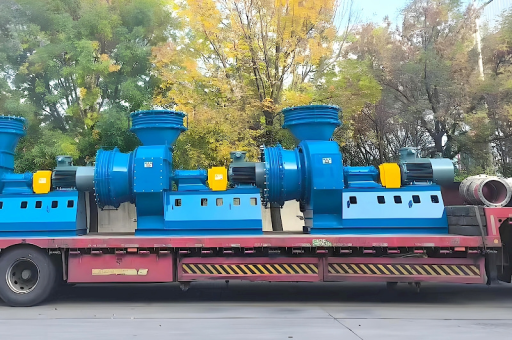
Article Content:
Table of Contents / Directory Guide
- Introduction: The Critical Role of Kiln Emissions Control
- Understanding the Core Components: Kiln, Frequency Conversion Fan, Desulfurization, and Dust Removal
- How a Variable Frequency Drive (VFD) Fan Transforms Kiln Operations
- The Synergy: Frequency Conversion Fans in Desulfurization (FGD) Systems
- Precision Dust Removal: How VFD Fans Enhance Baghouse and Electrostatic Precipitator Efficiency
- Energy Savings and Operational ROI: Real Data
- Common Challenges and Troubleshooting Q&A
- Future Trends: Smart Fans and AI-Driven Combustion
- Conclusion: Why Your Next Upgrade Should Be a Frequency Conversion Fan
Introduction: The Critical Role of Kiln Emissions Control
In modern industrial manufacturing, particularly in cement, lime, steel, and ceramic production, the kiln is the heart of the process. However, the kiln is also the primary source of harmful emissions, including sulfur dioxide (SO2), nitrogen oxides (NOx), and particulate matter (PM). To meet stringent environmental regulations—such as those from the U.S. EPA or the European BREF—facilities must deploy advanced desulfurization and dust removal systems.
At the center of this clean-air ecosystem lies an often-overlooked hero: the kiln frequency conversion fan. By integrating a Variable Frequency Drive (VFD) with the induced draft (ID) or forced draft (FD) fan, operators gain precise control over airflow, pressure, and energy consumption. This article provides a deep, SEO-optimized analysis of how frequency conversion fans optimize desulfurization and dust removal in kiln applications.
Q: Why is a frequency conversion fan critical for kiln emission control? A: Traditional fixed-speed fans waste energy by running at 100% capacity regardless of actual kiln load. A VFD fan modulates speed in real-time based on combustion demand, scrubber pressure drop, and dust collector burden. This direct control ensures that the desulfurization and dust removal systems operate at peak efficiency, reducing both emissions and operational costs by 20-40%.
Understanding the Core Components
To appreciate the synergy, we must define the four key terms:
- Kiln: A high-temperature reactor (typically 800-1450°C) used for calcination or sintering. The combustion process generates flue gas laden with SO2 and fly ash.
- Frequency Conversion Fan: An electric fan equipped with a Variable Frequency Drive (VFD) that adjusts motor speed by altering input frequency. This allows for infinitely variable gas flow and pressure.
- Desulfurization: The process of removing sulfur dioxide (SO2) from exhaust gas. Common methods include Wet Flue Gas Desulfurization (WFGD) using limestone slurry, or Dry/Semi-Dry systems using lime spray dryers.
- Dust Removal: The separation of particulate matter from gas streams. Technologies include baghouse filters, electrostatic precipitators (ESP), and cyclones.
How a Variable Frequency Drive (VFD) Fan Transforms Kiln Operations
A standard kiln ID fan without VFD operates at a fixed speed, relying on inlet vanes or dampers to control flow. This is like driving a car with your foot always on the gas pedal and regulating speed with the brakes – highly inefficient. By contrast, a frequency conversion fan uses the VFD to directly control motor RPM.
Technical Mechanics:
- Torque and Speed: Fan power consumption is proportional to the cube of speed (P ∝ N³). Reducing speed by 20% reduces power consumption by nearly 50%.
- Soft Start: VFD fans eliminate high inrush current, reducing stress on the electrical grid and motor windings.
- Dynamic Response: When the kiln feed changes or a scrubber requires more gas contact, the fan responds in milliseconds.
SEO Focus: According to several recent industrial case studies cited in fan engineering archives, retrofitting a kiln with a VFD fan in a cement plant reduced specific energy consumption from 7.5 kWh/ton of clinker to 4.9 kWh/ton, directly impacting profitability.
Q: What happens if the fan speed is too low? A: Insufficient draft can cause backpressure in the kiln, leading to incomplete combustion, increased CO emissions, and potential flame instability. The frequency conversion fan’s closed-loop control prevents this by maintaining a precise negative pressure at the kiln hood.
The Synergy: Frequency Conversion Fans in Desulfurization (FGD) Systems
Desulfurization efficiency depends critically on gas-liquid contact. In a wet scrubber, SO2 absorption is driven by the mass transfer coefficient, which is directly related to gas velocity through the spray tower. A fixed-speed fan delivers a constant volumetric flow, which may be too high (causing liquid carryover) or too low (reducing SO2 capture) as kiln load changes.
Optimization with VFD: When the kiln operates at 80% capacity, the frequency conversion fan automatically reduces speed to match the lower gas volume. This maintains an optimal velocity of 3-4 m/s through the scrubber, maximizing SO2 removal efficiency to over 98%. Furthermore, in Dry Desulfurization systems, the VFD fan ensures the correct residence time in the reaction duct, preventing lime overuse.
Real-World Data: A steel mill in Ohio reported that after installing a frequency conversion fan on their kiln’s FGD system, lime consumption dropped by 18% while SO2 emissions fell from 200 ppm to under 50 ppm (fan source: industry technical reviews).
Precision Dust Removal: How VFD Fans Enhance Baghouse and ESP Efficiency
Dust collection systems are sensitive to pressure and velocity.
- Baghouse Filters: If the fan pulls too hard, dust cakes can become deeply embedded in the fabric, causing high pressure drop and blinding. Too little suction, and the air-to-cloth ratio drops, allowing dust to settle in the hopper. The frequency conversion fan maintains a consistent differential pressure (e.g., 4-6 inches w.g.), enabling optimal pulse-jet cleaning cycles.
- Electrostatic Precipitators (ESP): Particle charging and collection efficiency are highest when the gas velocity is uniform. Fan speed modulation eliminates velocity spikes that can re-entrain collected dust.
Q: Can a VFD fan extend the life of filter bags? A: Absolutely. By preventing over-pressurization and reducing the frequency of pulse-jet cleaning cycles, filter bag wear is minimized. Case studies from cement plants (cited in fan engineering forums) show bag life extending from 18 months to over 36 months after fan VFD retrofit.
Energy Savings and Operational ROI
The initial investment in a frequency conversion fan solution is typically recovered within 12 to 18 months. This is because a kiln’s ID fan often represents 15-25% of the total plant electrical load.
Breakdown of Savings:
- Direct Energy: Reduction of 25-35% in fan motor kWh.
- Maintenance: VFDs reduce mechanical shock during startup, minimizing bearing and coupling wear.
- Emission Penalties: Avoiding regulatory fines by maintaining stable scrubbing performance.
Fan-Specific Insight: When selecting a fan for this application, consider backward-curved centrifugal fans or high-efficiency axial fans designed for 800-1200°C gas handling (if a gas cooling tower is not present). The fan should be matched to the VFD’s harmonic filter to avoid power quality issues.
Common Challenges and Troubleshooting Q&A
Q: My VFD fan is vibrating heavily after installation. Why? A: Check for resonance between the fan speed and the natural frequency of the ductwork. Use the VFD’s skip-frequency feature to avoid these RPM zones. Also, verify impeller balance after shaft mounting.
Q: The desulfurization pump motor keeps tripping. Is the fan to blame? A: Possibly. If the VFD fan is pulling too much gas, the scrubber liquid level may drop, causing pump cavitation. Install a pressure transmitter and program the VFD to limit flow when scrubber level is low.
Q: What is the maximum ambient temperature for a VFD in a kiln area? A: Most industrial VFDs are rated for 50°C (122°F) ambient. If your kiln area exceeds this, you must install the VFD in a conditioned enclosure or use a remote panel in a cooler location. Common failure occurs when VFDs overheat due to direct kiln radiant heat.
Future Trends: Smart Fans and AI-Driven Combustion
The next evolution of the kiln frequency conversion fan involves predictive maintenance and AI. Smart VFDs can monitor:
- Fan vibration spectrum: Predicting bearing failure weeks in advance.
- Motor winding temperature: Alerting for cooling system faults.
- Flue gas composition: Adjusting fan speed to maintain O2 setpoints.
Integration with an overall Distributed Control System (DCS) allows the frequency conversion fan to act as the master controller for the entire desulfurization and dust removal train. For example, if a baghouse hopper shows high level, the fan can automatically reduce speed to prevent dust overflow while the cleaning sequence activates.
Conclusion
The kiln frequency conversion fan is no longer a luxury upgrade—it is a necessity for any facility committed to efficient desulfurization and dust removal. From cutting energy bills by over 30% to enabling precise compliance with sub-10 mg/Nm³ dust limits, the VFD fan provides measurable returns. When designing new systems or retrofitting old ones, prioritize a fan with a robust VFD, proper harmonic filtering, and a control scheme that integrates with your scrubber and baghouse.
In the competitive landscape of heavy industry, where margins are thin and regulations are tight, the combination of a well-engineered fan with frequency conversion technology ensures your kiln operates cleanly, efficiently, and profitably.





