
This article's table of contents introduction:
- The Core Safety Hazard: Leakage & Ignition
- Critical Design & Component Features for High Safety
- Mandatory Safety Sub-Systems
- Regulatory & Certification Requirements (The "Safety Framework")
- Operational & Maintenance Safety Protocols
- Summary Checklist for a "High Safety" Combustible Gas Delivery Blower
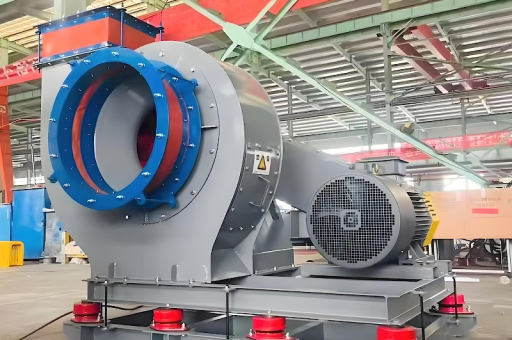
This is a critical piece of industrial equipment. A Combustible Gas Delivery High Pressure Blower handles a hazardous material (flammable gas) at elevated pressures. "High Safety" is not just a feature; it is the primary design requirement. Failure can lead to explosions, fires, and loss of life.
Here is a comprehensive breakdown of what "High Safety" means for this specific application, covering design features, regulatory standards, operational safeguards, and risk mitigation.
The Core Safety Hazard: Leakage & Ignition
The fundamental danger is the release of a combustible gas under pressure. This creates a flammable atmosphere. An ignition source (heat, spark, static electricity) then causes an explosion or fire.
Therefore, a "High Safety" system is designed with three pillars:
- Containment: Preventing any gas from leaking out.
- Elimination of Ignition Sources: Ensuring no spark or hot surface can ignite the gas.
- Overpressure Protection: Preventing catastrophic mechanical failure from over-pressurization.
Critical Design & Component Features for High Safety
A standard blower is unacceptable. A high-safety unit must incorporate the following:
| Feature | Purpose & Safety Benefit |
|---|---|
| Gas-Tight / Hermetically Sealed Construction | Eliminates all dynamic shaft seals (the most common leak point). Uses magnetic couplings or canned motor designs. No gas can escape to the atmosphere. |
| Explosion-Proof Motor & Wiring | Motor enclosure (e.g., Class I, Division 1) contains any internal ignition. Conduit seals prevent flame propagation. All electrical components are rated for hazardous locations (e.g., ATEX, IECEx, NEC 500). |
| Sparkless Impeller / Rotor | Impeller made from non-ferrous material (e.g., aluminum bronze, stainless steel) or coated to prevent sparking. Tight clearances to prevent metal-to-metal contact. |
| Casing Material (Ductile Iron / Steel) | Casting must be strong enough to withstand max allowable working pressure (MAWP) and pressure surge. Must be non-porous to prevent gas permeation. |
| Purging & Pressurization System (XP or Purging) | For larger motors, an internal purge system removes any accumulated gas before startup and maintains positive internal pressure to keep gas out. |
| Temperature Monitoring (RTDs / Thermocouples) | Embedded sensors on bearings, motor windings, and discharge casing. Alarms for high temperature (a sign of friction, bearing failure, or gas compression heat) and automatic shutdown at danger threshold. |
| Vibration Monitoring | Proximity probes on bearings. High vibration indicates impeller imbalance, bearing wear, or surge, which can lead to catastrophic failure and sparks. |
Mandatory Safety Sub-Systems
Beyond the blower itself, the installation is just as critical.
- Pressure Relief Valve (PRV) / Safety Valve: Installed on the discharge side. Set below the MAWP of the blower and downstream piping. If the discharge valve is closed or blocked, the PRV opens to vent gas to a safe location (e.g., flare, vent stack).
- Minimum Flow Bypass (Anti-Surge): A recirculation line with a control valve. Ensures the blower never operates below its minimum flow point (surge condition). Surge causes violent pressure fluctuations, mechanical damage, and high heat.
- Reverse Flow Prevention (Check Valve): Installed on the discharge line. Prevents high-pressure gas from flowing backward into the blower when it stops (which can cause the impeller to spin backwards and potentially ignite).
- Emergency Shutdown (ESD) System: A hard-wired, independent safety system that triggers on any critical fault (gas detection, high temperature, high vibration, loss of purge air, fire alarm). It cuts power to the blower motor and isolates it with emergency block valves (EIVs).
- Gas Detection (LEL Sensors): Located in the blower enclosure, motor compartment, and adjacent area. Set to alarm at 10% Lower Explosive Limit (LEL) and shutdown at 20-25% LEL.
Regulatory & Certification Requirements (The "Safety Framework")
A "High Safety" blower is not just engineered; it is certified. Look for these marks and standards:
- ATEX (Europe): Certification for equipment in potentially explosive atmospheres. Component marking (e.g., II 2G Ex h IIB T3 Gb).
- IECEx (International): Global certification for explosive atmospheres.
- NEC 500 / 505 (USA): Class I, Division 1 or Zone 1 / Zone 0 (for the gas path).
- API 614 (Lubrication Systems) & API 617 / ISO 13709 (Centrifugal Compressors/Blowers): Widely used standards for critical, high-reliability rotating equipment in oil & gas.
- ISO 13849 or IEC 61508 (Functional Safety): For the control and safety system (ESD). Performance Level (PL) or Safety Integrity Level (SIL) rating.
Important: The certification must cover the gas path (impeller, casing) which is Zone 0 (continuous hazard), and the motor/drive which is typically Zone 1 or 2.
Operational & Maintenance Safety Protocols
Safety doesn't stop at the design phase.
- Pre-Startup Safety Review (PSSR): Mandatory checklist before first operation.
- Leak Testing: Regular pressure decay tests and sniffer checks on all flanges and seals.
- LOTO (Lockout/Tagout): Strict procedures to ensure the blower is isolated and de-energized before maintenance. Never open a combustible gas blower unless it has been purged with inert gas (e.g., Nitrogen) and verified gas-free.
- Bearing & Seal Monitoring: Continuous tracking of temperature, vibration, and seal condition. Predictive maintenance is essential.
- Training: Operators and maintenance staff must be certified in handling flammable gas systems and understand the specific safety interlocks.
Summary Checklist for a "High Safety" Combustible Gas Delivery Blower
| Area | Must Have |
|---|---|
| Leak Prevention | Hermetic seal (magnetic drive/canned motor). Gas-tight flanges/gaskets. |
| Ignition Source Control | Sparkless impeller. Explosion-proof motor (Class I, Div 1). Grounding (bonding) of all components. |
| Overpressure Protection | ASME/ISO rated casing. Pressure Relief Valve. Minimum flow bypass. |
| Monitoring & Control | Temperature (RTDs), Vibration (probes), Gas Detection (LEL). Hardwired ESD. |
| Certification | ATEX / IECEx / NEC Class I, Division 1. SIL rating for safety system. |
| Installation | Isolated location or enclosure with forced ventilation. Grounding. Emergency isolation valves. |
Bottom Line: A "High Safety" Combustible Gas Delivery High Pressure Blower is not a standard piece of equipment. It is an engineered, certified safety system. If you are sourcing or operating one, ensure you work with a reputable manufacturer specializing in hazardous location equipment (e.g., Roots, Gardner Denver, Dresser-Rand, certain European OEMs) and that your entire installation meets the strictest local and international codes (API, ATEX, NEC). Cost-cutting on safety in this application is potentially catastrophic.





