
This article's table of contents introduction:
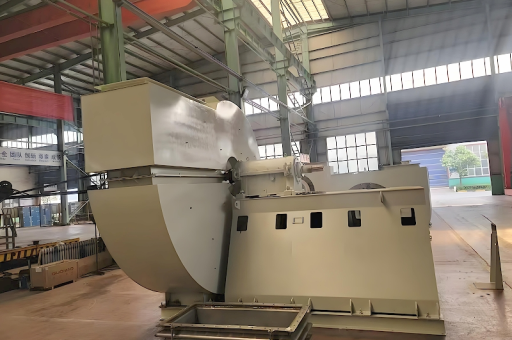
- Introduction to Induced Draft Fans in Industrial Dust Collection
- Why Choose a 160kW Centrifugal Fan for High-Volume Dust Control?
- Key Technical Specifications and Performance Parameters
- Design Features That Enhance Reliability and Longevity
- Installation Considerations for Maximum Airflow Efficiency
- Common Application Scenarios in Heavy Industries
- Frequently Asked Questions (FAQ)
- Conclusion: Selecting the Right Fan for Your Operation
** Maximizing Efficiency with a 160kW Induced Draft Fan for Industrial Dust Collector Centrifugal Systems
Table of Contents
- Introduction to Induced Draft Fans in Industrial Dust Collection
- Why Choose a 160kW Centrifugal Fan for High-Volume Dust Control?
- Key Technical Specifications and Performance Parameters
- Design Features That Enhance Reliability and Longevity
- Installation Considerations for Maximum Airflow Efficiency
- Common Application Scenarios in Heavy Industries
- Frequently Asked Questions (FAQ)
- Conclusion: Selecting the Right Fan for Your Operation
Introduction to Induced Draft Fans in Industrial Dust Collection
In modern industrial environments, controlling airborne particulates is not just a regulatory requirement—it is a critical factor for worker safety, equipment longevity, and process efficiency. The 160kW Induced Draft Fan for Industrial Dust Collector Centrifugal system plays a pivotal role in creating the necessary negative pressure to extract dust-laden air from production areas. Unlike forced draft fans that push air into a system, induced draft fans pull air through the dust collector, allowing for efficient filtration and clean air discharge.
The centrifugal design is particularly favored for its ability to generate high static pressure while maintaining stable airflow, even against the resistance of filter bags, cartridges, or scrubbers. When powered by a 160kW motor, these fans can handle large volumetric flow rates—typically ranging from 80,000 to 150,000 m³/h depending on system design—making them ideal for steel mills, cement plants, woodworking facilities, and chemical processing units.
Why Choose a 160kW Centrifugal Fan for High-Volume Dust Control?
A common question from facility engineers is: “Why not use multiple smaller fans instead of one 160kW unit?” The answer lies in energy efficiency, footprint, and maintenance simplicity. A single high-power 160kW Induced Draft Fan for Industrial Dust Collector Centrifugal reduces electrical infrastructure complexity, minimizes ductwork losses, and centralizes control. Moreover, modern variable frequency drives (VFDs) allow precise speed modulation, so the fan operates only at the required capacity, saving up to 35% energy compared to fixed-speed alternatives.
Centrifugal fans operate on the principle of converting kinetic energy from rotating impeller blades into pressure energy. In induced draft configuration, the fan is placed after the dust collector, pulling air through the filter media. This arrangement protects the fan blades from heavy particulate impact, extending impeller life.
Key Technical Specifications and Performance Parameters
To evaluate whether a 160kW Induced Draft Fan for Industrial Dust Collector Centrifugal meets your requirements, review these critical data points:
- Motor Power: 160 kW (typically 415V or 690V, 3-phase)
- Airflow Range: 80,000 – 150,000 m³/h
- Static Pressure: 3000 – 6000 Pa (dependent on filter resistance)
- Impeller Diameter: 1800 – 2500 mm
- Max Operating Temperature: 80°C (standard), up to 250°C with special alloys
- Noise Level: 85 – 95 dB(A) (with silencer options)
- Efficiency: 78% – 85% at design point
Performance curves must be matched to the dust collector’s pressure drop curve. An oversized fan wastes energy; an undersized fan fails to maintain proper negative pressure. Always commission a system resistance calculation before selecting the fan.
Design Features That Enhance Reliability and Longevity
Industrial dust collection fans operate continuously in harsh environments. The 160kW Induced Draft Fan for Industrial Dust Collector Centrifugal incorporates several engineering upgrades:
- Backward-Curved Blades: Offer non-overloading power characteristics—motor current drops if the system resistance decreases, preventing motor burnout.
- Heavy-Duty Bearing Assembly: Double-row spherical roller bearings with continuous grease lubrication or oil bath systems for extended service intervals.
- Wear Liners: Replaceable plates on the housing at the impeller periphery protect against abrasive particle erosion.
- Shaft Seal Systems: Labyrinth or carbon ring seals prevent dust leakage along the shaft, reducing bearing contamination.
- Vibration Monitoring Ports: Standard provision for accelerometer installation, enabling predictive maintenance.
Many operators report that with proper maintenance, these fans exceed 50,000 hours of uninterrupted operation before major overhaul is needed.
Installation Considerations for Maximum Airflow Efficiency
Correct installation directly impacts fan performance. For the 160kW Induced Draft Fan for Industrial Dust Collector Centrifugal, follow these guidelines:
- Suction Duct Design: Keep the inlet duct straight for at least 3 times the fan inlet diameter to ensure uniform airflow into the impeller.
- Discharge Ducting: Avoid sharp elbows within 5 diameters of the fan outlet; use gradual transitions to minimize pressure loss.
- Foundation Isolation: A reinforced concrete base with vibration isolators reduces noise transmission and structural fatigue.
- Flexible Connections: Install expansion joints at both inlet and outlet to prevent duct stresses from transmitting to the fan casing.
- Access Platforms: Ensure adequate clearance for bearing replacement, impeller inspection, and motor removal.
“What happens if the fan is installed with insufficient inlet straight ducting?” Performance can drop by 10–15% due to turbulent inlet flow, causing increased vibration and premature bearing failure.
Common Application Scenarios in Heavy Industries
The 160kW Induced Draft Fan for Industrial Dust Collector Centrifugal is deployed across diverse sectors:
- Cement Manufacturing: Extracting kiln dust and raw mill emissions, often handling high-temperature, abrasive particulate.
- Steel Production: Collecting fumes from electric arc furnaces, converters, and sinter plants where gas volumes are enormous.
- Wood Processing: Managing fine sawdust and shavings from MDF lines, sanders, and chippers.
- Chemical Processing: Ventilation of reactor vessels, drying operations, and powder handling systems requiring explosion-proof construction.
In each case, the fan must be matched not only to airflow and pressure but also to the chemical and thermal properties of the gas stream.
Frequently Asked Questions (FAQ)
Q1: Can a 160kW Induced Draft Fan run continuously at full speed?
A: Yes, the fan is designed for continuous duty. However, using a VFD to modulate speed based on real-time pressure requirements dramatically reduces energy consumption and motor wear.
Q2: What is the typical lifespan of impeller blades?
A: With standard carbon steel blades in moderate dust conditions, 3–5 years. In highly abrasive environments, upgrade to Hardox or ceramic-coated impellers to extend life to 8 years.
Q3: How often should bearing lubrication be performed?
A: Every 1,000 operating hours for grease-lubricated bearings, or monitored via oil level sight glass in oil bath systems. Most manufacturers recommend bearing replacement at 20,000 hours.
Q4: Is the fan suitable for explosion-proof environments?
A: Yes, provided the fan is constructed with non-sparking materials (aluminum or bronze impeller) and the motor is rated for hazardous zones (ATEX or NEC Class I/II).
Q5: What is the difference between induced draft and forced draft in dust collectors?
A: Induced draft fans pull air through the collector, placing the fan on the clean air side. Forced draft fans push air into the collector, subjecting the fan to dirty, abrasive airstreams. Induced draft is preferred for high-dust applications.
Conclusion: Selecting the Right Fan for Your Operation
The 160kW Induced Draft Fan for Industrial Dust Collector Centrifugal represents a powerful, reliable solution for large-scale dust management. Its backward-curved impeller design, heavy-duty construction, and ability to integrate with VFD control make it a cornerstone of modern industrial ventilation systems. To achieve optimal performance, always pair the fan with a properly designed dust collector, ensure correct ductwork layout, and adhere to a preventive maintenance schedule.
When evaluating suppliers, request certified performance curves, material certifications, and field service references. A well-selected fan not only complies with environmental regulations but also reduces downtime and operational costs over its service life. If you need assistance in sizing a 160kW induced draft fan for your specific application, consult with an experienced ventilation engineer who can model your system resistance and recommend the ideal fan configuration.





