
This article's table of contents introduction:
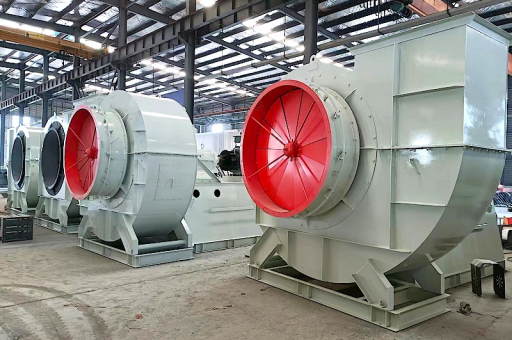
- What is a Y4-73 Desulfurization ID Fan?
- Key Specifications & Technical Details
- Critical Operational & Maintenance Considerations
- Common Applications
- Safety Warnings
- Summary Table
This is a highly specific query regarding an industrial fan. Based on the parameters you provided—440V / 660V voltage, Desulfurization (FGD) application, Induced Draft (ID) function, and the Y4-73 model—here is a breakdown of what this fan is, its specifications, and critical operational details.
What is a Y4-73 Desulfurization ID Fan?
This is a centrifugal fan specifically designed for Induced Draft (ID) service in thermal power plants or industrial boilers, explicitly for the Flue Gas Desulfurization (FGD) system. It pulls the hot, corrosive, and particulate-laden flue gas from the absorber tower (scrubber) and exhausts it to the chimney or downstream equipment.
The Y4-73 is a standardized Chinese industrial fan series (often referred to as a "boiler induced draft fan" or "soot blower fan").
Key Specifications & Technical Details
-
Voltage (440V / 660V):
- This indicates a dual-voltage or dual-speed motor configuration, common in heavy industrial applications.
- 440V: Often used in regions with 50Hz systems (e.g., parts of Asia, Middle East) or for specific motor designs.
- 660V: Common in high-power, low-current applications to reduce cable size and switchgear costs (e.g., 50Hz or 60Hz industrial systems).
- Note: A 440V/660V motor typically has a winding configuration that can be wired in Star (660V) or Delta (440V) configuration. For example, for a 440V supply, the motor is wired in Delta; for a 660V supply, it's wired in Star. You must match the winding configuration to the actual supply voltage.
-
Y4-73 Model Designation:
- Y: Impeller type (e.g., Y4-73 uses backward-curved, hollow blades for high efficiency and strength).
- 4: Specific performance coefficient.
- 73: Pressure coefficient.
- Number after 73 (e.g., Y4-73-11 No. 16D): Indicates the impeller diameter in decimeters (e.g., No. 16D = 1600mm impeller).
-
Desulfurization (FGD) Application:
- Corrosion Resistance: The fan handles highly corrosive gases (SOx, HCl, HF) and high moisture content. Materials are critical:
- Usually made of Carbon Steel with thick FRP (Fiber-Reinforced Plastic) lining, Stainless Steel (e.g., 316L, 904L), or Duplex Stainless Steel for the impeller and casing.
- The casing and inlet box are often rubber-lined or coated with high-temperature epoxy.
- Erosion Protection: Flue gas contains fly ash. The impeller blades may have wear-resistant coatings or hard-facing (e.g., tungsten carbide overlay).
- Sealing: Shaft sealing is critical to prevent leakage of toxic, acidic gas. Common options: Gland packing with clean water flushing or mechanical seals.
- Corrosion Resistance: The fan handles highly corrosive gases (SOx, HCl, HF) and high moisture content. Materials are critical:
-
Induced Draft (ID) Function:
- Location: Downstream of the scrubber (or baghouse/ESP).
- Duty: It operates under negative pressure and handles large volumes of gas at temperatures typically between 80°C and 120°C (after scrubber, gas is cool and saturated).
- Power: Very high power consumption (often hundreds of kW to 2+ MW depending on the plant size).
Critical Operational & Maintenance Considerations
- Vibration Monitoring: ID fans are prone to impeller imbalance due to erosion, corrosion, or fly ash build-up (even after a scrubber). Continuous vibration monitoring (probes on bearing housings) is mandatory.
- Bearing Lubrication: Heavy-duty bearings (often grease-lubricated or oil-lubricated with oil mist). Use high-temperature grease (e.g., lithium complex) suitable for the fan's operating temperature.
- Drainage: The casing must have a bottom drain (plug or valve) to remove condensed moisture and acidic water that accumulates during startup/shutdown.
- Blade Cleaning: Periodic compressed air or steam cleaning (via installed ports) is often necessary to remove sticky, corrosive deposits from the impeller blades.
- Motor Protection: Due to the high inertia of the fan, the motor must have proper thermal overload and phase failure protection. Soft-starters or VFDs are strongly recommended to reduce mechanical stress on the fan and motor windings.
- Inlet Dampers: Most Y4-73 ID fans use axial inlet guide vanes (variable vanes) to control airflow efficiently.
Common Applications
- Coal-Fired Power Plants: For scrubber exhaust.
- Cement Plants: For kiln exhaust in wet scrubber systems.
- Steel Mills: For sinter plants or blast furnace gas treatment.
- Chemical Plants: For processes involving SOx/HCl scrubbing.
Safety Warnings
- Toxic Gas: The gas handled is acidic, poisonous (SOx, NOx), and often contains heavy metals. Never operate with leaking seals.
- Hot Surfaces: Bearings and casing can be hot. Install thermal guards.
- Electrical Safety: For the 440V/660V motor, ensure the star/delta connection matches your supply voltage exactly. Incorrect wiring can destroy the motor instantly.
Summary Table
| Parameter | Typical Value / Specification for Y4-73 FGD ID Fan |
|---|---|
| Type | Centrifugal, Backward-Curved Blades |
| Model | Y4-73 |
| Application | Induced Draft (ID) for FGD system |
| Voltage Options | 440V (Delta) / 660V (Star) |
| Gas Handled | Saturated, acidic flue gas (SOx, HCl, moisture) |
| Materials | SS316L, Duplex SS, Carbon Steel + Rubber/FRP lining |
| Control | Inlet guide vanes (axial), VFD (optional) |
| Critical Issues | Erosion, Corrosion, Vibration from imbalance |
Do you need a specific datasheet, performance curve, or help selecting the correct impeller material for your flue gas composition?





