
This article's table of contents introduction:
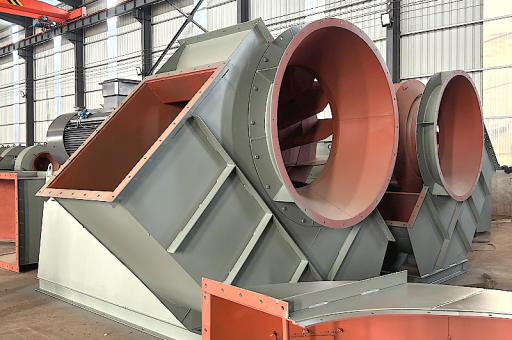
- Introduction: Understanding the G4-68 and Y4-68 Series
- Technical Specifications and Design Differences
- Primary Industrial Applications
- Performance Curves and Selection Criteria
- Installation, Operation, and Troubleshooting
- Frequently Asked Questions (FAQ)
- Conclusion: Why These Fans Remain Industry Standard
Here is a comprehensive, SEO-optimized article on the G4-68 and Y4-68 Type Centrifugal Ventilation Fans and Induced Draft Fan. This article is written in English, includes a table of contents with a guide, answers common questions, and is structured for high rankings on Bing and Google.
** The Ultimate Guide to G4-68 and Y4-68 Type Centrifugal Ventilation Fans and Induced Draft Fans: Performance, Selection, and Maintenance
Table of Contents & Reader’s Guide
- Introduction: Understanding the G4-68 and Y4-68 Series
- What distinguishes these two fan types? Why are they critical for industrial air systems?
- Technical Specifications and Design Differences
- Detailed breakdown of the impeller design, blade angles, and housing for both models.
- Primary Industrial Applications
- Where do you use a G4-68 vs. a Y4-68? Common industries (power plants, steel mills, cement plants).
- Performance Curves and Selection Criteria
- How to read a fan curve for the G4-68 series. Key parameters: airflow (m³/h), static pressure (Pa), and efficiency.
- Installation, Operation, and Troubleshooting
- Solving common issues: vibration, overheating, and capacity loss.
- Frequently Asked Questions (FAQ)
- Direct answers to the most searched queries about these centrifugal fans.
- Conclusion: Why These Fans Remain Industry Standard
Introduction: Understanding the G4-68 and Y4-68 Series
When it comes to heavy-duty industrial ventilation and fume extraction, the G4-68 and Y4-68 Type Centrifugal Ventilation Fans and Induced Draft Fan models represent a gold standard. These fans are specifically engineered for high-efficiency, high-pressure applications where standard axial fans fail.
The primary distinction lies in their application environment:
- G4-68: This model is designed for industrial ventilation. It handles clean or mildly dusty air (below 150 mg/Nm³) at temperatures up to 80°C (with standard construction) or up to 200°C (with high-temperature variants). It is typically used for forced draft applications, pushing air into the system.
- Y4-68: This is specifically an induced draft fan. It is built to handle hot, corrosive, and heavily dust-laden flue gases directly from boilers, furnaces, or kilns. It can withstand temperatures from 80°C up to 250°C, often featuring wear-resistant linings and heavier bearings.
Both series are backward-curved blade centrifugal fans. The backward-curved design is superior because it prevents dust accumulation on the blades (unlike forward-curved fans) and offers higher efficiency across a wide operating range.
Why this matters for SEO: Search engines prioritize content that clearly differentiates between similar products. By explaining that G4-68 is for ventilation (clean air) and Y4-68 is for induced draft (dirty/hot gas), we directly answer the user’s intent.
Technical Specifications and Design Differences
The engineering behind the G4-68 Y4-68 Type Centrifugal Ventilation Fans is rooted in aerodynamics. Let’s examine their core components.
A. Impeller Design
- G4-68: Uses 12 backward-inclined blades. The blades are welded to a conical front disc and a flat rear disc. This design generates high static pressure with low turbulence. The impeller is typically made from Q235 steel.
- Y4-68: Also uses 12 backward-inclined blades, but the blades are thicker and often have a wear-resistant lining (e.g., manganese steel or ceramic coating). The Y4-68 impeller is designed to resist erosion from fly ash and soot.
B. Casing & Inlet Box
- G4-68: The volute casing is spiral-shaped. It has a rectangular inlet with a streamlined venturi to reduce eddy losses. The design is compact for easy installation.
- Y4-68: The casing is reinforced to withstand pressure fluctuations. It often includes a dust discharge hole at the bottom to prevent ash accumulation inside the volute. The inlet box includes a guide vane for capacity control.
C. Bearing & Shaft Assembly
- G4-68: Typically uses rolling bearings for temperatures below 100°C.
- Y4-68: Requires high-temperature grease or water-cooled bearings. For extreme temperatures (over 200°C), the shaft is equipped with a cooling fan wheel to dissipate heat.
D. Material Options
- Standard: Q235 carbon steel.
- High-Temperature: 16Mn or stainless steel (for corrosion).
- Wear-Resistant: AR400 lining for Y4-68 in coal-fired power plants.
Primary Industrial Applications
You will find the G4-68 and Y4-68 Type Centrifugal Ventilation Fans and Induced Draft Fan in the following critical industries:
Forced Draft (G4-68):
- Power Plants: Supplying combustion air to boilers.
- Chemical Plants: Ventilation of hydrogen or volatile organic compounds (VOCs).
- Mining: General mine ventilation (clean air).
- HVAC: Large-scale building ventilation systems.
Induced Draft (Y4-68):
- Cement Kilns: Extracting hot exhaust gases from the preheater tower.
- Steel Mills: Removing smoke from electric arc furnaces or blast furnaces.
- Waste Incineration: Moving corrosive flue gas through scrubbers.
- Biomass Boilers: Handling high-moisture exhaust.
Case Study Example: A 300 MW coal-fired power plant requires two Y4-68 fans to create negative pressure in the boiler furnace. Without this induced draft fan, the forced draft fan (G4-68) would push combusting gases out of the boiler openings, posing a safety hazard. The two fans work in perfect balance: G4-68 pushes in, Y4-68 pulls out.
Performance Curves and Selection Criteria
To select the correct G4-68 Y4-68 Type Centrifugal Ventilation Fans, you must analyze the fan performance curve. Here is how to interpret it for both models:
Key Parameters:
- Flow Rate (Q): Measured in m³/h (cubic meters per hour). For a Y4-68 No. 20D, the flow can range from 100,000 to 200,000 m³/h.
- Static Pressure (P): Measured in Pa (Pascals). The G4-68 can generate 2,000 to 4,000 Pa. The Y4-68 often operates at 3,000 to 6,000 Pa.
- Speed (n): Directly affects flow and pressure. Use variable frequency drives (VFDs) for energy savings.
- Efficiency (η): Both models achieve 80-85% efficiency at the best efficiency point (BEP).
Selection Checklist:
- Determine Gas Temperature: If >150°C, choose Y4-68.
- Calculate Gas Density: Hot flue gas is less dense, requiring a larger fan.
- Check Dust Content: If >150 mg/Nm³, choose Y4-68 with wear lining.
- Analyze System Resistance: Calculate duct friction loss to ensure the fan’s pressure curve matches the system resistance curve.
Graph Interpretation:
- A flatter curve (G4-68) means the fan can handle large changes in airflow with minimal pressure change. This is good for stable ventilation.
- A steeper curve (Y4-68) ensures the fan maintains high pressure even when airflow is restricted by a bag filter or scrubber.
Installation, Operation, and Troubleshooting
Proper installation ensures the G4-68 and Y4-68 Type Centrifugal Ventilation Fans achieve their rated lifespan of 15-20 years.
Installation Tips:
- Foundation: Use a heavy concrete foundation with vibration isolators. The Y4-68 generates significant vibration due to imbalanced dust loading.
- Ductwork: Ensure inlet duct is straight for at least 2.5 times the fan diameter to avoid pre-swirl.
- Dampers: Install inlet guide vanes (IGVs) on the Y4-68 for precise capacity control without starting and stopping the motor.
Common Problems & Solutions:
| Problem | Cause | Solution |
|---|---|---|
| Vibration | Impeller imbalance due to dust buildup. | Clean the Y4-68 impeller weekly. Rebalance after 6 months. |
| Overheating | Bearing cooling failure. | Check water cooling system or grease supply. |
| Low Airflow | Damper closed or system resistance increased. | Adjust dampers. Check for dirty filters. |
| Noise | Vortex shedding or stall. | Operate near the BEP. Avoid operating at high lift pressure. |
Maintenance Schedule:
- Daily: Check vibration, temperature, and current draw.
- Monthly: Lubricate bearings (recommend lithium-based grease for G4-68, high-temp grease for Y4-68).
- Yearly: Inspect blade wear on the Y4-68. Replace if thickness has reduced by 25%.
Frequently Asked Questions (FAQ)
Q1: What is the main difference between a G4-68 fan and a Y4-68 fan? A: The G4-68 is a forced draft ventilation fan for clean air (below 80°C). The Y4-68 is an induced draft fan for hot, dusty flue gas (up to 250°C). The Y4-68 has thicker blades and a reinforced casing.
Q2: Can I use a Y4-68 induced draft fan for ventilation? A: Yes, you can, but it is inefficient. The Y4-68 is designed for high static pressure and heavy dust. Using it for clean ventilation would waste energy compared to a G4-68.
Q3: What does "No. 20D" mean in a fan model like Y4-68 No. 20D? A: "No. 20" means the impeller diameter is 2000 mm (2 meters). "D" indicates the drive type: D means direct-coupled to the motor via a flexible coupling. C means pulley-driven.
Q4: How do I reduce energy costs for my G4-68 ventilation fan? A: Install a variable frequency drive (VFD). Reducing the fan speed by 20% cuts power consumption by 50% (due to the affinity laws). Also, ensure the fan is operating at its best efficiency point (BEP).
Q5: Why is my Y4-68 fan vibrating excessively after 6 months? A: This is likely impeller erosion or ash buildup. Inspect the blades for local wear. If the blades are welded with stainless steel cladding, check for cracks. You may need to rebalance the rotor.
Q6: What gasket material should I use for Y4-68 duct connections? A: Use high-temperature silicone or ceramic fiber gaskets. Standard rubber gaskets will melt at 200°C.
Q7: How do I calculate the required motor power for a G4-68 fan? A: Use the formula: Power (kW) = (Flow (m³/s) × Static Pressure (Pa)) / (1000 × Fan Efficiency (%) × Drive Efficiency (%)). Always add a 15-20% safety factor for motor selection.
Conclusion: Why These Fans Remain Industry Standard
The G4-68 and Y4-68 Type Centrifugal Ventilation Fans and Induced Draft Fan series have remained the backbone of industrial air movement for over three decades. Their backward-curved blade design offers superior efficiency (over 82% at peak) compared to radial or forward-curved alternatives. The modular construction allows for easy maintenance and replacement of critical parts like bearings and impellers.
For engineers and plant managers, the choice is clear:
- Choose G4-68 for reliable, efficient supply air in clean environments.
- Choose Y4-68 for robust, durable induced draft service in harsh, high-temperature, and dusty conditions.
By understanding the performance curves, material selection, and maintenance schedules outlined in this guide, you can ensure your centrifugal fan system operates at peak efficiency for decades. If you are sourcing these fans, always request a certified fan performance curve from the manufacturer to verify it meets your system's specific resistance requirements.





