
This article's table of contents introduction:
- What is the GY6-41 Series?
- Key Features & Characteristics ("High Strength")
- Common Specifications (Typical for GY6-41)
- Common Applications (Where you would find this fan)
- How to Choose or Source a GY6-41 Fan
- Important Safety Note
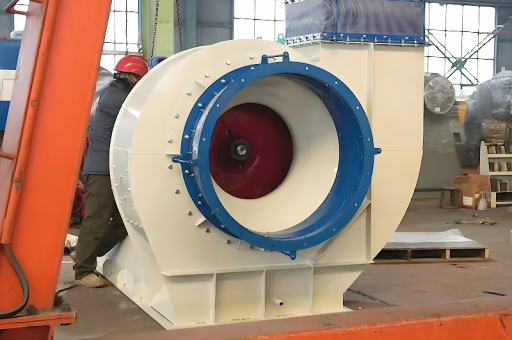
It appears you're referencing a specific model of industrial fan: the GY6-41 series, often described as a "High Strength Smoke Removal Industrial Centrifugal Blower Fan."
This is a very specific piece of equipment used primarily in boiler systems and industrial smoke exhaust. Here is a detailed breakdown of what this model typically is, its features, and its applications.
What is the GY6-41 Series?
The GY6-41 is a series of industrial centrifugal fans designed for high-temperature applications, most notably for induced draft (smoke removal) in industrial boilers, furnaces, and kilns. The "Y" in the model name typically denotes its use for fumes or smoke (Yin = smoke in Chinese pinyin), and it is built to handle the hot, corrosive, and particulate-laden gases produced by combustion.
Key Features & Characteristics ("High Strength")
When a listing mentions "High Strength" for this fan, it generally refers to the following:
- Robust Construction: Built with thicker steel plates and reinforced casings to withstand the pressure and wear of continuous operation.
- High-Temperature Design: The impeller, shaft, and bearings are designed to handle inlet air temperatures that can reach 250°C to 350°C (482°F to 662°F) , depending on the specific variant (e.g., GY6-41 vs. GY6-41 for higher temps). A cooling fan (impeller on the shaft) is often installed to cool the bearing housing.
- Wear Resistance: Impellers are typically hard-wearing and may be coated or made of materials resistant to erosion from fly ash and soot particles.
- Performance: The "6-41" designates specific aerodynamic characteristics. "6" refers to the specific speed, and "41" refers to the number of blades and their design, optimized for high static pressure at moderate flow rates, which is ideal for overcoming resistance in ductwork, chimneys, and air pollution control equipment.
Common Specifications (Typical for GY6-41)
- Type: Centrifugal, single inlet, overhung impeller.
- Application: Induced draft (pulling smoke/gases out of a boiler).
- Air Volume Range: Typically from 2,000 m³/h to 150,000 m³/h (depending on the specific size, e.g., No. 8D, 10D, 12D).
- Pressure Range: Typically 500 Pa to 4,000 Pa (or higher).
- Temperature Range: Standard up to 250°C, special design up to 350°C.
- Rotation: Drive side (clockwise or counter-clockwise as viewed from the motor side).
Common Applications (Where you would find this fan)
- Industrial Boilers: Smoke and flue gas extraction for coal, biomass, gas, or oil-fired boilers.
- Steam Generators: Removing hot combustion gases.
- Industrial Furnaces: Steel mills, glass plants, cement kilns.
- Waste Incineration: Moving exhaust gases from waste-to-energy plants.
- Dust Collection Systems: As the main exhaust fan for large-scale baghouses or electrostatic precipitators.
How to Choose or Source a GY6-41 Fan
If you are looking to purchase or replace one, you will need to know the following from your system's specifications:
- Required Air Volume (Flow Rate): How many cubic meters per hour (m³/h) or cubic feet per minute (CFM) need to be moved?
- Required Total Static Pressure: How much resistance (in Pascals or inches of water gauge) does the system create (ductwork, boiler, pollution control devices)?
- Gas Temperature: What is the maximum temperature of the gas entering the fan?
- Gas Composition: Is it smoky, corrosive, or highly abrasive (e.g., high fly ash content)? This determines if a special coating or material is needed.
- Motor Requirements: Power (kW/HP), voltage (e.g., 380V/3ph/50Hz or 460V/3ph/60Hz), and enclosure (TEFC, Open Drip Proof).
- Direction of Rotation & Discharge Angle: Which way does the fan need to spin, and where should the outlet be positioned (e.g., 0°, 90°, 180°, or 270°)?
Important Safety Note
These fans handle hot, toxic, and often corrosive gases. Always ensure proper installation with safety guards, vibration monitoring, and emergency shutdown systems. Work with a qualified engineer or industrial fan supplier to select the correct size and accessories (like variable frequency drives, VFDs, for motor speed control).
Would you like me to elaborate on any specific aspect of this fan, such as its performance curve, typical installation setup, or how it compares to similar models like the GY4-73 or YG6-41?





