
This article's table of contents introduction:
- Table of Contents / Article Guide
- Introduction – The Role of the Y9-38 in Industrial Boiler Systems
- Technical Specifications – Why 2900–730 rpm Matters
- Design Features – High Pressure, High Efficiency
- Working Principle – How Induced Draft Fans Maintain Combustion
- Performance Curve & Application Scenarios
- Installation, Maintenance & Common Troubleshooting
- Frequently Asked Questions (FAQ)
- Conclusion – The Future of High-Pressure Boiler Fans
Article Title:
Optimizing Industrial Airflow: A Comprehensive Guide to the Y9-38 Boiler Induced Draft Fan High Pressure Centrifugal Fan (2900–730 rpm)
Table of Contents / Article Guide
- Introduction – The Role of the Y9-38 in Industrial Boiler Systems
- Technical Specifications – Why 2900–730 rpm Matters
- Design Features – High Pressure, High Efficiency
- Working Principle – How Induced Draft Fans Maintain Combustion
- Performance Curve & Application Scenarios
- Installation, Maintenance & Common Troubleshooting
- Frequently Asked Questions (FAQ)
- Conclusion – The Future of High-Pressure Boiler Fans
Introduction – The Role of the Y9-38 in Industrial Boiler Systems
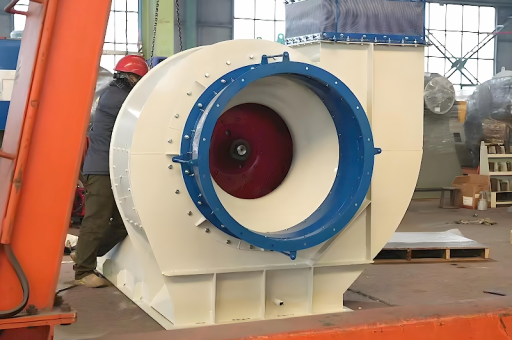
The Y9-38 Boiler Induced Draft Fan is a critical component in modern thermal power plants, industrial boilers, and large-scale heating systems. As a high-pressure centrifugal fan, its primary function is to extract flue gas from the boiler furnace, maintain negative pressure, and ensure efficient combustion. Operating within a speed range of 2900 to 730 rpm, this fan is engineered for variable-load conditions, allowing operators to fine-tune airflow according to boiler demand.
Unlike standard ventilation fans, the Y9-38 is optimized for high static pressure and abrasive flue gas environments. It is widely used in coal-fired, biomass, and oil/gas boiler systems where reliability under continuous heavy-duty operation is non-negotiable.
Technical Specifications – Why 2900–730 rpm Matters
The speed range of 2900–730 rpm is not arbitrary. It reflects a design philosophy balancing power consumption, pressure output, and mechanical durability.
| Parameter | Value |
|---|---|
| Speed Range | 2900 – 730 rpm |
| Pressure Range | 2500 – 8000 Pa (depending on impeller size) |
| Airflow Range | 6000 – 180000 m³/h |
| Working Medium | Flue gas (≤250°C standard, up to 350°C with special materials) |
| Impeller Type | Backward-curved blades |
At 2900 rpm, the fan delivers maximum pressure for startup or peak load. At 730 rpm, it operates efficiently during low-load or standby conditions, reducing energy use by up to 70% compared to constant-speed fans.
SEO Keyword Note: The combination "Y9-38 Boiler Induced Draft Fan High Pressure Centrifugal Fan 2900~730rpm" is the core search term for industrial engineers and procurement specialists looking for reliable boiler draft solutions.
Design Features – High Pressure, High Efficiency
The Y9-38 series stands out due to several engineering innovations:
- Backward-curved impeller blades – These reduce turbulence, lower noise, and maintain high static efficiency (typically 82–86%).
- Reinforced shaft and bearing housing – Designed to withstand axial thrust from high-pressure flue gas.
- Wear-resistant liners – Standard in areas exposed to fly ash erosion.
- Adjustable inlet vanes – Allow precise airflow modulation without varying motor speed (used in conjunction with VFD).
- Split housing design – Simplifies maintenance access to the impeller and shaft.
These features ensure the fan meets the demands of high-temperature, dust-laden flue gas while maintaining a long service life.
Working Principle – How Induced Draft Fans Maintain Combustion
In a boiler system, the induced draft (ID) fan is located downstream of the economizer or air preheater. Its job is to create a slight negative pressure inside the furnace, ensuring that combustion gases are drawn out while fresh air enters through the forced draft (FD) fan.
Process Flow:
- Flue gas exits the boiler furnace at high temperature.
- It passes through heat recovery equipment (temperature drops to ~150–250°C).
- The Y9-38 fan pulls the gas through dust collectors or scrubbers.
- Gas is discharged into the chimney or emission control system.
The 2900–730 rpm speed range is critical here: during boiler startup, high speed (2900 rpm) ensures rapid purging of residual gases. At steady state, the fan can slow down (730 rpm) to match combustion rate, saving energy and preventing over-draft that could destabilize the flame.
Performance Curve & Application Scenarios
A typical performance curve for the Y9-38 shows a steep pressure-airflow relationship, characteristic of high-pressure centrifugal fans. At 2900 rpm, the fan delivers high pressure but relatively lower airflow, making it ideal for systems with high resistance (e.g., long duct runs, baghouse filters). At 730 rpm, the curve flattens, indicating better airflow capacity at lower pressure.
Common applications include:
- Power plant utility boilers (50 MW to 300 MW)
- Industrial steam boilers in chemical, textile, and food processing plants
- Waste-to-energy incineration plants
- Large HVAC systems requiring pressure boosting
Installation, Maintenance & Common Troubleshooting
Installation Tips:
- Ensure the fan base is vibration-dampened and level.
- Use flexible connections between fan and ductwork to reduce stress.
- Install inlet and outlet silencers if noise is a concern.
Routine Maintenance:
- Check bearing temperature regularly (max allowed: 90°C).
- Inspect impeller for erosion or unbalanced buildup every 3 months.
- Lubricate bearings per manufacturer schedule (typically every 2000 hours).
- Verify VFD settings if speed is varied.
Common Issues & Solutions: | Issue | Probable Cause | Solution | |-------|----------------|----------| | Vibration | Impeller imbalance or bearing wear | Rebalance impeller; replace bearings | | Low airflow | Inlet vane stuck or duct blockage | Inspect vanes; check duct for obstructions | | Motor overheating | VFD harmonics or excessive load | Install line reactor; verify fan load | | Excessive noise | Cavitation or blade tip stall | Reduce speed; check inlet conditions |
Frequently Asked Questions (FAQ)
Q1: Can the Y9-38 fan handle flue gas above 350°C?
A: The standard version is rated for up to 250°C. For higher temperatures (up to 400°C), a version with stainless steel impeller and high-temperature bearings is available. Always consult the manufacturer for gas composition and temperature.
Q2: What is the difference between a Y9-38 and a standard centrifugal fan?
A: The Y9-38 is specifically designed for induced draft in boiler systems. It features heavier construction, higher pressure capability, and erosion-resistant materials compared to general-purpose centrifugal fans. The speed range (2900–730 rpm) is also wider, allowing better turndown ratio.
Q3: Is variable frequency drive (VFD) necessary for the Y9-38?
A: While not mandatory, VFD is highly recommended for energy savings and precise draft control. Without VFD, the fan typically runs at fixed speed (e.g., 1450 rpm) using inlet vanes for modulation, which wastes 15–25% of energy.
Q4: How do I calculate the correct fan speed for my boiler?
A: Use the fan affinity laws:
- Airflow ∝ speed
- Pressure ∝ speed²
- Power ∝ speed³
Start from the known design point (e.g., 1450 rpm, 50000 m³/h, 4000 Pa) and scale accordingly. Always cross-check with the fan’s certified performance curve.
Q5: What spare parts should I stock for the Y9-38?
A: Spare impeller (pre-assembled), bearing set, shaft seal, and inlet vane actuator. Also keep a set of gaskets and fasteners. For remote locations, a spare motor is advisable.
Conclusion – The Future of High-Pressure Boiler Fans
The Y9-38 Boiler Induced Draft Fan remains a workhorse in heavy industries due to its robust design and wide speed flexibility (2900–730 rpm). As global energy efficiency standards tighten, the use of VFD-controlled, high-pressure centrifugal fans will only increase. By combining reliable mechanical construction with modern variable-speed control, the Y9-38 offers a proven solution for boiler draft management, reducing both emissions and operating costs.
For engineers and plant managers, understanding the fan’s performance envelope, maintenance requirements, and installation best practices is essential to maximizing return on investment. As a high-pressure induced draft fan, the Y9-38 not only ensures safe boiler operation but also contributes to a greener industrial footprint.
SEO Final Note: For procurement or technical inquiries, search for "Y9-38 Boiler Induced Draft Fan High Pressure Centrifugal Fan 2900~730rpm" on industrial fan supplier sites or consult your local fan engineering team.





