
This article's table of contents introduction:
- Core Design & Efficiency Profile
- Why Rolling Bearings Improve Energy Efficiency
- Energy Efficiency Metrics (What to Look For)
- Key Advantages for Energy Efficiency (Specific to this Design)
- Potential Efficiency "Gotchas" (What to watch for)
- Comparison with Other Fan Types (Energy Focus)
- Conclusion: Are D Series Rolling Bearing Fans Energy Efficient?
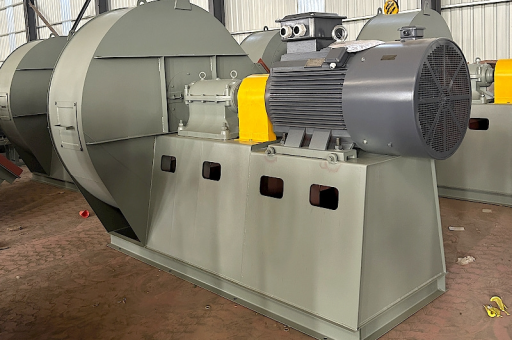
Your query appears to reference D Series centrifugal fans specifically designed for ventilation applications, likely using rolling element bearings (as opposed to sleeve bearings) and potentially a backward-curved or airfoil blade design. The focus on "Energy Efficiency" suggests you are evaluating their performance for industrial or commercial HVAC systems.
Here is a detailed breakdown of the energy efficiency characteristics, advantages, and considerations for D Series Rolling Bearing Centrifugal Ventilation Fans.
Core Design & Efficiency Profile
The "D Series" in this context typically refers to a class of Double-Width, Double-Inlet (DWDI) or heavy-duty SWSI (Single Width, Single Inlet) centrifugal fans. Key features affecting efficiency:
- Rolling Element Bearings (Ball/Roller): These are inherently more efficient than sleeve bearings at startup (lower breakaway torque) and at higher speeds. They generate less frictional heat during operation, contributing directly to improved mechanical efficiency. They also maintain their efficiency better over time if properly lubricated.
- Blade Geometry (Implicit): For this to be a high-efficiency "Energy Efficiency" model, the impeller is almost certainly Backward-Curved (BC) or Backward-Inclined (BI) , often an Airfoil (AF) design.
- Efficiency Range: 75% – 88%+ (Static Efficiency).
- Why? These blades avoid the "forging" effect of forward-curved blades, reducing aerodynamic losses.
Why Rolling Bearings Improve Energy Efficiency
Compared to traditional sleeve bearings:
| Feature | Rolling Bearing (D Series) | Sleeve Bearing (Traditional) |
|---|---|---|
| Startup Torque | Low (~1000x less than sleeve) | Very High (oil film must shear) |
| Running Friction | Low & Consistent | Higher, varies with oil temp |
| Speed Capability | High (suitable for VFD) | Limited (prone to oil whip) |
| Maintenance | Grease replenishment | Oil ring maintenance |
| First Cost | Higher | Lower |
| Energy Impact | Saves 1-3% on full-load, much more on partial-load or start/stop cycles | Wastes energy through viscous drag |
The "Energy Efficiency" claim is most valid when:
- The fan runs at variable speeds (VFD driven). Rolling bearings handle the lower speeds and high-speed peaks better without excessive friction penalties.
- The application requires frequent starts/stops.
Energy Efficiency Metrics (What to Look For)
When evaluating a D Series fan, check the Fan Efficiency Grade (FEG) or Fan Motor Efficiency (FME) per AMCA 205 or ISO 12759 standards.
- Target: FEG ≥ 85 (High Efficiency) or FEG ≥ 90 (Premium Efficiency).
- Peak Efficiency: A well-engineered D Series (Backward-Curved, Rolling Bearing) should achieve 82%–88% Static Efficiency at its Best Efficiency Point (BEP).
- Part-Load Performance: Due to the stable power curve of backward-curved blades, the fan maintains high efficiency even when throttled via VFD (down to ~50% flow).
Key Advantages for Energy Efficiency (Specific to this Design)
- Lower Parasitic Losses: Rolling bearings have a coefficient of friction of about 0.0015 (ball) vs 0.01-0.05 for sleeve bearings under load. This reduces the torque required to spin the shaft.
- No Oil Churning Loss: Sleeve bearings require an oil bath or ring that churns oil, creating drag. Rolling bearings use a minimal grease charge.
- High Speed Capability: Allows for smaller, lighter impeller designs running at higher RPM (higher pressure per stage) without the efficiency penalty of a large, slow-moving impeller.
- Variable Speed Ready: Rolling bearings are the standard for VFD applications. They do not suffer from the "oil film collapse" issue at low speeds that sleeve bearings do, ensuring reliable efficiency across the entire speed range.
Potential Efficiency "Gotchas" (What to watch for)
- Bearing Grease Overpacking: If the factory or maintenance crew over-greases the bearings, the internal friction can actually increase by 10-20%, negating the efficiency benefit. Use the "1/3 to 1/2 full" rule.
- Belt Drive vs. Direct Drive:
- Direct Drive (D-Series, often with the bearing housing): Very high efficiency (no belt slip, no V-belt losses ~3-5%).
- Belt Drive (Common in D Series): Adds a 3-7% efficiency loss. However, it allows for speed changes. For maximum energy efficiency, specify Direct Drive with a VFD.
- Inlet Conditions: Even the best rolling bearing fan loses efficiency if the inlet is non-uniform (poor duct design, no inlet cone, or blocked inlet bell).
Comparison with Other Fan Types (Energy Focus)
| Fan Type | Typical Peak Efficiency | Bearing Type (Standard) | Energy Efficiency Verdict |
|---|---|---|---|
| D Series (Rolling Bearing, BC/AF) | 82-88% | Rolling (Ball/Roller) | Excellent. Best for continuous high-flow/high-pressure. |
| Tubular Centrifugal | 65-75% | Sleeve or Rolling | Good, but lower static efficiency. |
| Forward-Curved (Squirrel Cage) | 60-75% | Sleeve (Often) | Poor for energy efficiency. High leakage, high starting torque. |
| Axial Fan (Vaneaxial) | 75-85% | Rolling (Standard) | Good, but pressure capability is lower. Higher noise. |
Conclusion: Are D Series Rolling Bearing Fans Energy Efficient?
Yes, they are typically one of the most energy-efficient choices for medium to high-pressure ventilation systems.
- Best Application: Clean air, variable air volume (VAV), high static pressure (2" to 12" w.g. or higher), continuous industrial ventilation.
- Energy Savings: Compared to a standard forward-curved fan with sleeve bearings, a properly selected D Series (Backward Curved, Rolling Bearing) can save 15-30% in energy consumption.
- Justification for Premium Cost: The higher initial cost of rolling bearings (vs. sleeve) and high-efficiency impeller is typically recovered through lower electricity bills within 1-3 years.
Recommendation: To quantify this for your specific project, request a fan selection curve showing the Static Efficiency at your Operating Point (CFM x Static Pressure). Ensure the fan is sized to operate within 5-10% of its BEP for maximum energy efficiency.





