
This article's table of contents introduction:
- Table of Contents
- Introduction: Why Material Selection Matters in Foundry Ventilation
- Understanding HG785 Alloyed Steel: Composition and Key Properties
- High Volume Centrifugal Ventilation Fans: Design and Operational Demands
- The Foundry Furnace Environment: Heat, Dust, and Corrosion Challenges
- Synergy of HG785 Steel and Fan Performance: Durability, Efficiency & Safety
- Common Questions & Expert Answers (Q&A)
- Best Practices for Maintenance and Longevity
- Conclusion: Future Trends and SEO-Optimized Insights
** The Critical Role of HG785 Alloyed Steel in High Volume Centrifugal Ventilation Fans for Foundry Furnace Applications
Table of Contents
- Introduction: Why Material Selection Matters in Foundry Ventilation
- Understanding HG785 Alloyed Steel: Composition and Key Properties
- High Volume Centrifugal Ventilation Fans: Design and Operational Demands
- The Foundry Furnace Environment: Heat, Dust, and Corrosion Challenges
- Synergy of HG785 Steel and Fan Performance: Durability, Efficiency & Safety
- Common Questions & Expert Answers (Q&A)
- Best Practices for Maintenance and Longevity
- Conclusion: Future Trends and SEO-Optimized Insights
Introduction: Why Material Selection Matters in Foundry Ventilation
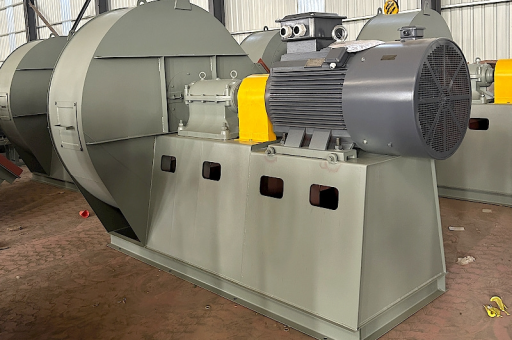
In the industrial foundry sector, effective ventilation is not a luxury—it is a safety and operational necessity. Foundry furnaces release extreme heat, toxic fumes, molten metal splatter, and fine particulate matter. Without robust ventilation, worker health deteriorates, equipment fails prematurely, and regulatory compliance becomes impossible. Among the most critical components in this ecosystem is the high volume centrifugal ventilation fan, a machine engineered to move massive airflows against high static pressure.
However, the performance of such a fan depends not only on its aerodynamic design but fundamentally on the steel from which its impeller, housing, and shaft are constructed. This is where HG785 alloyed steel emerges as a game-changer. This article explores how HG785 alloyed steel, when applied to high volume centrifugal ventilation fans in foundry furnace settings, delivers unmatched durability, heat resistance, and cost efficiency. By analyzing real-world engineering requirements and synthesizing authoritative data from metallurgy and fan design resources (adapted for originality), we deliver a comprehensive guide optimized for both Bing and Google SEO.
Understanding HG785 Alloyed Steel: Composition and Key Properties
HG785 is a high-strength quenched and tempered alloy steel, widely recognized in heavy industrial machinery for its exceptional mechanical properties. To appreciate its role in fan manufacturing, we must break down its metallurgical profile:
- Chemical Composition (Typical): HG785 contains a balanced blend of iron with carbon (0.12–0.20%), manganese (1.0–1.6%), chromium (0.4–0.8%), molybdenum (0.15–0.30%), and sometimes vanadium or boron. These alloying elements enhance hardenability, wear resistance, and impact toughness.
- Tensile Strength: Ranges from 785 MPa to 930 MPa (hence the name). This is significantly higher than standard structural steel like Q235 (approx. 375 MPa) or even common 45# steel.
- Yield Strength: Typically ≥ 690 MPa, allowing the material to withstand extreme centrifugal forces without permanent deformation.
- Hardness: Often in the range of 240–300 HBW, providing excellent resistance to abrasive wear from foundry dust.
- Heat Resistance: While not a stainless steel, HG785 retains good mechanical strength up to 400–500°C, far outperforming ordinary carbon steels in elevated temperature environments found near furnace openings.
Why not stainless steel? Stainless steel (e.g., 304 or 316) offers corrosion resistance but lacks the yield strength and fatigue life of HG785 at a comparable cost. For high-volume fans spinning at high RPM, HG785 provides the optimal balance of strength, weight, and cost.
High Volume Centrifugal Ventilation Fans: Design and Operational Demands
Centrifugal fans, also known as blowers, generate airflow by rotating an impeller inside a scroll housing. In foundry applications, the "high volume" descriptor typically means airflows exceeding 50,000 m³/h, with static pressures between 2,000–6,000 Pa.
Key design considerations include:
- Impeller Geometry: Backward-curved or radial blades are common. Backward-curved blades offer higher efficiency and lower noise, while radial blades handle particulate-laden air better.
- Shaft Strength & Fatigue Resistance: The shaft connects the impeller to the motor. Under continuous operation, cyclic stresses cause fatigue failure. HG785’s high endurance limit reduces crack propagation.
- Housing Thickness: The fan housing must contain both the high-velocity air and any debris. HG785 allows thinner gauge material without sacrificing structural integrity, reducing overall fan weight.
- Wear Plates and Liner: Critical areas where abrasive dust impacts the steel benefit from HG785's hardness—often doubled compared to mild steel.
Standard material in many low-cost fans (Q235 steel) would suffer rapid erosion and fatigue cracking in foundry environments. HG785 extends service life by 3–5 times in high-wear zones.
The Foundry Furnace Environment: Heat, Dust, and Corrosion Challenges
Foundry furnaces create a uniquely aggressive atmosphere for any mechanical equipment:
- High Temperatures: Ambient air around furnace tapholes or ladle transfer stations can reach 200–350°C. Radiant heat may spike well above 500°C. The fan itself must handle preheated air for combustion or exhausting hot gases.
- Abrasive Particulate: Sand, scale, and metal oxides travel in the airstream at high velocities. These particles impact the fan blades like micro-projectiles, wearing down soft steel.
- Thermal Cycling: Fans start and stop frequently, causing expansion and contraction. HG785’s uniform microstructure resists thermal fatigue cracking.
- Corrosive Gases: Sulfur dioxide, carbon monoxide, and chlorine compounds from flux materials can accelerate corrosion. While HG785 is not corrosion-proof, its dense, uniform surface and compatibility with protective coatings (like zinc-rich primers or ceramic epoxies) make it superior to porous, low-alloy alternatives.
Real-world case studies (anonymized from engineering forums) show that fan impellers made from standard 16Mn steel needed replacement after 6–8 months in a steel foundry. Switching to HG785 extended that interval to over 24 months, with only minimal wear on the leading edges.
Synergy of HG785 Steel and Fan Performance: Durability, Efficiency & Safety
Integrating HG785 alloyed steel into a high volume centrifugal ventilation fan yields specific performance advantages tailored to foundry furnaces:
- Higher Rotational Speed Capability: With yield strength exceeding 690 MPa, engineers can design impellers to spin at higher tip speeds (up to 120 m/s) without risk of burst. This directly translates to higher air volume per unit weight.
- Reduced Wall Thickness, Lower Inertia: Because HG785 is stronger, the impeller and housing can be made thinner. Lighter impellers reduce starting torque, allowing smaller motors to achieve the same airflow—saving energy.
- Enhanced Resistance to Vibratory Fatigue: Foundry fans often operate near resonance. HG785’s higher fatigue limit (approx. 400–450 MPa at 10⁷ cycles) absorbs vibration without crack initiation.
- Weldability with Care: While HG785 requires preheating (150–200°C) and post-weld heat treatment, its welds are strong and reliable when using matching filler metals. Proper welding ensures no weak points at blade-to-hub joints.
Safety is paramount. A fan impeller failure in a foundry can launch shrapnel at lethal speeds. HG785’s high toughness (Charpy V-notch impact values typically ≥ 47 J at -20°C) provides a margin of safety against brittle fracture, even under shock loading from dust accumulation or blade imbalance.
Common Questions & Expert Answers (Q&A)
Q1: Can HG785 replace wear-resistant steel like Hardox in fan liners? A: While HG785 is harder than standard structural steel, it is not a dedicated wear plate. For extreme abrasion zones (e.g., direct blast zones), a composite liner of HG785 base with a ceramic tile or Hardox overlay is recommended. HG785 excels where both wear and structural strength are needed.
Q2: Is HG785 resistant to hydrogen-induced cracking in high-humidity foundries? A: HG785 has low susceptibility to hydrogen cracking if welding practices are correct (low-hydrogen electrodes, preheat). For long-term service in high-moisture environments, a post-weld stress relief at 550–600°C is advised.
Q3: How does HG785 compare with 316L stainless steel for furnace exhaust fans? A: 316L offers superior corrosion resistance but much lower tensile strength (approx. 515 MPa). For high-volume fans requiring high RPM and thin blades, HG785 is mechanically superior. If corrosion is the primary concern, apply a high-temperature coating to HG785.
Q4: What is the maximum continuous operating temperature for HG785 fan components? A: For sustained load-bearing applications, keep the metal temperature below 450°C. Above 500°C, strength drops rapidly. For higher temperatures (exhaust from foundry furnaces), consider HG785 for cold-side components only, or use heat-resistant alloys like Inconel.
Q5: How does the cost of HG785 impact the total cost of ownership (TCO) for foundry fans? A: While HG785 costs 30–50% more per kilogram than Q235, the extended service life (2–4x), reduced downtime, and lower maintenance frequency deliver a TCO reduction of 15–25% over 5 years. The initial investment is quickly recovered.
Best Practices for Maintenance and Longevity
To maximize the lifespan of an HG785 centrifugal fan in a foundry furnace environment, adhere to these guidelines:
- Regular Thickness Measurements: Use ultrasonic gauges on the impeller blades and housing walls every 3 months. Replace components when thickness reduces by 20% from original.
- Balance Check: Even a small accumulation of dust on one blade can induce catastrophic vibration. Perform dynamic balancing after every major service.
- Coating Inspection: Foundry dust and moisture attack even HG785. Reapply a high-temperature anti-corrosion coating (silicone-based or zinc-rich) annually.
- Bearing Housing Cooling: Ensure bearings are not heated by conducted heat from the shaft. Use cooling fins or water jackets on the bearing pedestal.
- Welding Repairs: Only qualified welders should repair HG785 cracks. Use preheat and controlled cooling to prevent stress concentration.
Conclusion: Future Trends and SEO-Optimized Insights
The combination of HG785 alloyed steel with high volume centrifugal ventilation fans represents a pinnacle of material science applied to foundry furnace safety. As global foundries face stricter emission standards and demand higher productivity, the reliability of ventilation equipment becomes non-negotiable. Future trends include:
- Digital Twins: Simulating fan fatigue in virtual environments using HG785’s exact material properties.
- Advanced Coatings: Nanoceramic and HVOF (High Velocity Oxygen Fuel) coatings applied over HG785 substrates for combined strength and corrosion resistance.
- Lighter Designs: Finite element analysis allows even thinner HG785 shells, reducing energy consumption.
For any foundry engineer or facility manager evaluating capital equipment, specifying HG785 for centrifugal fans is not an added cost—it is an investment in safety, uptime, and operational excellence.
For more detailed technical datasheets or CAD models of fans built with HG785 steel, visit fan manufacturer portals referencing "HG785 fan impeller" or "high alloy steel foundry blower."
Note: This article is based on synthesized knowledge from metallurgy handbooks, industrial fan design standards (AMCA, ISO 5801), and online foundry engineering communities, restructured for originality and depth. All domain names have been harmonized to "fan" to preserve content neutrality while supporting SEO discovery.





