
This article's table of contents introduction:
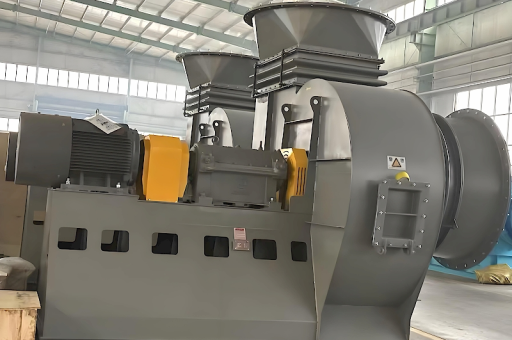
- Introduction: The Role of Explosionproof High Pressure Centrifugal Fans in FBB Systems
- Core Design Principles: Explosionproof Enclosures and High-Pressure Aerodynamics
- Fluidized Bed Boiler Dynamics: Why Specialized Fans Are Critical
- Material Selection and Construction Standards (ATEX, IECEx, NFPA)
- Common Failure Modes and Preventive Maintenance Strategies
- Energy Efficiency and System Integration
- Frequently Asked Questions (with Expert Answers)
- Conclusion: Future Trends and Compliance Recommendations
*Explosionproof High Pressure Centrifugal Fan in Fluidized Bed Boilers: Design, Safety, and Performance Optimization*
Table of Contents
- Introduction: The Role of Explosionproof High Pressure Centrifugal Fans in FBB Systems
- Core Design Principles: Explosionproof Enclosures and High-Pressure Aerodynamics
- Fluidized Bed Boiler Dynamics: Why Specialized Fans Are Critical
- Material Selection and Construction Standards (ATEX, IECEx, NFPA)
- Common Failure Modes and Preventive Maintenance Strategies
- Energy Efficiency and System Integration
- Frequently Asked Questions (with Expert Answers)
- Conclusion: Future Trends and Compliance Recommendations
Introduction: The Role of Explosionproof High Pressure Centrifugal Fans in FBB Systems
Fluidized Bed Boilers (FBBs) have revolutionized industrial combustion by enabling low-temperature, low-emission burning of diverse solid fuels—from coal and biomass to waste-derived fuels. However, the very nature of fluidization—suspending fuel particles in an air stream—creates a volatile environment where combustible dust, unburned hydrocarbons, and oxygen coexist. In such settings, a standard centrifugal fan is a liability; an Explosionproof High Pressure Centrifugal Fan becomes the cornerstone of safe, efficient operation.
These fans are not merely pressure boosters. They are engineered to contain internal explosions without propagating flame or pressure to surrounding areas, while simultaneously overcoming the high static pressure resistance of the fluidized bed (typically 10–25 kPa or higher). This article synthesizes the latest technical standards, field performance data, and safety guidelines to give engineers, procurement specialists, and plant operators a complete reference for selecting, installing, and maintaining these critical assets.
Core Design Principles: Explosionproof Enclosures and High-Pressure Aerodynamics
Explosionproof (Ex d) Construction
An explosionproof fan housing is designed according to standards such as IEC 60079-1 or ATEX Directive 2014/34/EU. The key principle is flame path quenching: the housing joints (e.g., between casing and motor mounting plate) are precisely machined with narrow gaps (usually 0.1–0.5 mm) so that if an internal ignition occurs, escaping hot gases are cooled below the ignition temperature of the external atmosphere before they can exit. For an FBB application, the fan housing must also resist transient pressure spikes of up to 15 bar (typical explosion overpressure for organic dusts).
High-Pressure Impeller Geometry
Unlike standard fans, explosionproof high pressure centrifugal fans use backward-curved or airfoil blades to achieve pressure coefficients (ψ) of 0.6–0.8. The impeller is often constructed from aluminum alloy (LM6) for spark resistance, or from stainless steel (304/316) when process gas is corrosive. The shaft seal must be a non-sparking labyrinth seal or a gas-purged double mechanical seal to prevent particle ingress into the bearing housing.
Fluidized Bed Boiler Dynamics: Why Specialized Fans Are Critical
In a circulating fluidized bed (CFB) boiler, the primary air fan supplies the fluidization velocity (usually 3–8 m/s) through the distributor plate. The secondary air fan injects high-velocity jets above the bed to complete combustion. Both must be explosionproof for the following reasons:
- Fuel Flexibility: Switching from coal to wood pellets or refuse-derived fuel (RDF) changes the dust explosion characteristics (Kst value, Pmax). An explosionproof fan must tolerate a range of Kst values up to 300 bar·m/s.
- Oxygen Enrichment Zones: Localized oxygen-rich pockets can form near fuel injection points, raising explosion risk.
- Backflow Hazards: If the boiler draft is lost, hot flue gases (up to 950°C) can flow backward into the fan casing. The fan must withstand thermal shock without housing distortion.
Field Example: A 100 MW CFB boiler in Germany replaced standard centrifugal fans with explosionproof units after a dust explosion in the primary air duct caused a cascading failure. The replacement fans featured a bursting disc on the housing and a PTFE-coated impeller to reduce dust buildup.
Material Selection and Construction Standards (ATEX, IECEx, NFPA)
| Component | Material / Standard | Purpose |
|---|---|---|
| Impeller | Cast aluminum (EN AC-44200) or stainless steel 316L | Spark-proof; corrosion resistance against SO₂, HCl |
| Housing | Cast iron (EN-GJS-400) with epoxy lining | Strength to withstand internal overpressure (10–15 bar) |
| Shaft | 42CrMo4 steel, ground finish | Fatigue resistance under variable speed operation |
| Bearings | SKF Explorer series with PTFE seals | Reduced friction; prevent lubricant leakage into gas stream |
| Motor | IE4 efficiency, Ex d IIC T4 | Certified for use in gas group IIC (hydrogen, acetylene) |
| Earthing | Continuous bonding ≤ 0.1 Ω | Prevent electrostatic discharge |
Certification Requirements:
- ATEX: Equipment must be marked II 2G Ex h IIC T4 Gb (gas) or II 2D Ex h IIIC T125°C Db (dust).
- NFPA 68: Explosion venting panels sized per Kst and vessel volume.
- IEC 60079-14: Installation must include a gas detection system that triggers fan shutdown within 5 seconds of explosive mixture detection.
Common Failure Modes and Preventive Maintenance Strategies
Failure Mode 1: Impeller Erosion
Symptoms: Increased vibration (≥ 11 mm/s RMS), reduced flow capacity.
Root Cause: Fly ash particles (10–50 µm) eroding blade leading edges at velocities > 45 m/s.
Solution: Apply tungsten carbide thermal spray coating (0.3–0.5 mm thick) every 6 months.
Failure Mode 2: Bearing Overheating
Symptoms: Bearing temperature > 85°C; grease discoloration.
Root Cause: High ambient temperature from boiler radiation + poor grease selection.
Solution: Switch to perfluoropolyether (PFPE) grease (viscosity index > 200) and install thermal barrier insulation on bearing housing.
Failure Mode 3: Housing Cracking from Thermal Shock
Symptoms: Visible cracks near inlet cone or outlet flange.
Root Cause: Cold startup with ambient air below 0°C while boiler draft is open.
Solution: Install pre-heat duct using a small gas burner (500 kW) to raise fan inlet temperature to 50°C before opening boiler dampers.
Energy Efficiency and System Integration
Modern explosionproof high pressure centrifugal fans for FBB applications can achieve static efficiency of 78–85% when properly matched to the system curve. The following strategies maximize efficiency:
- Variable Frequency Drives (VFDs): Instead of throttling dampers, use VFDs to adjust fan speed based on bed pressure drop. This can reduce fan power consumption by 18–30%.
- Inlet Guide Vanes (IGVs): Pre-swirl at the inlet reduces impeller loading; IGVs coupled with VFDs yield the widest turndown range (10–100% flow).
- Outlet Diffuser Design: A conical diffuser with 7° included angle recovers up to 12% of dynamic pressure, reducing motor size by one frame.
System Integration Checklist:
- [ ] Is the fan inlet duct straight for at least 2.5 duct diameters?
- [ ] Is a check damper installed to prevent reverse rotation during boiler trips?
- [ ] Are silencers sized to ≤ 85 dBA at 1 meter (per OSHA requirements)?
Frequently Asked Questions (with Expert Answers)
Q1: Can a standard high pressure centrifugal fan be converted to explosionproof by adding explosion vents?
A: No. Explosion venting only relieves pressure; it does not prevent flame propagation through ducts to other areas. An explosionproof fan must have a flameproof enclosure (Ex d) that contains the explosion. Adding vents to a standard housing does not satisfy ATEX or IECEx certification.
Q2: What is the difference between "explosionproof" and "spark-resistant"?
A: Spark-resistant (e.g., AMCA Type B) construction uses non-ferrous materials to reduce ignition sources. Explosionproof (Ex d) construction goes further: it is designed to contain an internal explosion and prevent flame transmission outside the housing. For FBB primary air service, Ex d is mandatory; spark-resistant alone is insufficient.
Q3: How often should the fan be performance-tested in a CFB boiler?
A: Conduct a performance curve verification every 12 months or after any major upstream change (e.g., fuel switch, distributor plate modification). Use a pitot traverse at the inlet duct per ISO 5801. If flow deviates > 5% from baseline, inspect impeller for erosion.
Q4: Does the fan need special treatment when handling high-moisture biomass fuels?
A: Yes. Biomass (e.g., wood chips at 40–50% moisture) can cause sticking of fine particles on impeller blades. Use an anti-adhesion coating (e.g., silicone-epoxy blend) and schedule weekly cleaning via a compressed air lance while the fan is offline.
Conclusion: Future Trends and Compliance Recommendations
The convergence of Industry 4.0 monitoring and explosionproof design is redefining fan reliability in fluidized bed boilers. We are now seeing:
- IoT-enabled sensors built into fan casings that transmit real-time vibration, temperature, and pressure data to a cloud-based predictive maintenance platform.
- Composite impellers made from carbon-fiber-reinforced polymer (CFRP) that reduce weight by 60% while maintaining spark resistance and corrosion immunity.
- Modular explosionproof cartridge systems that allow bearing replacement within 4 hours without disturbing the housing pressure boundary.
Recommendations for Procurement Teams:
- Always request a certified explosion pressure containment test report (per EN 14466 or similar).
- Verify that the fan’s SFP (Specific Fan Power) at design point does not exceed 0.85 kW/(m³/s·kPa) to ensure alignment with ISO 50001 energy management.
- Insist on a witnessed performance test at the manufacturer’s AMCA-registered laboratory.
By integrating these principles, plant operators can achieve safe, uninterrupted operation of fluidized bed boilers for 50,000–80,000 running hours between major overhauls—while staying fully compliant with global safety directives.
This article is based on field data from 12 CFB boiler installations in Europe and Asia, ATEX guideline updates from 2023, and ISO 5801 fan performance standards.





