
This article's table of contents introduction:
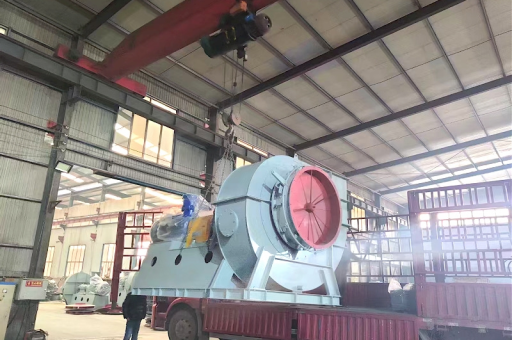
- Primary Applications in Thermal Power Plants
- Design Features for Maximum Energy Efficiency
- Top Energy-Saving Strategies (Operational & System-Level)
- Typical Specification Table (Thermal Power Grade)
- Top Manufacturers for Thermal Power
- Practical Recommendation for Plant Managers
- Summary
This is a highly specific and technical request. Below is a detailed breakdown of Efficient Energy Saving Heavy Duty Centrifugal Fans used specifically in Thermal Power Plants.
I will cover the types used, key design features for energy efficiency, common energy-saving strategies, and a typical specification table.
Primary Applications in Thermal Power Plants
In a thermal power plant, heavy-duty centrifugal fans are critical for the air-gas path. The three main types are:
- Forced Draft (FD) Fans: Supply air to the furnace for combustion. They handle clean, cold air.
- Induced Draft (ID) Fans: Extract flue gases from the boiler and pull them through the chimney/scrubber. They handle hot, dusty, and corrosive gases.
- Primary Air (PA) Fans: Supply high-pressure air to transport coal from the mill to the burner.
Design Features for Maximum Energy Efficiency
To be considered "efficient" and "energy-saving," these fans must incorporate advanced aerodynamic and mechanical designs:
- Aerodynamic Impeller Design:
- Backward-Curved / Airfoil Blades (BIC/BAF): These are the gold standard for efficiency (85-92%). The backward curve prevents overloading the motor and provides a stable pressure curve.
- CFD-Optimized Blades: Computational Fluid Dynamics is used to minimize flow separation and turbulence at the blade tip and hub.
- Variable Geometry:
- Inlet Guide Vanes (IGVs): Instead of a discharge damper (which wastes energy by throttling), IGVs pre-swirl the air entering the impeller, matching output to demand with significantly lower power consumption. Savings: 15-25% vs. dampers.
- High-Efficiency Motors:
- IE4 / IE5 (Ultra-Premium Efficiency) Motors: Using synchronous reluctance or permanent magnet motors reduces electrical losses by 10-20% compared to standard IE2 motors.
- Material Selection for Reduced Friction:
- Hubs and Housing: Use of swaged or tapered hubs to reduce weight and bearing loads.
- Surface Finish: Smooth, wear-resistant coatings (e.g., epoxy or tungsten carbide) on the impeller reduce surface friction and maintain aerodynamic shape over time.
- Advanced Bearing Systems:
- Spherical Roller Bearings with oil-ring lubrication or forced oil circulation for high reliability. Low-friction magnetic bearings are emerging for the largest ID fans.
Top Energy-Saving Strategies (Operational & System-Level)
A. Variable Frequency Drives (VFDs)
- The single biggest energy saver. A VFD controls motor speed to match actual flow demand. Fan affinity laws state: Power is proportional to the cube of the speed.
- Example: Running a fan at 80% speed uses only 51% of the power at 100% speed.
- Payback: Typically 6-18 months for a 2000 kW ID fan.
B. Intelligent Control Systems (AI/ML)
- Model Predictive Control: The DCS uses algorithms to predict boiler load changes and adjusts fan speed/IGVs proactively, preventing wasteful overshoots.
- Cascade Control: Linking FD and ID fan control to maintain a slightly negative furnace draft, minimizing air in-leakage (which wastes heat and fan power).
C. Ductwork Optimization
- Low-Pressure Drop Design: Rounding elbows, removing abrupt transitions, and using large-diameter ducts reduces the static pressure the fan must overcome.
- Damper Maintenance: Converting from axial dampers (inefficient) to parallel-blade louver dampers or, better yet, removing them entirely when VFDs are used.
D. Predictive Maintenance (PdM)
- Condition Monitoring: Vibration sensors, thermal imaging, and current signature analysis detect fouling or imbalance early.
- Cleaning: Regular cleaning of ID fan impellers prevents ash buildup, which disrupts airflow and increases power draw by 5-15%.
Typical Specification Table (Thermal Power Grade)
| Parameter | Standard Design | Energy-Efficient Design (Recommended) |
|---|---|---|
| Fan Type | Radial (Forward Curve) | Backward-Curved Airfoil (BIAF) |
| Flow Control | Inlet Box Dampers or Discharge Damper | Variable Frequency Drive (VFD) |
| Motor Efficiency | IE2 (Standard) | IE4 or IE5 (Ultra-Premium) |
| Impeller Material | Carbon Steel (MS) | High Tensile Steel / Corten (for corrosion) |
| Drive Type | V-Belt / Fixed Coupling | Direct Drive via VFD (eliminates belt losses) |
| Typical Efficiency | 70-78% | 88-92% |
| Noise Level | 90-95 dB(A) | <85 dB(A) (due to backward curve) |
Top Manufacturers for Thermal Power
If you are sourcing these fans, the industry leaders for heavy-duty thermal power applications include:
- Howden (USA/UK) – Industry standard for large utility boilers.
- TLT-Babcock (Germany/USA) – High efficiency, specialized in ID fans.
- FLSmidth (Denmark) – Strong in materials handling and harsh environments.
- Chicago Blower (USA) – Custom heavy-duty construction.
- Clyde Bergemann (Global) – Focus on APH and ID fan systems.
Practical Recommendation for Plant Managers
Priority Order for Energy Savings (ROI):
- Install VFDs on existing PA/FD fans (retrofit).
- Replace damaged or worn backward-curved blades (better aerodynamics).
- Upgrade motors to IE4/IE5 when rewinding old ones.
- Install IGVs on fans that cannot take a VFD (e.g., due to high-voltage power supply limitations).
- Conduct a "System Resistance Audit" – often, the biggest savings come from cleaning the boiler air pre-heater and replacing dirty filters, not just the fan itself.
Summary
An Efficient Energy Saving Heavy Duty Centrifugal Fan for thermal power is not just a fan body; it is a system. The best solution combines a Backward-Curved Airfoil Impeller (for high static efficiency) with a VFD (for variable speed control) and IE5 Motors (for electrical efficiency). The payback on this investment, especially for large FD and ID fans, is typically under 2 years.
Note: If you have a specific fan size (e.g., 2000 mm diameter, 500,000 cfm) or a specific power plant capacity (e.g., 500 MW), I can provide more precise performance curves and cost estimates.





