
This article's table of contents introduction:
- The Short Answer: Direct Efficiency
- The Critical Factor: Misalignment & System Efficiency
- The "Power Plant Fan" Specifics
- Energy Efficiency Comparison Table (for Power Plant Fan Application)
- Key Takeaway for Your Question
This is an excellent question that gets to the heart of mechanical power transmission efficiency in industrial settings.
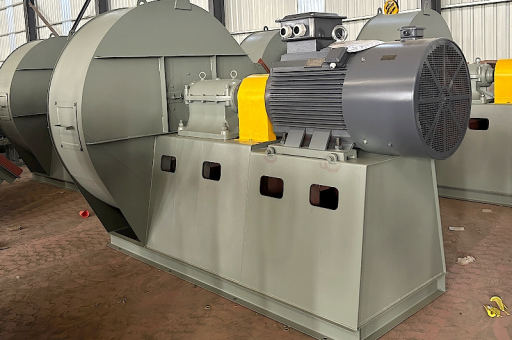
To assess the energy efficiency of a carbon steel coupling driving a power plant fan, we must distinguish between two very different types of couplings: Rigid and Flexible. The efficiency of the coupling itself vs. the system efficiency (including alignment and maintenance) are also different concepts.
Here is the detailed breakdown.
The Short Answer: Direct Efficiency
In terms of the pure mechanical energy transfer from the motor shaft to the fan shaft, a carbon steel coupling is incredibly efficient.
- Rigid Carbon Steel Coupling (e.g., Flange or Sleeve): Efficiency is 9% to 100% . There are no moving parts, no fluid slip, and no friction. The only theoretical loss is a tiny amount of material hysteresis (internal damping).
- Flexible Carbon Steel Coupling (e.g., Gear, Disc, or Grid): Efficiency is typically 0% to 99.9% . Losses come from slight friction at the gear teeth, flexing of the metallic disc packs, or the sliding of the grid in its lubricant.
Conclusion: The carbon steel coupling is rarely the primary source of energy loss in the drive train. The motor (90-96%) and the fan itself (70-85% for a typical fan, or worse) are the dominant inefficiencies.
However, the system efficiency can be dramatically lower if the coupling is poorly selected or maintained.
The Critical Factor: Misalignment & System Efficiency
This is where the "energy efficiency" question becomes critical for a power plant.
A carbon steel coupling is not tolerant of misalignment in the same way a rubber or elastomeric coupling is.
-
Rigid Couplings: Require almost perfect alignment (typically < 0.001 inches or 0.025 mm). Any misalignment is forced. This creates:
- Forces on Bearings: High radial and axial loads on the motor and fan bearings. This increases friction, which is a direct energy loss (P = F x V).
- Pre-mature Bearing Failure: Leading to unplanned downtime (a massive plant efficiency loss).
- Shaft Fatigue: Risk of shaft breakage.
- Vibration: Vibration itself dissipates energy.
- Net Effect: A rigid carbon steel coupling on a misaligned fan can reduce the system efficiency by a small amount (0.5-2%) but, more importantly, destroys the reliability of the whole system.
-
Flexible Carbon Steel Couplings (Gear, Disc, Grid): These are designed to accommodate misalignment, not eliminate it. They are the standard for high-power, high-speed fan drives.
- Gear Couplings: Suffer from friction as gear teeth slide against each other under misalignment. This generates heat and power loss. If the gear teeth are not well-lubricated (common in hot environments near boilers), friction can increase significantly, leading to a 1-3% efficiency drop.
- Disc Couplings: This is the best choice for efficiency in this application. They are maintenance-free, have no sliding friction, and transfer power through the tension of flexible metallic discs. Their efficiency remains very high (99.8%+) even with minor misalignment. However, they cannot handle large axial or angular misalignment like a gear coupling can.
- Grid Couplings: Use a serpentine steel grid wound through slots. They have excellent damping properties (which reduces vibration energy) but the sliding of the grid in its lubricant creates a small, but measurable, friction loss.
The "Power Plant Fan" Specifics
Power plant fans (ID Fans, FD Fans, PA Fans, Cooling Tower Fans) are unique:
- High Power, High Speed: Often operating at 1500-3000 RPM with motor power from 500 kW to 10+ MW. Even a 1% efficiency loss in the coupling is 5-10 kW of wasted heat, which over a year is a significant cost.
- Harsh Environment:
- Temperature: Near boiler areas (FD/ID fans) are hot. This degrades lubricants in gear couplings, increasing friction.
- Contamination: Ash, fly-ash, and dust. If a coupling is not enclosed, it can gum up.
- Vibration: Fans are inherently vibration-prone (blade passing frequency, imbalance). A coupling that can dampen this vibration (like a grid coupling) can save energy in the long run by protecting the motor and fan.
- Long Runs: Fans run 24/7/365. Cumulative efficiency losses are huge.
Energy Efficiency Comparison Table (for Power Plant Fan Application)
| Coupling Type | Material | Pure Efficiency | System Efficiency Impact (Alignment/Tolerance) | Maintenance Cost vs. Efficiency | Best For Power Plant Fan? |
|---|---|---|---|---|---|
| Rigid (Flange) | Carbon Steel | 99% | Very Low (System fails quickly on misalignment) | High (alignment is critical) | No. Only for very small/low-power fans where alignment is perfect. |
| Flexible (Gear) | Carbon Steel | 5% | Medium (Loses efficiency if misaligned > 0.5°) | High (Needs periodic lubrication) | Conditional. For very high torque, but less optimal than disc. |
| Flexible (Disc) | Stainless (Not carbon) | 8% | High (Tolerates moderate misalignment without loss) | Very Low (Zero maintenance) | Yes. Best for most modern power plant fans (e.g., FD, ID, PA). |
| Flexible (Grid) | Carbon Steel | 2% | Medium-High (Dampens vibration, improving system life) | Medium (Needs occasional lubrication) | Yes. Good for older fans with known vibration issues. |
Key Takeaway for Your Question
A carbon steel coupling itself is not a source of significant energy loss. The material is efficient.
However, the type of carbon steel coupling and its state of alignment and lubrication are the dominant factors affecting the total drive train efficiency.
- For maximum energy efficiency: Use a disc coupling (made of stainless steel for the flexing elements, but often with carbon steel hubs). This removes friction, reduces bearing loads (lower motor current draw), and requires no energy-wasting lubrication.
- If using a gear coupling (most common in old plants): The energy efficiency drop from a worn, misaligned, or poorly lubricated gear coupling can be 2-5%. This translates to tens of thousands of dollars in wasted electricity per year for a large (2 MW+) fan.
- Avoid rigid couplings for new fan installations. They are energy inefficient in the system sense because they force misalignment wrecking havoc on other components.
Final Recommendation: If you want the most energy-efficient solution for a carbon steel drive train on a power plant fan, choose a maintenance-free, laminated metallic disc coupling (with carbon steel hubs). This provides >99.8% mechanical efficiency and protects the fan and motor bearings from the loads that cause the real energy losses.





