
This article's table of contents introduction:
- The Components: Material & Application Breakdown
- Why This Combination is Superior for Furnace Fans
- Critical Factors for "Long Life"
- Potential Failure Modes (What to Watch For)
- Quick Summary for Maintenance Teams
It appears you are looking for information about a specific configuration: Carbon Steel V-Belts driving Long Life Industrial Centrifugal Fans, likely used in a Furnace application.
This is a very common and robust mechanical system in heavy industries (steel mills, power plants, glass manufacturing, etc.). Here is a detailed breakdown of this setup, focusing on why these materials and components are chosen, and key considerations for longevity.
The Components: Material & Application Breakdown
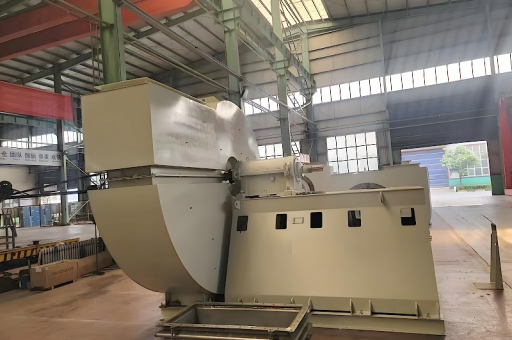
A. Industrial Centrifugal Fan (Furnace Duty)
- Application: Used for forced draft (FD), induced draft (ID), primary air, or recirculation in furnaces. They handle hot, potentially dirty or corrosive gases.
- "Long Life" Design Features:
- Materials: Heavy-gauge steel, often with wear liners or coatings (e.g., thermal spray, ceramic/epoxy).
- Bearings: Pillow block bearings designed for high temperatures, often with water cooling or high-temperature grease. Self-aligning bearings are standard.
- Shaft: High-strength steel (e.g., 1045 or 4140), ground and polished to spec.
- Wheel: Backward curved (for high efficiency, non-overloading) or radial tipped (for severe duty, handling dust/abrasives). Welded and stress-relieved.
B. Carbon Steel V-Belt
- "Carbon Steel" implies the tensile cords inside the belt are steel (often high-carbon steel wire).
- Why Carbon Steel?
- Tensile Strength: Steel cords have the highest tensile strength of standard belt materials.
- Minimal Stretch: They do not "grow" or elongate over time like polyester or aramid/rubber belts. This means no constant re-tensioning required.
- Heat Resistance: Steel is inherently resistant to the elevated ambient heat radiating from a furnace, which can degrade standard rubber/fabric belts rapidly.
- Load Capacity: Essential for the high torque required to start a heavy centrifugal fan wheel (high inertia).
- Construction: The steel cords are encased in neoprene or SBR rubber for flexibility, friction, and oil/heat resistance.
C. Sheaves (Pulleys)
- Usually cast iron or ductile iron. For high-horsepower, long-life applications, they are tapered-bore (e.g., "QD" or "Taper-Lock") for a tight, keyed fit on the motor and fan shafts.
- Grooves must be perfectly aligned to prevent uneven belt wear and vibration.
Why This Combination is Superior for Furnace Fans
| Feature | Benefit in Furnace Fan Application |
|---|---|
| Steel Cord V-Belts | Zero maintenance stretch. Handles high starting torque. Resists heat from radiant furnace. Higher HP capacity per belt width compared to standard belts. |
| Carbon Steel Construction | Matches thermal expansion of fan shaft. Stronger for heavy fan wheels. |
| V-Belt Drive | Provides necessary speed reduction (fan usually runs slower than motor). Acts as a mechanical fuse (slips slightly on overload). Dampens vibration between motor and fan. |
| Centrifugal Fan | High pressure generation needed to overcome furnace resistance. Non-overloading power curve prevents motor burnout (with backward curved blades). |
Critical Factors for "Long Life"
To maximize the life of this drive system in a harsh furnace environment:
- Pre-Alignment: Misalignment is the #1 killer of V-belts and bearings. Use a laser alignment tool or a straightedge to ensure the motor sheave and fan sheave are perfectly parallel.
- Proper Tensioning:
- Steel Cord Belts: Do NOT require high deflection tensioning. They require sufficient tension to keep from slipping, but over-tensioning can destroy the fan bearings (since the belt can't stretch).
- Use a force deflection gauge to the manufacturer's specifications. A common method is the "span deflection" test.
- Furnace Heat Management:
- Radiation: Place a heat shield between the fan/drive and the furnace wall.
- Convection: Ensure there is adequate air flow over the belts and bearings. Do not enclose the drive in a tight, unventilated box.
- Shaft Heat Soak: On ID fans, hot gas conducts heat up the shaft to the bearings. Use heat slingers and proper high-temp grease.
- Wash Down / Environment:
- Steel belts are vulnerable to rust. If the atmosphere is humid or contains acid fumes, the steel cords can corrode internally, leading to sudden failure.
- If wash-down is required, use a rust-inhibiting coating on the fan shaft and ensure belts are dried.
- Bearing Selection: Use spherical roller bearings for their ability to handle the radial loads and minor misalignment common in belt drives.
Potential Failure Modes (What to Watch For)
- Belt "Turnover" or "Flutter": Caused by misalignment, worn sheave grooves, or insufficient tension.
- Sudden Belt Breakage: For steel cord belts, this usually indicates corrosion or a manufacturing defect (broken wire). Unlike rubber belts, steel belts do not gradually fray.
- Sheave Groove Wear: The steel belt cords are harder than the cast iron sheave. Over years, the sheave grooves will wear down (become cupped), causing the belt to ride too deep and lose grip. Sheaves are sacrificial and need to be replaced eventually.
- Shaft Fretting: In the bore of the taper-lock bushing, relative motion can cause fretting corrosion on the fan shaft. Use an anti-seize compound on the shaft.
Quick Summary for Maintenance Teams
| Item | Action | Reason |
|---|---|---|
| Belts | Replace in matched sets (don't mix old/new). | Even load distribution. |
| Steel Cord Tension | Use a tension meter. Do not "feel" it. | Over-tension breaks bearings; under-tension slips belts (heat). |
| Sheaves | Inspect grooves for cupping annually. | Worn sheaves destroy new belts quickly. |
| Heat | Shield the drive from direct radiant heat. | Rubber compounds degrade rapidly above 140°F (60°C). Steel cords suffer thermal stress. |
| Alignment | Check monthly (especially after any maintenance). | Vibration destroys bearings and belts. |
In conclusion: The Carbon Steel V-Belt driving a Long Life Industrial Centrifugal Furnace Fan is a heavy-duty, reliable system if managed correctly. The main weakness is not the components themselves, but improper tensioning (critical for steel belts) and misalignment, especially in the harsh thermal environment of a furnace.





