
This article's table of contents introduction:
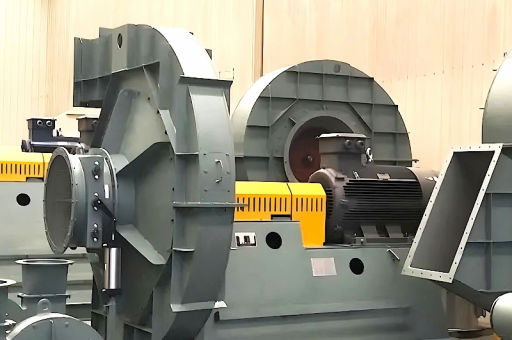
- Table of Contents
- Introduction: What Is a Carbon Steel High Volume Anti Explosion Foundry Induced Draft Fan?
- Core Construction Materials: Why Carbon Steel?
- Understanding “High Volume” in Foundry Ventilation
- The Anti-Explosion Imperative for Foundry Environments
- How an Induced Draft Fan Differs from Forced Draft in Foundries
- Key Design Features of an Anti-Explosion Fan
- Performance Metrics: Airflow, Static Pressure, and Temperature Tolerance
- Installation Best Practices for Maximum Safety
- Maintenance Strategies to Extend Fan Life
- Frequently Asked Questions (FAQ)
- Conclusion: Choosing the Right Fan for Your Foundry
The Ultimate Guide to Carbon Steel High Volume Anti Explosion Foundry Induced Draft Fans: Design, Safety, and Industrial Efficiency**
Table of Contents
- Introduction: What Is a Carbon Steel High Volume Anti Explosion Foundry Induced Draft Fan?
- Core Construction Materials: Why Carbon Steel?
- Understanding “High Volume” in Foundry Ventilation
- The Anti-Explosion Imperative for Foundry Environments
- How an Induced Draft Fan Differs from Forced Draft in Foundries
- Key Design Features of an Anti-Explosion Fan
- Performance Metrics: Airflow, Static Pressure, and Temperature Tolerance
- Installation Best Practices for Maximum Safety
- Maintenance Strategies to Extend Fan Life
- Frequently Asked Questions (FAQ)
- Conclusion: Choosing the Right Fan for Your Foundry
Introduction: What Is a Carbon Steel High Volume Anti Explosion Foundry Induced Draft Fan?
A Carbon Steel High Volume Anti Explosion Foundry Induced Draft Fan is a specialized industrial ventilation device designed to extract hot, contaminated, and potentially explosive gases from foundry environments. It combines a rugged carbon steel housing with a high-volume airflow capacity and anti-explosion features to meet the strict safety standards of metal casting facilities. Unlike standard fans, this unit is engineered to operate under extreme temperatures (often up to 400°C / 752°F) while preventing ignition of flammable gases, dust, or fumes.
In foundries, the induced draft fan sits at the exhaust end of the ventilation system, creating negative pressure that pulls emissions away from work areas, through filtration or heat recovery units, and safely outside. The term “anti-explosion” refers to the fan’s ability to contain and suppress any internal spark or flame, preventing it from propagating into the ductwork or the foundry atmosphere.
Core Construction Materials: Why Carbon Steel?
Q: Why use carbon steel instead of stainless steel or aluminum?
A: Carbon steel offers an optimal balance of strength, thermal conductivity, and cost-efficiency for heavy-duty foundry applications. While stainless steel resists corrosion better, carbon steel can withstand the mechanical stress of high-volume airflow and temperature fluctuations without deforming. It is also more weldable and repairable, which is critical in remote or harsh foundry sites.
Key properties of carbon steel used in these fans:
- Tensile strength > 400 MPa
- Operating temperature range: -20°C to 450°C (with thermal coating)
- Thickness: Typically 6–12 mm for the housing, 4–8 mm for impeller blades
- Surface treatment: High-temperature epoxy or zinc-rich primer to reduce oxidation
For foundries handling corrosive fumes (e.g., sulfur gases or chlorine), a carbon steel fan may receive an additional anti-corrosion lining or stainless steel cladding on the impeller, but the main body remains carbon steel to preserve structural integrity.
Understanding “High Volume” in Foundry Ventilation
A high-volume induced draft fan is defined by its ability to move large masses of air per unit time. In foundry applications, the required airflow is measured in cubic meters per hour (m³/h) or cubic feet per minute (CFM).
Typical high-volume specifications:
- Airflow rate: 50,000 to 500,000 m³/h
- Static pressure: 2000 to 8000 Pa
- Wheel diameter: 1.5 to 4.5 meters
Why high volume?
Foundries generate enormous heat loads (cupolas, electric arc furnaces, ladles) and toxic gases (CO, SO₂, NOₓ, metal particulates). A low-volume fan would fail to dilute these contaminants to permissible exposure limits. High-volume fans ensure rapid air exchange—often 10–20 air changes per hour—keeping worker safety and equipment longevity intact.
The Anti-Explosion Imperative for Foundry Environments
Q: What causes explosions in foundry ventilation systems?
A: Three factors form the explosion triangle: fuel (combustible dust, grease, or gas), oxygen, and an ignition source (spark from fan blades striking foreign objects, static electricity, or overheated bearings).
Anti-explosion fans are designed to break this triangle. Key safety features include:
- Spark-resistant impeller: Impeller blades are made from non-ferrous metals (aluminum bronze) or coated with a conductive layer to prevent frictional sparking.
- Explosion-proof motor: Enclosures rated Ex d (flameproof) or Ex e (increased safety) to contain any internal motor arc.
- Earthing and bonding: All metal parts are grounded to dissipate static charge.
- Pressure-relief panel: A frangible panel on the fan housing releases pressure if an internal explosion occurs, preventing catastrophic casing rupture.
- Temperature monitoring: RTD or thermocouple sensors in bearings and housing trigger automatic shutdown if temperatures exceed a safe threshold.
These design principles align with ATEX (Europe), IECEx (International), and NFPA 68 (USA) standards.
How an Induced Draft Fan Differs from Forced Draft in Foundries
| Feature | Induced Draft (ID) Fan | Forced Draft (FD) Fan |
|---|---|---|
| Position in system | At the exhaust end | At the intake end |
| Function | Creates negative pressure to pull gases out | Pushes fresh air into furnace or workspace |
| Gas temperature | Handles hot, contaminated gases (up to 400°C) | Handles ambient or preheated air |
| Material durability | Higher thermal fatigue resistance required | Lower thermal demands |
| Typical use | Cupolas, electric arc furnaces, ladle preheaters | Combustion air supply, cooling |
The induced draft configuration is preferred for anti-explosion applications because it reduces the risk of hot gases leaking into the fan room. The fan itself is placed downstream of the dust collector or scrubber, so it handles cooler, cleaner gas, lowering thermal stress and spark probability.
Key Design Features of an Anti-Explosion Fan
When selecting or customizing a Carbon Steel High Volume Anti Explosion Foundry Induced Draft Fan, look for these mechanical hallmarks:
- Backward-curved centrifugal impeller: Provides higher efficiency and non-overloading power characteristics.
- Abrasion-resistant lining: Tungsten carbide or ceramic coating on blade leading edges to resist particulate wear.
- Double-row spherical roller bearings: With temperature probes and vibration sensors.
- Shaft seal: Labyrinth or carbon ring seal to prevent gas leakage along the shaft.
- Access doors: For internal inspection and cleaning without full disassembly.
Performance Metrics: Airflow, Static Pressure, and Temperature Tolerance
The performance of these fans is typically plotted on a fan curve showing the relationship between airflow (Q) and static pressure (Ps). For foundry ID fans:
- Design point: 150,000 m³/h at 5000 Pa, with a safety margin of 10–15%.
- Temperature tolerance: Continuous operation at 350°C, peak at 400°C for 30 minutes.
- Speed: 600–1200 RPM (belt-driven or direct drive with variable frequency drive).
Q: How do you calculate the required fan size for a foundry?
A: Use the formula:
Airflow (m³/h) = Heat load (kW) × 1.2 / (Temperature difference × 1.005)
Then multiply by a safety factor of 1.2–1.5 to account for duct leakage and filter loading.
Installation Best Practices for Maximum Safety
Proper installation is critical to maintain anti-explosion certification:
- Mounting: Foundation must be level and isolated from structural vibrations. Use spring or rubber isolators.
- Duct connection: Install flexible connectors to avoid transmitting thermal expansion stress.
- Grounding: Earth all metal parts with a dedicated grounding conductor (≤ 4 ohms resistance).
- Pressure-relief venting: Orient the explosion relief panel toward a safe discharge area (no personnel or equipment).
- Electrical wiring: Use armored cables and seal fittings to prevent spark ingress.
Maintenance Strategies to Extend Fan Life
To ensure a 10–15 year service life:
- Weekly check: Listen for bearing noise, check vibration levels (< 7.5 mm/s RMS).
- Monthly inspection: Clean impeller blades of accumulated dust; check for pitting or corrosion.
- Quarterly: Lubricate bearings with high-temperature grease, inspect shaft seal wear.
- Annual overhaul: Dismantle fan, replace bearing or seal if clearance exceeds 0.5 mm, and rebalance the impeller.
Q: What is the most common failure mode?
A: Impeller imbalance due to uneven dust buildup or blade erosion. Using a frequency analyzer to monitor vibration can predict failure weeks in advance.
Frequently Asked Questions (FAQ)
Q1: Can a carbon steel fan handle corrosive gases?
A1: Yes, with a protective lining (e.g., HDPE or rubber) or by selecting a thicker gauge (10 mm+) to allow for corrosion loss over time.
Q2: Is it mandatory to have an ATEX or IECEx certificate for foundry fans?
A2: In most industrial countries, yes. Installations without proper certification can face legal liability and insurance voidance.
Q3: Can I retrofit an existing fan to become anti-explosion?
A3: Partially. You can replace the impeller with a spark-resistant version and add temperature sensors, but the housing may not meet explosion containment requirements. Full replacement is safer.
Q4: What is the price range for such a fan?
A4: Prices vary widely based on size and certification. For a 100,000 m³/h unit, expect $25,000 to $85,000 USD from a reputable manufacturer.
Q5: How do I ensure the fan meets OSHA or EU safety standards?
A5: Request a copy of the fan’s Declaration of Conformity and a Type Examination Certificate from a notified body (e.g., TÜV, SGS, or UL).
Conclusion: Choosing the Right Fan for Your Foundry
The Carbon Steel High Volume Anti Explosion Foundry Induced Draft Fan is not a luxury—it is a critical safety and productivity tool for modern metalcasting facilities. By combining rugged carbon steel construction, high-volume airflow capacity (50,000–500,000 m³/h), and rigorous anti-explosion design, this fan protects workers, equipment, and the environment.
When sourcing a fan, prioritize manufacturers that offer:
- Third-party certification (ATEX/IECEx/NFPA)
- Computational fluid dynamics (CFD) analysis for your specific duct network
- A proven track record in ferrous and non-ferrous foundries
Remember that a fan is only as good as its installation and maintenance. Budget for proper foundation work, grounding, and a preventive maintenance program from day one.
For a detailed quote or custom design, contact an industrial fan supplier today and specify your foundry’s heat load, gas composition, and ambient conditions. Investing in the right fan now will prevent costly shutdowns and safety incidents later.





