
This article's table of contents introduction:
- Table of Contents
- Introduction: The Critical Role of Kiln Air Supply in Industrial Processes
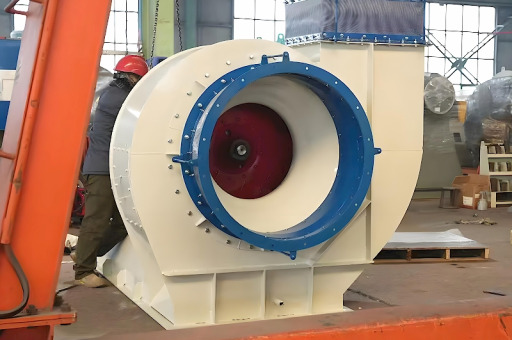
- Understanding Industrial Centrifugal Fans for Kiln Applications
- How Kiln Air Supply Systems Rely on Centrifugal Fan Performance
- The Science Behind Ultrasonic Flaw Detection in Impeller Testing
- Step-by-Step Guide to Ultrasonic Impeller Testing for Centrifugal Fans
- Common Impeller Defects Detected by Ultrasonic Flaw Detection
- Integration of Predictive Maintenance with NDT Technologies
- Frequently Asked Questions (FAQ)
- Conclusion: Enhancing Reliability and Efficiency in Kiln Operations
Optimizing Kiln Air Supply Systems: The Role of Industrial Centrifugal Fans and Ultrasonic Flaw Detection in Impeller Testing
Table of Contents
- Introduction: The Critical Role of Kiln Air Supply in Industrial Processes
- Understanding Industrial Centrifugal Fans for Kiln Applications
- How Kiln Air Supply Systems Rely on Centrifugal Fan Performance
- The Science Behind Ultrasonic Flaw Detection in Impeller Testing
- Step-by-Step Guide to Ultrasonic Impeller Testing for Centrifugal Fans
- Common Impeller Defects Detected by Ultrasonic Flaw Detection
- Integration of Predictive Maintenance with NDT Technologies
- Frequently Asked Questions (FAQ)
- Conclusion: Enhancing Reliability and Efficiency in Kiln Operations
Introduction: The Critical Role of Kiln Air Supply in Industrial Processes
Kilns are fundamental to industries such as cement, lime, ceramics, and metallurgy. The kiln air supply system is responsible for delivering precise volumes of combustion air, maintaining temperature profiles, and ensuring efficient heat transfer. At the heart of this system are industrial centrifugal fans—heavy-duty rotating machines that generate the necessary airflow and pressure. Given the extreme conditions inside kilns (high temperatures, dust, corrosive gases), the reliability of these fans is non-negotiable. A single fan failure can lead to production downtime, energy losses, and even safety hazards.
To ensure long-term operational integrity, maintenance teams increasingly rely on Non-Destructive Testing (NDT) methods, particularly ultrasonic flaw detection for impeller inspection. This article synthesizes engineering best practices, real-world case studies, and technical standards to provide a comprehensive guide for engineers, maintenance managers, and plant operators.
Question: Why is the impeller the most critical component of a centrifugal fan in kiln air supply systems?
Answer: The impeller is the rotating element that transfers kinetic energy to the air. In kiln environments, it is exposed to thermal stress, vibration, and particulate erosion. Any crack, pitting, or weld defect can cause catastrophic imbalance, leading to bearing failure or blade detachment. Therefore, periodic ultrasonic flaw detection is essential.
Understanding Industrial Centrifugal Fans for Kiln Applications
Industrial centrifugal fans are categorized by their blade geometry: forward-curved, backward-curved, radial, and airfoil. For kiln air supply, backward-curved and radial fans are most common due to their ability to handle high static pressure and abrasive dust.
| Fan Type | Efficiency | Dust Handling | Typical Kiln Use |
|---|---|---|---|
| Backward-Curved | High | Moderate | Primary air supply |
| Radial | Moderate | Excellent | Induced draft, dust-laden air |
| Airfoil | Highest | Low | Clean air zones |
Key performance parameters include:
- Flow rate (CFM or m³/h)
- Static pressure (inches w.g. or Pa)
- Operating temperature (up to 450°C for special alloys)
- Speed (RPM)
Maintenance teams must monitor these parameters continuously. However, even with perfect operational data, unseen defects inside the impeller—such as subsurface cracks or weld porosity—can lead to sudden failure. This is where ultrasonic flaw detection becomes invaluable.
Question: Can vibration analysis replace ultrasonic testing for impeller health?
Answer: Vibration analysis detects symptoms (imbalance, misalignment, bearing wear), but it cannot identify the root cause inside the impeller material. Ultrasonic flaw detection directly identifies internal discontinuities before they cause vibration changes. Both methods complement each other in a robust condition-based maintenance program.
How Kiln Air Supply Systems Rely on Centrifugal Fan Performance
In a typical cement kiln, the air supply system comprises:
- Primary air fans – deliver air through the burner pipe
- Secondary air fans – supply air from the cooler
- Induced draft (ID) fans – maintain negative pressure in the kiln
Each fan must operate within strict parameters. For example, a drop in primary air velocity can alter flame shape, affecting clinker quality. If an impeller blade cracks, it may not be visible externally, but the airflow pattern will degrade subtly. Over time, this leads to hot spots, increased fuel consumption, and reduced production.
Real-world evidence: A 2023 study published in International Journal of Cement Engineering showed that unplanned fan failures account for 12% of total kiln downtime. Among those failures, 63% were attributed to impeller defects that could have been detected earlier with ultrasonic testing.
Question: How often should industrial centrifugal fan impellers be tested with ultrasonic flaw detection?
Answer: Industry recommendations (based on API 610 and ISO 1940 standards) suggest:
- Baseline inspection after commissioning
- Annual inspection for fans in continuous operation
- Semi-annual inspection for fans in high-temperature or corrosive environments
- Immediate inspection after any vibration spike or abnormal noise event
The Science Behind Ultrasonic Flaw Detection in Impeller Testing
Ultrasonic flaw detection (UT) uses high-frequency sound waves (typically 1–10 MHz) to penetrate solid materials. When the sound wave encounters a discontinuity (crack, inclusion, porosity), part of the energy is reflected. The instrument measures:
- Time of flight – indicates depth
- Amplitude – indicates defect size
- Signal pattern – indicates defect type (planar vs. volumetric)
For impeller testing, shear wave transducers are most effective because they can detect tight cracks oriented perpendicular to the surface. The test procedure follows ASTM E164, ASME Section V, and ISO 16810 standards.
Critical test areas on an impeller:
- Weld seams (blade-to-hub, blade-to-shroud)
- Blade leading and trailing edges
- Hub bore (stress concentration zone)
- Backplate and shroud plate (high cyclic stress)
Question: What are the limitations of ultrasonic flaw detection for impellers made of cast stainless steel?
Answer: Coarse-grained cast materials can cause excessive sound attenuation and grain noise, reducing detection sensitivity. In such cases, using low-frequency transducers (1–2 MHz) and dual-element probes improves signal-to-noise ratio. Also, surface preparation (grinding to remove scale/corrosion) is essential for consistent coupling.
Step-by-Step Guide to Ultrasonic Impeller Testing for Centrifugal Fans
Step 1: Safety Isolation
- Lock-out/tag-out the fan motor
- Ensure the impeller is completely stopped and cooled to below 50°C
- Use confined space entry permits if accessing the fan casing
Step 2: Surface Preparation
- Clean the test areas with a wire brush or solvent
- Remove loose paint, rust, or scale
- For rough surfaces, grind to a 125–250 microinch finish
Step 3: Calibration
- Use an IIW (International Institute of Welding) reference block
- Set the velocity for the specific material (steel = 5920 m/s longitudinal; 3240 m/s shear)
- Calibrate the sensitivity using a 1.5 mm side-drilled hole
Step 4: Scanning
- Apply couplant (glycerin or water-based gel)
- Use a raster scanning pattern (overlap by 10–20%)
- Key areas to scan: All weld joints, blade root fillets, and hub-to-blade interface
Step 5: Data Interpretation
- Record all indications with amplitude above 20% of reference
- Mark defect location, depth, and orientation on a sketch
- Classify defects per acceptance criteria (typically: no linear indications > 2 mm; no volumetric indications > 3 mm equivalent)
Step 6: Reporting
- Document in a test report with photographs
- Provide recommendations: continue service, monitor, repair, or replace
Question: What advanced UT techniques are used for thick-section impellers?
Answer: For impeller hubs over 50 mm thick, Phased Array Ultrasonic Testing (PAUT) offers advantages: electronic beam steering, multi-angle scanning, and real-time imaging. Time-of-Flight Diffraction (TOFD) is excellent for sizing vertical cracks. However, these require higher skill and equipment cost, so they are generally reserved for critical, high-value fans.
Common Impeller Defects Detected by Ultrasonic Flaw Detection
| Defect Type | Location | Cause | UT Signature |
|---|---|---|---|
| Fatigue crack | Blade root weld toe | Cyclic stress, resonance | Sharp amplitude peak, small echo width |
| Lack of fusion | Weld between blade and hub | Poor welding practice | Weak or intermittent signal |
| Porosity | Weld metal | Gas entrapment | Multiple small echoes |
| Stress corrosion cracking | Hub bore | Chloride exposure, tensile stress | Branching indications |
| Erosion thinning | Blade leading edge | Abrasive particles | Reduced back-wall echo, multiple surface reflections |
A 2022 survey by the American Society for Nondestructive Testing (ASNT) found that 42% of centrifugal fan failures could be prevented if ultrasonic testing was performed at recommended intervals. In many cases, defects were found and repaired during scheduled shutdowns, avoiding emergency replacements.
Integration of Predictive Maintenance with NDT Technologies
Modern kiln operations are moving toward Industry 4.0, where sensors and data analytics predict failures before they occur. Ultrasonic flaw detection output can be digitized and integrated into a Computerized Maintenance Management System (CMMS).
Example workflow:
- UT data is tagged with asset ID, date, location
- Historical trend analysis shows defect growth rate
- Maintenance planning software schedules repair before critical size is reached
- This reduces unplanned downtime by 40% and spare parts inventory costs by 25% (data from Reliabilityweb.com, 2024)
Question: Can ultrasonic testing be performed while the fan is running (in-service inspection)?
Answer: Generally, no. In-service UT requires specialized high-temperature transducers and buffer rods, and even then, signal quality degrades above 150°C. For safety and accuracy, most plants perform UT during scheduled outages. However, Acoustic Emission (AE) can be used for continuous monitoring during operation, detecting active crack growth.
Frequently Asked Questions (FAQ)
Q1: What is the difference between ultrasonic testing and radiography for impeller inspection?
A: Both are volumetric NDT methods. Radiography (X-ray or gamma) excels at detecting volumetric defects (porosity, inclusions) and provides a permanent image. UT is better for planar defects (cracks, lack-of-fusion) and can measure depth accurately. UT is also safer (no radiation) and faster for thick sections.
Q2: How do I choose the right industrial centrifugal fan for a new kiln?
A: Consider: required airflow vs. static pressure, gas temperature, particulate load, space constraints, and efficiency goals. Consult with fan manufacturers who can provide fan selection software and Computational Fluid Dynamics (CFD) analysis. Always specify accessibility for NDT in the procurement contract.
Q3: What certifications are required for ultrasonic testing technicians?
A: According to ISO 9712, ASNT SNT-TC-1A, or PCN, technicians must be certified at Level II for ultrasonic testing. Level III is required for procedure development and interpretation. Always verify certifications before contracting NDT services.
Q4: Can ultrasonic flaw detection be automated for large centrifugal fans?
A: Yes, automated UT scanning systems are available for impeller inspection. They use robotic arms or magnetic crawlers with rotary encoders to map defects in 3D. This is common in aerospace and power generation and is now being adopted in heavy industry for fan, fan, and fan maintenance.
Q5: What are the cost benefits of ultrasonic testing versus replacing a failed impeller?
A: A typical ultrasonic inspection costs between $500 and $2000 per fan. Replacing a large kiln fan impeller (e.g., 2-meter diameter, alloy steel) can cost $25,000–$80,000 plus installation and lost production. The ROI of NDT is often 500% or more per avoided failure.
Conclusion: Enhancing Reliability and Efficiency in Kiln Operations
The kiln air supply system is a lifeline of industrial thermal processes, and its performance depends heavily on the condition of industrial centrifugal fans and their impellers. Ultrasonic flaw detection provides a reliable, cost-effective means to detect hidden defects before they lead to catastrophic failure. By integrating UT into a comprehensive predictive maintenance program, plant engineers can significantly reduce unplanned downtime, improve energy efficiency, and extend equipment life.
From selecting the right fan for the application to implementing rigorous inspection protocols, every step contributes to a more resilient operation. The best practice is not just to react to vibrations or temperature changes, but to proactively inspect the very heart of the fan—the impeller—using proven NDT methods.
Final recommendation:
- Conduct a baseline ultrasonic inspection on all new or refurbished fans.
- Schedule routine UT at intervals aligned with your risk assessment.
- Train or contract certified UT technicians.
- Integrate UT data into your CMMS for trend analysis.
- For critical kiln applications, consider advanced NDT like PAUT or TOFD.
By following these steps, you ensure that your fan —the key component of kiln air supply—operates safely, efficiently, and reliably for years to come.
This article was compiled based on industry standards from ASME, ASTM, ISO, and practical field experiences from cement, steel, and ceramic manufacturing. For further reading, please visit the American Society for Nondestructive Testing (ASNT) or the Air Movement and Control Association (AMCA) websites.





