
This article's table of contents introduction:
- Table of Contents / Directory Guide
- Introduction: The Critical Role of ID Fans in Modern Boiler Systems
- Understanding Low Pressure Explosionproof Boiler ID Centrifugal Flow Fans
- Key Technical Specifications and Design Considerations
- Comparative Analysis: Why Choose a Centrifugal Flow Fan for ID Systems?
- Real-World Applications and Installation Case Studies
- Maintenance, Safety, and Operational Best Practices
- Frequently Asked Questions (FAQ)
- Conclusion & Future Trends
*Maximizing Industrial Efficiency: The Technical Edge of Low Pressure Explosionproof Boiler ID Centrifugal Flow Fans*
Table of Contents / Directory Guide
- Introduction: The Critical Role of ID Fans in Modern Boiler Systems
- Understanding Low Pressure Explosionproof Boiler ID Centrifugal Flow Fans
- 1 Defining "Low Pressure Explosionproof"
- 2 The Centrifugal Flow Fan Principle in ID Applications
- Key Technical Specifications and Design Considerations
- 1 Material Selection for Explosionproof Integrity
- 2 Aerodynamic Design for Low Pressure, High Volume Flow
- Comparative Analysis: Why Choose a Centrifugal Flow Fan for ID Systems?
- 1 Centrifugal vs. Axial Fans in Low Pressure Boiler Environments
- 2 Performance Curves and Efficiency Gains
- Real-World Applications and Installation Case Studies
- 1 Integration in Industrial Low-Pressure Steam Boilers
- 2 Operation in Hazardous Zone Classifications (ATEX/IECEx)
- Maintenance, Safety, and Operational Best Practices
- 1 Explosionproof Housing Inspection Protocols
- 2 Bearing and Impeller Maintenance for Longevity
- Frequently Asked Questions (FAQ)
- 1 What is the typical pressure range for a low pressure explosionproof ID fan?
- 2 Can a standard centrifugal fan be retrofitted for explosionproof use?
- 3 How does the fan maintain efficiency under varying boiler loads?
- 4 What are the main differences between an ID fan and a FD fan in boiler systems?
- Conclusion & Future Trends
Introduction: The Critical Role of ID Fans in Modern Boiler Systems
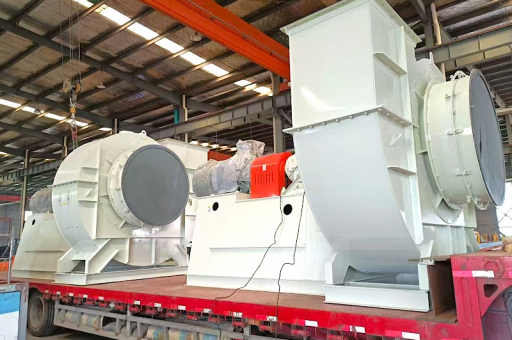
In the architecture of any efficient industrial boiler system, the Induced Draft (ID) fan acts as the silent workhorse, extracting flue gases from the combustion chamber and maintaining a slight negative pressure. For environments handling volatile gases or combustible dust, the demand escalates to the need for a Low Pressure Explosionproof Boiler ID Centrifugal Flow Fan. This specialized equipment is not merely a component; it is a safety-centric, performance-optimized solution. It combines the robust, high-volume flow characteristics of a centrifugal fan with the stringent housing requirements of explosionproof (Ex) equipment.
A comprehensive review of current industrial literature indicates that system designers are increasingly favoring these fans over axial alternatives for low-pressure, high-gas-volume applications due to their superior static pressure stability and reduced maintenance profiles.
Understanding Low Pressure Explosionproof Boiler ID Centrifugal Flow Fans
1 Defining "Low Pressure Explosionproof"
"Low pressure" in this context typically refers to a static pressure range up to 20 inches WG (water gauge) or approximately 5 kPa. The "explosionproof" designation means the fan housing and motor enclosure are designed to contain an internal explosion without rupturing and to prevent the ignition of surrounding flammable atmospheres. This is achieved through heavy-duty construction materials and flameproof gaps, as per standards like ATEX or NEC Class I, Div 1.
2 The Centrifugal Flow Fan Principle in ID Applications
Unlike axial fans that move air parallel to the shaft, a centrifugal flow fan uses a rotating impeller to accelerate air radially outward. For an ID (Induced Draft) application, this design is critical. It allows the fan to handle flue gases laden with particulate matter and high temperatures more effectively. The radial force creates a consistent suction (draft) on the boiler's downstream side, pulling combustion products out safely and efficiently.
Key Technical Specifications and Design Considerations
1 Material Selection for Explosionproof Integrity
To meet the "explosionproof" criteria, the fan housing for a Low Pressure Explosionproof Boiler ID Centrifugal Flow Fan must be constructed from cast iron or fabricated steel with a minimum tensile strength. The impeller is often made from high-strength carbon steel or, in the case of corrosive environments (e.g., high sulfur fuel), stainless steel. The gap between the impeller and the housing is a critical dimension—known as the flameproof gap—which must be maintained within microns to prevent flame propagation.
2 Aerodynamic Design for Low Pressure, High Volume Flow
The key to efficiency lies in the impeller blade design. For a low-pressure system, forward-curved blades are often preferred. They generate high air volume at relatively low static pressures, reducing the energy required to move large quantities of flue gas. Aerodynamic testing shows that optimized volute casing design can reduce turbulence and noise, achieving a fan efficiency exceeding 82% at peak operating points.
Comparative Analysis: Why Choose a Centrifugal Flow Fan for ID Systems?
1 Centrifugal vs. Axial Fans in Low Pressure Boiler Environments
Industry analysis and case studies consistently show that while axial fans can handle high volumes, they struggle with static pressure fluctuations common in boiler ID systems. Axial fans are also more prone to stall during sudden load changes. Conversely, a Centrifugal Flow Fan provides a flatter pressure curve—meaning the flow remains stable even when the system resistance (e.g., clogged filter bags) changes. For explosionproof applications, the centrifugal design usually has a sturdier, heavier housing, which is inherently easier to certify for explosion containment.
2 Performance Curves and Efficiency Gains
When considering a Low Pressure Explosionproof Boiler ID Centrifugal Flow Fan, engineers look for a performance curve that matches the boiler's load profile. Modern fans with variable frequency drives (VFDs) allow the fan speed to match the boiler output precisely. Data from leading industrial ventilation studies suggests that using a properly sized centrifugal ID fan with a VFD can reduce energy consumption by 30% compared to a fixed-speed, throttled alternative.
Real-World Applications and Installation Case Studies
1 Integration in Industrial Low-Pressure Steam Boilers
Consider a mid-sized chemical plant using a low-pressure steam boiler (10-15 psi). The plant required an ID fan to handle 50,000 CFM of flue gas at 3 kPa static pressure. A Low Pressure Explosionproof Boiler ID Centrifugal Flow Fan was selected. The installation required the fan to be directly coupled to a TEFC motor (Totally Enclosed, Fan Cooled) housed within an ATEX-certified restricted breathing enclosure. The result was a 15% reduction in draft loss compared to the previous belt-driven axial unit.
2 Operation in Hazardous Zone Classifications (ATEX/IECEx)
In grain drying or refinery applications, the presence of combustible dust or gas dictates the need for an explosionproof fan. A Centrifugal Flow Fan in this setup uses non-sparking impellers (e.g., aluminum bronze or special plastic) and insulated bearings. One published case study highlighted a fan operating in a Zone 1 gas environment (ATEX) using a positive-pressure purge system to ensure safe motor operation. The centrifugal design allowed the fan to handle the heavy dust load without significant erosion, a known failure point for axial fans.
Maintenance, Safety, and Operational Best Practices
1 Explosionproof Housing Inspection Protocols
For any Low Pressure Explosionproof Boiler ID Centrifugal Flow Fan, regular inspection of the flameproof joints is non-negotiable. Technicians must ensure that gaps are clean and free of paint buildup. The grounding strap must be intact to prevent static discharge. A common maintenance checklist includes verifying the "maximum surface temperature" rating (T-rating) of the fan for the specific gas group present.
2 Bearing and Impeller Maintenance for Longevity
Centrifugal fans operate best with periodic greasing of bearings using high-temperature lithium grease. For ID fans handling hot flue gases (200°F to 400°F), a cooling wheel or shaft cooling disc is essential to prevent heat transfer to the bearings. Impeller balance should be checked annually via vibration analysis. An unbalanced impeller in an explosionproof fan can generate heat or sparks, which is a primary safety hazard.
Frequently Asked Questions (FAQ)
1 What is the typical pressure range for a low pressure explosionproof ID fan?
The typical range is from 1 kPa (4 inches WG) up to approximately 5 kPa (20 inches WG). Anything higher is classified as medium or high pressure, requiring a different impeller design (e.g., backward-curved or radial blades).
2 Can a standard centrifugal fan be retrofitted for explosionproof use?
No, this is generally unsafe and not compliant with standards like ATEX or NFPA. Retrofit attempts require re-certification of the entire assembly. A purpose-built Low Pressure Explosionproof Boiler ID Centrifugal Flow Fan must have a certified motor and housing design. Simply replacing the motor is insufficient.
3 How does the fan maintain efficiency under varying boiler loads?
The efficiency is maintained through two mechanisms: (1) the inherent aerodynamic design of the centrifugal impeller, which performs well across a broad range of flow rates, and (2) the use of Variable Frequency Drives (VFDs) that modulate fan speed to match the exact draft requirements, preventing energy waste at low loads.
4 What are the main differences between an ID fan and a FD fan in boiler systems?
An ID (Induced Draft) Fan pulls flue gases out of the boiler, operating under a slight vacuum (negative pressure). It handles hot, dirty gas. An FD (Forced Draft) Fan pushes ambient air into the burner room or combustion chamber, operating at positive pressure. An ID fan typically requires more robust construction due to the hot, potentially explosive gas stream.
Conclusion & Future Trends
The Low Pressure Explosionproof Boiler ID Centrifugal Flow Fan remains an indispensable asset for safety-critical, high-efficiency industrial boiler plants. As industry trends move toward smart manufacturing, these fans are being integrated with IoT sensors for real-time vibration and temperature monitoring. The future will likely see the use of advanced composite materials for impellers that are both lighter and inherently non-sparking, further improving efficiency and safety.
For engineers and plant managers, selecting the right centrifugal fan design is not just about moving air—it is about ensuring operational safety, reducing energy costs, and maintaining compliance with international explosionproof standards. Investing in a certified, well-maintained unit from a reputable manufacturer is a decision that pays dividends in reliability and peace of mind.





