
This article's table of contents introduction:
- Table of Contents
- Introduction: Why Anti-Corrosion and Explosion-Proof Features Matter
- What Are Anti-Corrosion Industrial Centrifugal Fans?
- The Explosion-Proof Principle: How It Works
- Key Construction Materials for Corrosion Resistance
- Critical Applications Across High-Risk Industries
- Selection Criteria: How to Choose the Right Fan
- Installation, Maintenance, and Safety Best Practices
- Frequently Asked Questions (FAQ)
- Conclusion: Your Next Step Toward Safe Ventilation
** The Ultimate Guide to Anti-Corrosion Industrial Centrifugal Fans: Explosion-Proof Design, Applications, and Selection
Table of Contents
- Introduction: Why Anti-Corrosion and Explosion-Proof Features Matter
- What Are Anti-Corrosion Industrial Centrifugal Fans?
- The Explosion-Proof Principle: How It Works
- Key Construction Materials for Corrosion Resistance
- Critical Applications Across High-Risk Industries
- Selection Criteria: How to Choose the Right Fan
- Installation, Maintenance, and Safety Best Practices
- Frequently Asked Questions (FAQ)
- Conclusion: Your Next Step Toward Safe Ventilation
Introduction: Why Anti-Corrosion and Explosion-Proof Features Matter
In industrial environments where volatile gases, chemical vapors, salt mist, or acidic moisture are present, standard centrifugal fans often fail prematurely—or worse, become ignition sources. This is why Anti Corrosion Industrial Centrifugal Fans with Explosion Proof certification are not optional but mandatory in sectors such as marine, petrochemical, pharmaceutical, mining, and wastewater treatment.
This guide combines search-engine optimized engineering insights and practical maintenance knowledge. You will learn what makes a fan truly anti-corrosion and explosion-proof, how to select the correct model, and the critical safety regulations you must follow.
What Are Anti-Corrosion Industrial Centrifugal Fans?
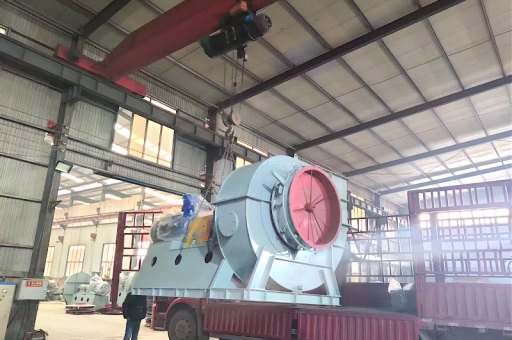
An Anti Corrosion Industrial Centrifugal Fan is a dynamic ventilation device designed to move air or process gases through a system while resisting chemical attack. Unlike standard fans, these units feature corrosion-resistant coatings, alloys, or composite materials that prevent rust and degradation even when exposed to highly acidic or alkaline atmospheres.
Key characteristics:
- Housing: Typically constructed from fiberglass-reinforced plastic (FRP), stainless steel 316L, or coatings of epoxy/polyester.
- Impeller: Balanced to minimize vibration, with shrouded or open-faced designs.
- Explosion-proof motor: Prevents arcs, sparks, or hot surfaces from igniting flammable atmospheres.
These fans are often paired with Explosion Proof accessories such as spark-resistant impellers (aluminum or monel), non-ferrous fasteners, and grounding provisions.
The Explosion-Proof Principle: How It Works
An Explosion Proof Fan does not mean it can withstand an internal explosion; rather, it contains an internal ignition event and prevents it from propagating to the surrounding environment. According to international standards (e.g., ATEX, IECEx, NEC), the fan’s housing and motor must be designed to:
- Contain the pressure of an internal explosion.
- Prevent flame transmission through joints, vents, or seals.
- Operate at surface temperatures below the auto-ignition point of the surrounding gas or dust.
For example, a Anti Corrosion Industrial Centrifugal Fan in a chemical plant handling hydrogen must have a T-class (temperature classification) of T3 or T4, ensuring the maximum surface temperature stays below 200°C (392°F) or 135°C (275°F) respectively.
Did you know? In North America, explosion-proof fans are often rated Class I, Division 1, Groups C and D for corrosive gases.
Key Construction Materials for Corrosion Resistance
The durability of a fan depends heavily on what it’s made of. For Anti Corrosion performance, manufacturers use the following materials:
| Material | Corrosion Resistance | Typical Application |
|---|---|---|
| FRP (Fiberglass Reinforced Plastic) | Excellent against acids, bases, salt spray | Marine exhaust, chemical fume extraction |
| Stainless Steel 316L | Great for chloride/fluoride environments | Pulp and paper, fertilizer plants |
| PVC / PVDF | Superior for extremely aggressive acids | Electroplating, semiconductor fabs |
| Coated Carbon Steel (e.g., with PVDF lining) | Moderate, cost-effective solution | General ventilation with mild corrosives |
Important: When selecting a fan, check the maximum operating temperature of the material. FRP, for instance, may degrade above 80°C (176°F), whereas stainless steel can handle 200°C+.
Critical Applications Across High-Risk Industries
Where would you find an Anti Corrosion Industrial Centrifugal Fan Explosion Proof in action? Below are real-world scenarios:
- Oil & Gas Refineries: Ventilation of hydrogen sulfide (H₂S) and sour gas areas.
- Chemical Processing: Handling chlorine, ammonia, nitric acid fume extraction.
- Pharmaceutical Manufacturing: Removal of solvent vapors and VOCs in explosion-rated cleanrooms.
- Mining & Minerals: Forced ventilation in tunnels where methane gas is present.
- Wastewater Treatment: Corrosive hydrogen sulfide and explosive biogas (methane) extraction.
All these applications require compliance with local regulations, such as ATEX for Europe or IECEx for international use.
Selection Criteria: How to Choose the Right Fan
To avoid costly mistakes, follow this step-by-step selection process:
- Define the gas composition. Is it flammable? Corrosive? Heavy or light?
- Determine the temperature class (T-class). Must be lower than the auto-ignition temperature.
- Choose the material. Match the corrosion resistance to the chemical concentration.
- Verify ATEX/IECEx certification. Ensure the fan is labeled for the zone (e.g., Zone 1, Zone 2 for gas; Zone 21, Zone 22 for dust).
- Check airflow and pressure. Use a fan performance curve to stay within 65–85% efficiency.
Q: Can I convert a standard fan to explosion-proof?
A: Usually, no. A certified fan must be factory-built and approved; retrofitting voids certification liabilities.
Installation, Maintenance, and Safety Best Practices
Even the best fan can fail if installed incorrectly. Follow these tips:
- Grounding: All metallic parts must be grounded to prevent static discharge.
- Inlet/outlet ductwork: Use non-sparking fasteners (brass or stainless steel) and ensure electrical continuity.
- Routine inspection: Check seals, gaskets, and motor bearing for corrosion or wear (quarterly).
- Vibration monitoring: Use accelerometers since imbalance can lead to component rubbing—a potential spark source.
- Spare parts: Always stock original manufacturer certified parts (e.g., explosion-proof motor, gaskets).
Frequently Asked Questions (FAQ)
Q1: What is the difference between corrosion-resistant and explosion-proof fan?
Corrosion-resistant fans are built to withstand chemical attack; explosion-proof fans prevent ignition. A high-quality industrial unit combines both.
Q2: Can an anti-corrosion fan be used in a dust explosion zone?
Yes, but you must choose a fan with an ATEX Category 1D or 2D rating and check for dust-proof enclosure (IP6X).
Q3: What is the typical lifespan of a fan?
With proper maintenance, an FRP anti-corrosion fan can last 10–15 years, while stainless steel units may exceed 20 years.
Q4: Is it safe to install the fan indoors?
Yes, as long as the motor and electrical box are located in a non-hazardous area or are rated for the zone.
Q5: How do I verify if a fan is truly explosion-proof?
Look for a permanently affixed certification label showing ATEX (e.g., II 2G Ex d IIB T4) or IECEx (e.g., Ex d IIB T4 Gb).
Conclusion: Your Next Step Toward Safe Ventilation
Selecting the right Anti Corrosion Industrial Centrifugal Fan Explosion Proof is a decision that impacts asset integrity, workplace safety, and regulatory compliance. By focusing on material compatibility, certification marks, and correct installation, you eliminate two major risks: corrosion-induced structural failure and explosion ignition.
If you are currently specifying a system, consider consulting a certified fan application engineer. Provide them with the gas composition, temperature, pressure, and required airflow. This ensures your fan is optimized not only for performance but for the harshest industrial conditions.
Stay safe. Stay ventilated.





