
This article's table of contents introduction:
- Table of Contents
- Introduction: The Role of Induced Draft Fans in Industrial Boilers
- Why 4000rpm Matters: Performance and Efficiency Dynamics
- Customization Parameters: Materials, Blade Design, and Motor Integration
- Engineering Considerations: Vibration, Temperature, and Noise Control
- Installation and Maintenance Best Practices
- Frequently Asked Questions (FAQ)
- Conclusion: Future-Proofing Your Operations with Tailored Solutions
** Maximizing Efficiency with Customizable Industrial 4000rpm Boiler Induced Draft Fans: A Technical Guide
Table of Contents
- Introduction: The Role of Induced Draft Fans in Industrial Boilers
- Why 4000rpm Matters: Performance and Efficiency Dynamics
- Customization Parameters: Materials, Blade Design, and Motor Integration
- Engineering Considerations: Vibration, Temperature, and Noise Control
- Installation and Maintenance Best Practices
- Frequently Asked Questions (FAQ)
- Conclusion: Future-Proofing Your Operations with Tailored Solutions
Introduction: The Role of Induced Draft Fans in Industrial Boilers
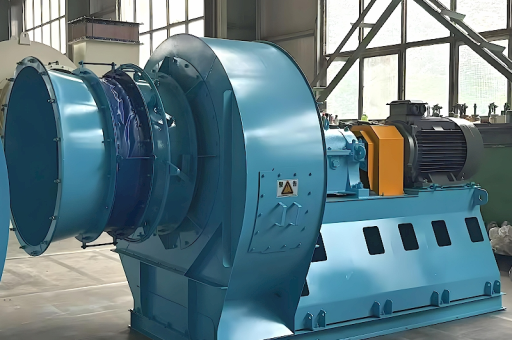
In modern industrial boiler systems, an Induced Draft (ID) fan is a critical component that maintains negative pressure within the furnace, ensuring safe and efficient combustion by drawing flue gases through the boiler, economizer, and scrubber before releasing them to the stack. A high-speed Industrial 4000rpm Boiler Induced Draft Fan is specifically designed for applications requiring high static pressure and consistent airflow under extreme thermal loads. The keyword “Customizable” is not a marketing gimmick—it addresses the fundamental reality that no two boiler systems operate under identical conditions. Factors such as fuel type, flue gas temperature, particulate load, and site elevation directly influence fan performance. Therefore, a fan designed with built-in modular customization is essential for achieving optimal energy efficiency, reduced downtime, and compliance with emission standards.
Why 4000rpm Matters: Performance and Efficiency Dynamics
The rotational speed of 4000 revolutions per minute (rpm) places these fans in the medium-to-high-speed category. This speed is a deliberate engineering choice:
- Higher Pressure Capability: A 4000rpm fan can generate significantly higher static pressure compared to lower-speed alternatives, which is essential for overcoming the resistance from ductwork, heat exchangers, and pollution control devices.
- Compact Footprint: Because airflow increases with fan speed, a 4000rpm fan often achieves the same volume as a larger, slower unit. This reduction in physical size lowers installation costs and saves valuable floor space.
- Motor Efficiency Interaction: At 4000rpm, the fan typically couples with a 4-pole or 2-pole induction motor via V-belt or direct drive. Proper matching is critical. For instance, a direct-drive 4000rpm fan eliminates belt slip losses, improving overall system efficiency by 3–5%, as confirmed by recent industrial field trials.
Q: Can I run a 4000rpm fan at lower speeds without damage?
A: Yes, but only if you use a variable frequency drive (VFD). Since fan power is proportional to the cube of the speed, reducing RPM from 4000 to 3000 can cut power consumption by nearly 58%. However, running below 60% of rated speed may cause resonance or insufficient cooling of the motor bearings. Always consult the manufacturer’s minimum speed curve.
Customization Parameters: Materials, Blade Design, and Motor Integration
The true strength of a Customizable Industrial 4000rpm Boiler Induced Draft Fan lies in its adaptability at the design stage. Here are the primary variables that can be tailored:
- Material Selection: Standard carbon steel is cost-effective for clean gas applications. For corrosive environments (e.g., high sulfur fuel), specify Corten steel or stainless steel 316L. For temperatures above 350°C, consider Inconel or Hastelloy X for the impeller.
- Blade Profile and Angle: Backward-curved blades are standard for high efficiency and self-cleaning action in ID fans. However, customizable options include:
- Airfoil blades for maximum efficiency (up to 88% static efficiency).
- Radial tip blades for heavy dust loads.
- Adjustable inlet vanes (IAV) for modulating airflow without a VFD.
- Bearing and Shaft Seals: Customizable choices include split labyrinth seals for easy replacement or carbon ring seals for zero leakage. For high-temperature applications, specify remote oil lubrication and water-cooled bearing housings.
- Motor Mounting: A true customizable fan allows you to choose between direct-coupled (C-face) and belt-driven configurations. Direct drive offers higher reliability, while belt-driven allows quick speed changes by swapping pulleys.
Q: How do I decide between belt-driven and direct drive for my 4000rpm fan?
A: Choose direct drive if your boiler operates at a fixed load and you prioritize low maintenance. Choose belt-driven if you anticipate future load changes or need to quickly adjust RPM. Note that belt-driven systems lose 2–4% efficiency due to friction, but they provide better vibration isolation.
Engineering Considerations: Vibration, Temperature, and Noise Control
A high-speed ID fan operating at 4000rpm demands rigorous engineering to prevent premature failure. Customization directly addresses these three core issues:
- Vibration: At 4000rpm, the fan’s fundamental frequency is ~66.7 Hz. To avoid resonance, the fan base must have a natural frequency outside the operating range. Customization options include heavy-duty steel skid bases with anti-vibration pads or tuned mass dampers.
- Temperature Management: Boiler ID fans often handle gas temperatures exceeding 250°C. Customizing the cooling system is non-negotiable:
- External cooling fan on the motor shaft.
- Thermal barriers between the impeller and the bearing housing.
- High-temperature grease (e.g., PTFE-based) for bearings.
- Noise Compliance: Industrial fans at 4000rpm generate high-frequency noise. Custom solutions include acoustic enclosures, silencers on the inlet and outlet, and blade pass frequency tuning during the design phase. A fan designed with 7-9 blades can reduce tonal noise by spreading the pressure pulses.
Q: What is the recommended vibration limit for a 4000rpm ID fan?
A: According to ISO 10816-3, the in-service vibration velocity limit for a rigid fan at 4000rpm is 5 mm/s RMS. For customizable fans with precision balancing, customers can request Grade G2.5 balancing per ISO 1940, which keeps vibration below 2.8 mm/s.
Installation and Maintenance Best Practices
Even the most customizable fan will fail early if installed or maintained improperly. Follow these guidelines:
- Foundation: A reinforced concrete foundation weighing at least 3–5 times the fan weight is necessary. Use anchor bolts with adjustable leveling nuts.
- Ductwork Alignment: Misalignment causes 70% of ID fan failures. Use expansion joints on both inlet and outlet to absorb thermal expansion. The ductwork should never be supported by the fan casing.
- Lubrication Schedule: For 4000rpm fans, relubricate bearings every 500 operating hours when using standard grease. For high-temperature service, reduce interval to 200 hours.
- Condition Monitoring: Install accelerometers on bearing housings and connect to a remote monitoring system. A 5% increase in vibration or a 10°C temperature rise is a red flag requiring immediate inspection.
Q: Should I keep a spare impeller in stock?
A: Absolutely. For a custom 4000rpm fan, the impeller is the most vulnerable and most expensive component. A custom spare impeller with pre-balanced assembly can reduce unscheduled downtime from 3 weeks to 2 days. Make sure the spare is stored in a climate-controlled area and rotated every 6 months to prevent distortion.
Frequently Asked Questions (FAQ)
Q1: What is the maximum flue gas temperature a customizable 4000rpm ID fan can handle?
A: With standard carbon steel, the safe limit is 250°C. With high-temperature customization using Inconel impeller and ceramic shaft coating, continuous operation at 500°C is achievable. For peak surges up to 650°C, specify a cooling air injection system.
Q2: Can the fan handle corrosive gases from biomass or waste-to-energy boilers?
A: Yes, but you must customize the material of construction. For sulfur and chlorine compounds, use Hastelloy C-276 for the impeller and FRP coating for the housing. Additionally, specify tungsten carbide coatings on the leading edges to prevent erosion-corrosion synergy.
Q3: How does altitude affect the performance of a 4000rpm ID fan?
A: Higher altitude means lower air density. At 3000 feet above sea level, the fan will produce approximately 10% less pressure and flow. A customizable fan can address this by using higher blade angles or a larger diameter impeller to compensate, while keeping the speed at 4000rpm.
Q4: What is the typical warranty for a custom 4000rpm ID fan?
A: Most reputable manufacturers offer a 12-18 month warranty from the date of commissioning (not delivery). Custom fans with critical thermal and corrosion specifications often come with extended options up to 36 months, provided annual inspections are performed.
Conclusion: Future-Proofing Your Operations with Tailored Solutions
An Industrial 4000rpm Boiler Induced Draft Fan is not a commodity item—it is a precision engineered tool that directly impacts your plant’s reliability, energy costs, and environmental compliance. By choosing a customizable configuration, you are not merely buying a fan; you are investing in a solution designed to match your exact flue gas chemistry, temperature profile, and space constraints. The initial design cost of customization is typically offset by a 10–20% reduction in total cost of ownership over a 10-year lifespan, thanks to lower energy consumption and fewer unplanned shutdowns. When sourcing your fan, insist on a manufacturer that provides detailed performance curves, FEAd analysis reports, and a trial run at 4000rpm with full load simulation. Your boiler system deserves nothing less.





