
This article's table of contents introduction:
- What is the 8-17 Series?
- Key Customization Options for This Series
- Why Customize an 8-17 Series Fan?
- Example of a Customized Specification (What you need to tell the manufacturer)
- Questions for the Manufacturer
- Recommended Steps for Procurement
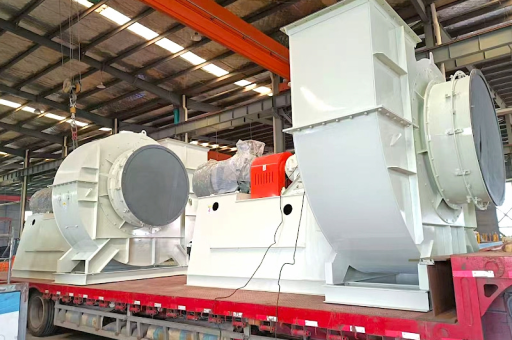
It appears you are inquiring about a customized version of an 8-17 Series Small Flow, High Pressure Centrifugal Fan.
This type of fan is a specific industrial model known for generating high static pressure at relatively low air volumes. Customization is common because these fans are often used in niche or demanding applications (pneumatic conveying, combustion air, forced draft, etc.).
Here is a breakdown of what "Customized" typically means for an 8-17 Series fan and the parameters you will need to negotiate with a manufacturer.
What is the 8-17 Series?
- Design: Centrifugal fan (typically forward-curved or radial blade design for high pressure).
- Performance Profile: High pressure (up to 15-30 kPa or more) but small flow (generally under 5,000 m³/h, often much less like 500–2,000 m³/h).
- Construction: Usually rugged cast iron or heavy-gauge steel housing with a high-speed impeller.
Key Customization Options for This Series
When you request a "customized" version, manufacturers typically need to adjust these parameters to match your exact operating point (the specific combination of air pressure and flow you need).
Mechanical & Drive Customization
- Motor Type: Standard AC motor vs. Explosion-proof motor (for flammable gases), Variable Frequency Drive (VFD) ready, or DC motor.
- Mounting & Orientation:
- Discharge angle (e.g., Top Horizontal, Downward, Sideways).
- Rotation direction (Clockwise or Counter-clockwise).
- Mounting base (foot mounted, flange mounted).
- Connection Type: Inlet/Outlet flanges (ANSI, DIN, JIS) vs. slip-on connections.
Material & Coating (For Harsh Environments)
- Standard: Cast Iron or Steel (SPHC/SS400).
- Customization Options:
- 316L Stainless Steel (for corrosive gases or high humidity).
- Aluminum (for spark-resistant or lighter applications).
- Coating: Epoxy, PTFE (Teflon), or ceramic lining for abrasion resistance (e.g., conveying sand or powder).
Sealing & Safety
- Shaft Seal: Standard labyrinth seal vs. Mechanical seal (for leak-proof gas handling) vs. Air purge seal.
- Impeller Design: Open vs. Closed impeller. Open is better for particulate-laden air; closed is more efficient for clean air.
- Balance Grade: G6.3 (standard) vs. G2.5 (for very high-speed, low-vibration operation).
Why Customize an 8-17 Series Fan?
You wouldn't customize this fan for standard HVAC. You customize it because your application demands a very specific "sweet spot" of high pressure and low flow that no off-the-shelf unit can achieve. Common reasons include:
- Pneumatic Conveying: Moving fine powders (cement, flour, plastic pellets) over short vertical distances.
- Combustion Air: Supplying draft for boilers, incinerators, or furnaces operating at high backpressure.
- Aeration & Agitation: Deep tank aeration in wastewater treatment (requiring high pressure to overcome water head).
- Vacuum Systems: The high-pressure side of a regenerative blower or for vacuum pick-and-place systems.
Example of a Customized Specification (What you need to tell the manufacturer)
To get a proper quotation for a customized 8-17 Series fan, provide these FOUR critical data points:
- Target Flow Rate:
e.g., 1,500 m³/h - Target Total Pressure:
e.g., 12,000 Pa (or 1,200 mmH₂O) - Gas Characteristics:
- Clean air? Or contains dust, moisture, or corrosive chemicals?
- Temperature of the gas (e.g., 80°C vs. -20°C).
- Environment: Indoor/Outdoor? Explosion-proof zone required? Noise level limit?
Questions for the Manufacturer
When contacting a supplier (common in China, Italy, or Germany for this series), ask these specific questions:
- "Can you confirm the impeller diameter and speed (RPM) for my pressure/flow point?"
- "What is the sound pressure level (dB) at this operating point?"
- "Do you offer VFD control as a standard customization, or do I need to specify it?"
- "What is the maximum allowable working temperature with the standard rubber seal vs. Viton seal?"
Recommended Steps for Procurement
- Identify a Manufacturer: Look for companies specializing in "8-18" or "9-19" series (the 8-17 is a derivative). Good regions: Shandong, Zhejiang (China) or Italy/Germany for high-end.
- Request a Performance Curve: Do not accept a quote without a performance curve showing your operating point. A custom fan must be designed to operate at or near its Best Efficiency Point (BEP) .
- Verify Warranty: Custom high-pressure fans are expensive. Ensure a warranty covers the impeller and motor for at least 12-24 months.
Need a specific parameter to proceed? If you tell me your exact flow (m³/h) and exact pressure (Pa or mmH₂O) , plus the gas type (e.g., air, sawdust, corrosive fumes), I can help you draft the precise specification sheet for the manufacturer.





