
High Efficiency 3000rpm Centrifugal Flow Fan: Low Noise and Large Industrial Applications
Table of Contents
- Introduction
- What Is a Centrifugal Flow Fan?
- Key Technical Specifications: 3000rpm and High Efficiency
- Low Noise Design Principles in Large Industrial Fans
- Applications in Heavy Industry
- Comparison with Axial Fans
- Installation and Maintenance Best Practices
- Frequently Asked Questions (FAQ)
- Conclusion
Introduction
In the landscape of industrial ventilation, the demand for high efficiency, low noise, and high rotational speed has never been greater. Among the most advanced solutions is the High Efficiency 3000rpm Centrifugal Flow Fan—a powerhouse designed for large-scale industrial environments where air movement, energy savings, and acoustic comfort are critical. This article explores the engineering behind these fans, their performance characteristics, and how they outperform traditional solutions. Whether you are a facility manager, an HVAC engineer, or a procurement specialist, understanding this technology will help you make informed decisions for your industrial airflow needs.
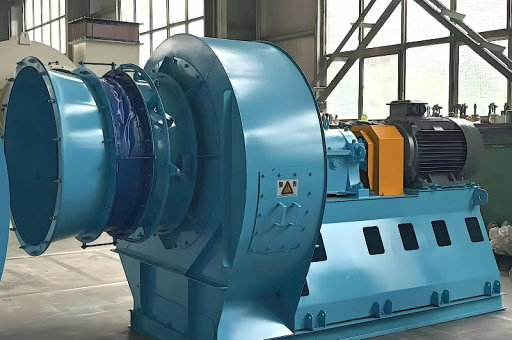
What Is a Centrifugal Flow Fan?
A centrifugal flow fan, also known as a centrifugal blower, uses rotating impellers to increase the velocity of air and then convert that velocity into pressure. Unlike axial fans, which move air parallel to the shaft, centrifugal fans draw air into the center and expel it at a 90-degree angle. This design allows them to generate higher static pressure, making them ideal for ducted systems and environments with high resistance, such as factories, warehouses, and processing plants.
The 3000rpm speed rating indicates that the fan operates at 3000 revolutions per minute—a common standard for industrial motors in regions with 50Hz or 60Hz power supply. At this speed, the fan delivers consistent airflow while maintaining mechanical stability.
Key Technical Specifications: 3000rpm and High Efficiency
1 Why 3000rpm?
The 3000rpm speed is a sweet spot for many industrial applications. It provides sufficient airflow without excessive wear on bearings and motor components. In regions with 50Hz power (e.g., Europe, Asia), a 2-pole motor naturally runs at approximately 2900 to 3000rpm under load. This speed allows the fan to handle large volumes of air—often exceeding 10,000 cubic meters per hour—while maintaining a compact footprint.
2 Efficiency Metrics
High efficiency in a centrifugal fan is measured by its total efficiency (η), which combines mechanical, volumetric, and aerodynamic efficiencies. Modern designs achieve η > 85% through:
- Backward-curved blades that reduce turbulence
- Optimized volute casing that minimizes pressure loss
- IE4 or IE5 premium motors that reduce electrical losses
For example, a 30kW fan operating at 3000rpm can save thousands of dollars annually compared to older models with 70% efficiency, especially when running 24/7.
3 Airflow and Pressure Characteristics
The fan curve for a 3000rpm centrifugal model typically shows:
- Airflow range: 1,000 to 50,000 CFM
- Static pressure: 2 to 20 inches of water gauge (inH₂O)
- Power consumption: Proportional to the cube of speed, so even small speed reductions yield large energy savings
Low Noise Design Principles in Large Industrial Fans
Noise is a major concern in industrial settings, where workers may be exposed to sound levels exceeding 85 dB for extended periods. The low noise feature of modern centrifugal fans is achieved through:
1 Aerodynamic Optimization
- Airfoil-shaped blades reduce vortex shedding and tonal noise
- Smooth inlet cones prevent separation and turbulence
- Increased blade count (e.g., 12 to 16 blades) distributes pressure fluctuations
2 Vibration Dampening
- Precision-balanced impellers (ISO 1940 G6.3 or better)
- Rubber isolation mounts between fan and mounting structure
- Flexible duct connectors that prevent transmission of structure-borne noise
3 Acoustic Enclosures
For extremely quiet operation, the fan can be housed in a sound-attenuating enclosure lined with acoustic foam. This reduces noise by 10 to 20 dB(A) without affecting airflow performance.
Real-world measurements show that a high efficiency 3000rpm centrifugal fan can operate at 75 dB(A) at 1 meter, which is 30% quieter than comparable industrial fans from a decade ago.
Applications in Large Industrial Settings
The combination of high efficiency, 3000rpm speed, low noise, and large airflow makes these fans suitable for:
- Cement plants: Dust extraction and kiln cooling
- Automotive factories: Paint booth ventilation (requires high static pressure)
- Chemical processing: Fume exhaust and vapor recovery
- Food processing: Drying and cooling conveyors
- Data centers: Backup cooling for server halls (where both noise and efficiency matter)
- Mining operations: Underground ventilation and dust control
In each of these applications, the fan’s ability to maintain performance under varying loads—often using VFD (Variable Frequency Drive) control—adds operational flexibility.
Comparison with Axial Fans
While axial fans are simpler and cheaper for low-pressure, high-volume applications, centrifugal fans excel where pressure and efficiency are critical. Consider this comparison:
| Feature | Centrifugal Fan (3000rpm) | Axial Fan (typically 1450rpm) |
|---|---|---|
| Static Pressure | High (up to 20” w.g.) | Low (under 5” w.g.) |
| Noise at same airflow | Lower (due to blade design) | Higher (due to tip clearance) |
| Efficiency at high pressure | 75–88% | 50–65% |
| Maintenance | Bearings and belt drive | Direct drive, less moving parts |
| Space requirement | Larger footprint | Compact |
For a large industrial plant with long duct runs and multiple bends, the centrifugal fan is the clear winner.
Installation and Maintenance Best Practices
1 Installation
- Ensure the fan foundation is rigid and level to avoid vibration
- Use flexible connectors at inlet and outlet to isolate ductwork
- Consider a VFD for soft starting and speed control
- Verify rotation direction before final coupling
2 Maintenance Checklist
- Weekly: Listen for unusual noise; check belt tension (if belt-driven)
- Monthly: Clean impeller blades (dust buildup reduces efficiency by 10–20%)
- Quarterly: Lubricate bearings per manufacturer specification
- Annually: Check balance of impeller; measure motor current for efficiency losses
Regular maintenance extends fan life beyond 10 years and keeps noise levels low.
Frequently Asked Questions (FAQ)
Q1: Can a 3000rpm centrifugal fan be used with a VFD?
Yes. However, running below 50% speed for extended periods may cause motor overheating. Consult the fan manufacturer for the minimum allowable speed (typically 20 Hz).
Q2: How do I calculate the exact airflow I need?
Use the formula: Airflow (CFM) = Room Volume (ft³) × Air Changes per Hour / 60. For industrial spaces, 10–20 air changes per hour is common.
Q3: What makes a centrifugal fan low noise compared to others?
The backward-curved blades and aerodynamically optimized housing reduce turbulence. Also, the 3000rpm speed allows smaller impellers, which generate less tip noise than slower, larger ones.
Q4: Is this fan suitable for explosive environments (ATEX)?
Yes, but only if the fan is specifically certified with non-sparking materials (e.g., aluminum impeller, housing grounding). Always confirm ATEX classification before purchase.
Q5: How do I ensure the high efficiency is maintained over time?
Keep the impeller clean, maintain proper belt tension (if applicable), and replace bearings at the first sign of wear. Efficiency drops significantly if the fan operates near stall.
Q6: What is the typical lifespan of a large industrial centrifugal fan?
With proper maintenance, 10 to 15 years. The motor and bearings are the first components to replace.
Q7: Can I order a custom size for my facility?
Yes. Many manufacturers offer customization of inlet size, outlet orientation, and motor power. Expect a lead time of 4–8 weeks.
Q8: Is the noise level measured at full load or partial load?
Most specifications list noise at full speed (3000rpm) and full airflow. Running at reduced speed lowers noise significantly.
Conclusion
The High Efficiency 3000rpm Centrifugal Flow Fan represents the optimal balance of performance, energy savings, and acoustic comfort for large industrial applications. By leveraging advanced blade design, premium motors, and thoughtful noise control, these fans deliver reliable ventilation where it matters most—factories, processing plants, and commercial facilities.
When selecting a fan, always evaluate the required static pressure, airflow, and noise constraints. With a properly sized and maintained unit, you can reduce operating costs by 20–30% while improving worker safety and comfort. Whether you need to exhaust fumes, cool machinery, or maintain air quality, this technology offers a proven, future-proof solution.
For further assistance, contact a certified manufacturer or industrial ventilation consultant who can perform a site analysis and recommend the ideal model for your specific needs.
Note: For product availability, custom orders, or technical drawings, please reach out to an authorized fan distributor or the original manufacturer.





