
This article's table of contents introduction:
- Breakdown of the Terms
- The Complete Picture: Application & Industry
- What to look for when buying / specifying:
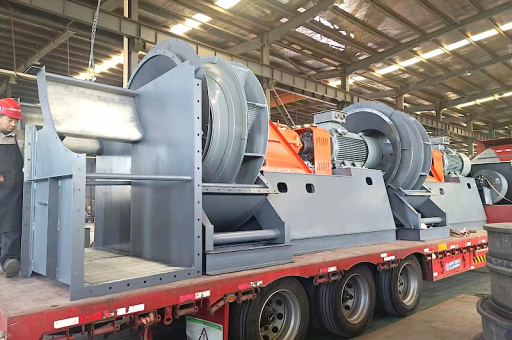
It appears you are listing key specifications or search terms for a specialized industrial fan. Here is a breakdown of what these terms mean and how they combine into a single piece of equipment.
This describes a High-Performance Industrial Exhaust Fan, likely used in harsh chemical processing environments (like plating, fume scrubbing, or chemical manufacturing).
Breakdown of the Terms
Frequency Conversion (Variable Frequency Drive - VFD)
- What it is: The fan motor is controlled by a Variable Frequency Drive (VFD).
- Why it matters: Allows for precise control of the fan speed (RPM). Instead of just on/off, you can ramp the speed up or down.
- Benefits: Significant energy savings (fan power is proportional to the cube of speed), reduced wear on bearings/motors, and the ability to adjust airflow dynamically to match process demand.
Centrifugal Flow Fan
- What it is: The type of fan. Air enters the impeller axially (along the shaft) and is discharged radially (outward by centrifugal force).
- Why it matters: Centrifugal fans generate high static pressure. This is necessary to overcome the resistance of ductwork, scrubbers, and long pipe runs. They are ideal for moving corrosive air through a system.
Acid Alkali Resistant
- What it is: The materials of construction are chemically inert to both strong acids (e.g., H₂SO₄, HCl) and strong bases (e.g., NaOH, KOH).
- Why it matters: This is critical for safety and longevity. In a chemical plant, a standard metal fan would corrode in minutes. An acid/alkali resistant fan can operate for years.
- Common Materials:
- FRP (Fiber-Reinforced Plastic): The most common for high chemical resistance.
- PP (Polypropylene): Good for moderate temperatures and specific chemicals.
- PVDF (Polyvinylidene Fluoride): For very high temperatures and the most aggressive chemicals.
Corrosion Resistant
- What it is: A broader term than "Acid Alkali Resistant." It implies resistance to a wide range of corrosive environments, including salt spray, oxidizing agents, moist chlorine gas, and solvents.
- How it's achieved: The entire fan housing, impeller (wheel), and seals are made from non-metallic materials (FRP, PP, PVDF) or metal with specialized linings.
The Complete Picture: Application & Industry
When you combine all these features, you get a FRP (or PP) Centrifugal Fan with a VFD.
-
Typical Application:
- Fume Hood Exhaust: In a university or pharma lab.
- Wet Scrubber System: Pushing or pulling air through a packed tower to remove pollutants.
- Plating Line Exhaust: Removing fumes from chrome, nickel, or acid baths.
- Chemical Storage Tank Venting.
-
Key Advantages of this specific configuration:
- Efficiency: VFD allows the fan to run at exactly the speed needed (saves electricity).
- Safety: Corrosion resistance prevents leaks of hazardous gases.
- Durability: The non-metallic construction (FRP/PP) will not rust or pit.
- Maintenance: VFD allows for soft starts (reduces electrical and mechanical shock).
What to look for when buying / specifying:
- Motor Power (kW/HP): Dependent on required air volume (CFM) and static pressure (in. w.g. or Pa).
- Material: FRP (best for broad chemical resistance, handle up to ~80-100°C), or PP (cheaper, good for lower temps up to ~60-80°C).
- VFD Type: Ensure the VFD is rated for the motor's power and the ambient conditions (possibly corrosive air in the drive panel).
- Seals: Look for shaft seals (e.g., Teflon lip seal or mechanical seal) to prevent corrosive fumes from leaking into the motor bearing housing.
- Spark Resistance: If handling flammable vapors, ensure the fan is ATEX rated (or equivalent) with non-sparking construction.
In short: You are looking for a VFD-controlled, FRP centrifugal fan designed for chemical exhaust systems. This is a very specific, high-end piece of industrial ventilation equipment.





