
** The Critical Role of the 90kW Cement Kiln Medium Pressure Centrifugal Induced Draft Fan for Kiln Head Combustion Optimization
Directory Guide 1.0 Introduction: Why the Kiln Head Fan is the Heart of Cement Pyroprocessing 2.0 Technical Anatomy: Decoding the Name – Medium Pressure, Centrifugal, Induced Draft 3.0 Power and Performance: Why 90kW is the Goldilocks Zone for 2500-5000 TPD Lines 4.0 Operational Challenges: High Temperature, Dust Load, and Corrosion at the Kiln Head 5.0 Comparative Analysis: Induced Draft vs. Forced Draft at the Kiln Outlet 6.0 Q&A: Top 5 Questions from Plant Engineers and Maintenance Managers 7.0 Maintenance Best Practices: Bearing, Vibration, and Blade Wear Life Extension 8.0 Future Trends: VFD Integration and Predictive Maintenance for 90kW ID Fans 9.0 Conclusion: A Small Component with a Giant Impact on Clinker Quality
0 Introduction: Why the Kiln Head Fan is the Heart of Cement Pyroprocessing
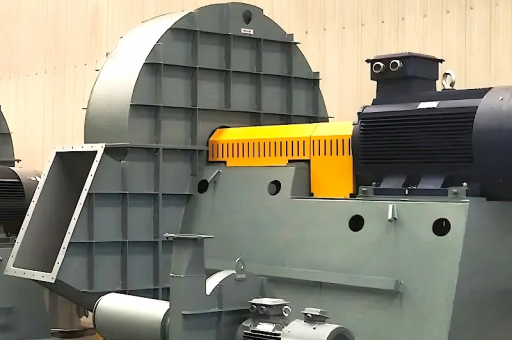
In the complex ecosystem of a cement plant, the rotary kiln is the central digestive system, and the kiln head induced draft (ID) fan is its lung. Specifically, the Cement Kiln Medium Pressure Centrifugal Induced Draft Fan 90kw Kiln Head is not just another piece of rotating equipment; it is the primary driver of secondary air flow. This air, preheated by the clinker cooler, enters the kiln head to support fuel combustion and maintain the critical flame shape. Without a perfectly matched 90kW ID fan, the kiln would suffer from incomplete combustion, poor clinker quality, and excessive energy consumption. This article dissects the engineering, application, and maintenance of this vital fan, drawing on insights from global cement production practices and mechanical design standards.
0 Technical Anatomy: Decoding the Name – Medium Pressure, Centrifugal, Induced Draft
To understand the value proposition, we must break down the nomenclature:
-
Cement Kiln Medium Pressure: In cement pyroprocessing, medium pressure typically refers to a static pressure range of 2500 to 4000 Pa (10 to 16 inches w.g.). This is not a low-pressure ventilation fan. It must overcome the resistance of the kiln hood, the burner pipe, and the clinker bed to pull the correct volume of secondary air. The 90kW motor is selected to deliver stable draft at 2800 to 3200 Pa, which is the sweet spot for maintaining a stable kiln flame without disrupting the clinker cooler operation.
-
Centrifugal Induced Draft: Unlike axial fans, a centrifugal fan uses a rotating impeller to increase the velocity of air radially. The "induced draft" configuration means the fan is located after the kiln head, pulling air out of the kiln inlet zone, creating negative pressure. This negative draft is essential for drawing preheated secondary combustion air into the kiln from the cooler.
-
90kw Kiln Head: The power rating of 90kW is carefully determined by the fan curve intersection with the system resistance curve. For a modern 2500 to 3500 tons per day (TPD) cement line, the required air volume at the kiln head is approximately 80,000 to 120,000 m³/h at 20°C. The 90kW motor, when coupled with a high-efficiency backward-curved blade impeller, achieves an efficiency of 82-85%, which is critical for reducing the plant's specific power consumption (kWh/t).
0 Power and Performance: Why 90kW is the Goldilocks Zone for 2500-5000 TPD Lines
Plant operators often ask whether a 75kW or 110kW fan would be better. The 90kW selection is not arbitrary. It represents a balance between installed power and operating margin.
- Oversizing Risk: A 110kW fan running at 85% speed (if VFD equipped) will operate far from its Best Efficiency Point (BEP), causing flow instability and premature bearing wear. It also adds unnecessary capital and electrical infrastructure costs.
- Undersizing Risk: A 75kW fan cannot maintain negative draft during peak production when the clinker bed in the cooler is deep. This leads to a "floating" kiln flame, fuel-rich zones, and increased NOx emissions. The 90kW fan provides enough pressure head (typically 3200 Pa) to overcome a 15-20% increase in system resistance due to dust accumulation on the impeller blades.
Case Example: A cement plant in Indonesia upgraded from a 75kW to a 90kW medium pressure centrifugal induced draft fan. Post-upgrade, the kiln head oxygen level stabilized from 4% to 2.5%, reducing specific heat consumption by 1.2%. The annual fuel saving (petcoke) paid for the fan motor and impeller upgrade within 14 months.
0 Operational Challenges: High Temperature, Dust Load, and Corrosion at the Kiln Head
The "kiln head" environment is brutal. The fan must withstand:
-
High Temperature: The gas temperature at the kiln head inlet typically ranges from 200°C to 350°C. While the clinker cooler recuperates heat, any pressure imbalance can cause hot gas spikes up to 450°C. The 90kW fan’s impeller must be fabricated from abrasion-resistant steel (e.g., Hardox 450 or equivalent) or, for higher temperature resilience, from high-chrome cast iron. Carbon steel impellers will experience creep and warpage within six months at these temperatures.
-
Abrasive Dust Load: The gas is laden with fine clinker dust, often 20-50 g/Nm³. This dust acts like sandpaper on the blades. Without a proper wear liner on the fan housing and a hard-faced impeller, blade thickness can reduce by 3-5mm per year, leading to imbalance, vibration, and eventual failure. A 90kW fan running in a dusty kiln head requires a wear-resistant coating (e.g., ceramic tile lining on the volute tongue) to extend Mean Time Between Overhauls (MTBO) to 12-18 months.
-
Corrosion: If the raw mix contains sulfur or chlorine, the kiln head gas can become acidic, especially during startup when moisture is present. Condensation of sulfuric acid (H2SO4) on the fan blades causes pitting corrosion. A 90kW induced draft fan handling high-sulfur fuel (petcoke) must use 316L stainless steel or duplex stainless steel for the impeller.
0 Comparative Analysis: Induced Draft vs. Forced Draft at the Kiln Outlet
A common point of confusion is whether the fan at the kiln head is an Induced Draft (ID) or Forced Draft (FD) fan.
- Forced Draft (FD) Fans: These are located before the kiln head, pushing combustion air into the burner. They handle clean, cool air (ambient) and operate at higher static pressure (4000-5000 Pa).
- Induced Draft (ID) Fans: The 90kW fan in question is an ID fan. It is located after the kiln head inlet, pulling the secondary air through the kiln hood. It handles hot, dusty gas. The key difference is temperature and dust content.
SEO Note: For engineers searching for "cement kiln head exhaust fan specification" or "hot gas centrifugal fan clinker cooler," this 90kW medium pressure centrifugal induced draft fan is the correct equipment.
0 Q&A: Top 5 Questions from Plant Engineers and Maintenance Managers
Q1: Can I use a 90kW fan for both kiln head and tertiary air duct extraction? A: No. The tertiary air duct has lower resistance and lower temperature. A single fan cannot serve both without damper modulation, which wastes energy. The 90kW fan is dedicated to kiln head negative draft control.
Q2: Why does my 90kW ID fan vibrate after 6 months? A: Blade erosion is the #1 cause. Check the impeller weight balance. High dust load causes uneven wear. You may need to install a drop-out box or a pre-separator cyclone in the duct before the fan.
Q3: What is the recommended bearing type for high temperature operation? A: Spherical roller bearings with a high-temperature grease (e.g., Mobilith SHC 460) rated for 180°C ambient temperature. Continuous oil circulation is preferred for higher reliability over grease lubrication in a 90kW motor-driven fan.
Q4: Can a VFD reduce motor size from 90kW to 75kW? A: No. The motor rating must match the maximum shaft power demand at the design point. A VFD only controls speed; it cannot increase torque. At 100% speed, the fan still requires 90kW. However, a VFD can reduce average consumption to 45-60kW during partial load conditions.
Q5: What is the typical payback period for replacing an old high-draft fan? A: If your old fan efficiency is below 60%, replacing it with a modern 90kW backward-curved fan (85% efficiency) reduces power consumption by 25-40%. At $0.10/kWh and 8000 operating hours, payback is 10-18 months.
0 Maintenance Best Practices: Bearing, Vibration, and Blade Wear Life Extension
To achieve a 5+ year service life for a 90kW kiln head ID fan, follow this maintenance regimen:
-
Vibration Monitoring: Install accelerometers on the bearing housings. ISO 10816-3 standard for medium-sized machines (15-300kW) allows a total vibration velocity of 4.5 mm/s RMS for "newly commissioned." Alarm at 7.1 mm/s, trip at 11.2 mm/s. If vibration increases by 1 mm/s per month, schedule blade inspection.
-
Bearing Inspection: Change grease every 3 months. Check for grease discoloration (indicates overheating) or metal particles (bearing race fatigue). For a 90kW fan running at 1500 RPM (4-pole motor), the drive-end bearing typically has a fatigue life (L10) of 50,000 hours.
-
Impeller Wear Assessment: Every 6 months, stop the fan and measure blade thickness at the hub and tip. A reduction of 20% from the original thickness means immediate replacement or hard-facing. Use a ultrasonic thickness gauge for non-destructive measurement.
-
Shaft Alignment: Misalignment between the 90kW motor and fan shaft causes high bearing loads. Laser alignment should be performed annually, with a parallel offset tolerance of less than 0.05mm.
0 Future Trends: VFD Integration and Predictive Maintenance for 90kW ID Fans
The cement industry is moving toward Industry 4.0. For a 90kW medium pressure centrifugal induced draft fan:
- VFD (Variable Frequency Drive): Older plants use inlet guide vanes or damper control, which throttles flow but wastes motor power. Replacing a damper with a VFD for a 90kW fan can save 30-100 MWh per year. The VFD also enables soft start, reducing mechanical shock on the kiln head duct structure.
- Predictive Analytics: Using real-time motor current, vibration spectrum, and temperature data, AI models can predict impeller wear 3 months in advance. Cement plants using this technology report a 25% reduction in unplanned downtime for kiln head fans.
- Dust Mitigation: New designs incorporate a "clean air bleed" system that uses pressurized secondary air to purge the fan shaft seal, preventing dust from migrating into the bearing housing.
0 Conclusion: A Small Component with a Giant Impact on Clinker Quality
The 90kW Cement Kiln Medium Pressure Centrifugal Induced Draft Fan for the Kiln Head is a workhorse of the cement production process. Its proper specification (material, pressure rating, and motor power) directly influences clinker free lime, specific fuel consumption, and plant uptime. Engineers and procurement managers must treat this fan not as a commodity but as a critical process asset. By focusing on wear resistance, high-temperature design, and predictive maintenance, cement plants can achieve the holy grail of pyroprocessing: stable, efficient, and low-emission clinker production. The 90kW rating is a technical decision rooted in operational experience, and when specified correctly, it delivers unmatched reliability.





