
This article's table of contents introduction:
- What "100% Copper Wire Motor" Means (The Key Feature)
- What "High Durability Dust Collector Fan" Entails
- Why This Matters for a Dust Collector Fan
- Typical Specifications to Look For
- How to Vet a "High Durability" Claim
- Summary: Is it Worth It?
Here is a detailed breakdown of what "High Durability Dust Collector Fan With 100% Copper Wire Motor" means, why it matters, and the key specifications you should look for when purchasing one.
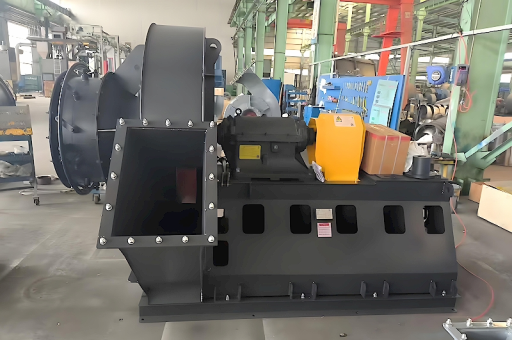
This is a marketing and technical description for an industrial or heavy-duty workshop fan designed to move air (and dust particles) through a dust collection system.
What "100% Copper Wire Motor" Means (The Key Feature)
This is the single most important feature for durability and performance. It refers to the windings inside the motor.
- 100% Copper Wire: The motor's electromagnets are made entirely of copper.
- The Alternative (Aluminum Wire): Cheaper motors use aluminum wire. This is a common cost-cutting measure.
Why Copper is Superior:
- Higher Conductivity: Copper conducts electricity about 40% better than aluminum. This means less energy is lost as heat. A copper motor runs cooler and more efficiently.
- Higher Tensile Strength: Copper is stronger than aluminum. It is less likely to break, snap, or deform due to vibration, thermal expansion, or physical stress. This is crucial in a dust collector fan which can vibrate significantly.
- Better Thermal Properties: Copper dissipates heat better than aluminum. Overheating is the #1 killer of electric motors. A copper motor is inherently more resistant to burnout from prolonged use or temporary overloads.
- Corrosion Resistance: Copper is more resistant to corrosion in humid or dusty environments compared to aluminum (which can oxidize and increase resistance over time).
The "Catch": A motor advertised this way is distinguishing itself from lower-quality "aluminum wire" motors. However, 100% copper is the standard for truly industrial-grade equipment. Any high-quality motor should use copper.
What "High Durability Dust Collector Fan" Entails
This implies the entire unit (not just the motor) is built for a harsh, continuous-duty environment. Key components include:
- Housing / Impeller (Fan Wheel):
- Material: Heavy-gauge steel or cast aluminum. Plastic housings are a sign of low durability.
- Coating: Powder-coated or epoxy-painted to resist rust and corrosion from sawdust, metal shavings, and humidity.
- Impeller Design: A "radial blade" or "backward-curved" impeller (not a simple "squirrel cage") is ideal. These are less prone to clogging with dust and can handle higher static pressure.
- Bearings:
- The Motor's Bearings: Look for Sealed, Double-Shielded Ball Bearings (not "sleeve" bearings). Ball bearings are far more durable for continuous use and handle radial and axial load from the fan wheel much better.
- Motor Construction:
- Totally Enclosed Fan Cooled (TEFC): This is a must. TEFC motors prevent dust from entering the motor windings. An "Open Drip-Proof" (ODP) motor will gum up and fail quickly.
- Class F or H Insulation: This indicates the motor's ability to withstand high operating temperatures (155°C or 180°C). Class B is lower-grade.
- Thermal Overload Protection: A built-in auto-reset or manual-reset thermal switch. This will cut power to the motor if it gets too hot, preventing burnout.
Why This Matters for a Dust Collector Fan
A dust collector fan (the "impeller" that creates suction) has a very difficult job:
- High Static Pressure: It must pull air through long, narrow hoses, filters (cyclone, bags, cartridges), and ductwork.
- Continuous Duty: It often runs for hours at a time in a workshop.
- Abrasive Environment: Dust is abrasive. A cheap fan will fail quickly.
- Risk of Clogging: Dust can build up on the impeller, causing imbalance and vibration.
A fan with a 100% copper wire motor and the other "high durability" features is built to survive this for years. A cheaper fan will fail in months or a year.
Typical Specifications to Look For
When you see this description, you should expect to find specs like these (adjust for your specific needs):
- Horsepower (HP): 1 HP, 2 HP, 3 HP, or more. (1.5 HP for single-bag, 3+ HP for cyclone systems).
- Voltage: 115V (single-phase for home shops) or 230V/460V (three-phase for industrial).
- Amperage: 12-14 Amps for a 1.5 HP motor at 115V.
- CFM (Cubic Feet per Minute): 800 CFM (for a small unit) to 2000+ CFM (for a large cyclone).
- Static Pressure (in H2O): At least 6-8 inches. Higher is better for ductwork.
- Impeller Diameter: 10" - 14" is common.
- RPM: 3450 RPM (for 60Hz power) or 2800 RPM (for 50Hz).
- Sound Level: A high-quality unit should be relatively quiet (80-85 dB or less) for its size.
- Inlet/Outlet Size: 4" - 6" for the main inlet.
How to Vet a "High Durability" Claim
Don't just trust the sticker. Check these details:
- Look for a Spec Sheet: Does the manufacturer list the motor wire type? If it's copper, they should. If they are vague, be suspicious.
- Check the Bearings: "Sealed ball bearings" is the key phrase. Ask if you can verify.
- Magnet Test: If you can access the motor itself, a strong magnet will stick to a steel motor housing but will not stick to copper. It will stick to aluminum. This is a simple test to confirm copper windings.
- Weight: A heavier motor (for its size) is almost always a copper motor.
- Look for a Name Brand: Motors from Leeson, Baldor, Marathon, WEG, or TECO are almost always copper. Generic "China" motors may or may not be.
Summary: Is it Worth It?
Yes, absolutely. For a dust collector fan—which is the heart of your dust collection system—the motor is the most critical component.
- A "100% Copper Wire" motor is not a luxury; it is the minimum standard for reliability and longevity.
- Any unit that claims "high durability" but uses an aluminum wire motor is fundamentally compromised.
The Bottom Line: If you see "High Durability Dust Collector Fan With 100% Copper Wire Motor," it is likely a well-built, industrial-grade product. It will cost more (significantly more) than a cheap "homeowner" model, but it will last and perform far better. It is a wise investment for any serious woodworker, metalworker, or shop that needs reliable dust collection.





