
This article's table of contents introduction:
- What is a 304 SS Dust Collector Fan?
- Why 304 Stainless Steel? (The Material Advantage)
- Key Features of a 304 SS High Pressure Centrifugal Blower
- Typical Applications
- How to Specify or Identify Your Fan (The "Sizing" Parameters)
- Common Model Types (Examples)
- A Word of Caution: Cost vs. Necessity
This sounds like you are referencing a specific type of industrial fan used for dust collection or pneumatic conveying, typically made from 304 Stainless Steel.
Since "304 SS" is the key differentiator (standard dust collectors are often made of carbon steel), let me break down what this fan typically is, why you would use it, and the key specifications involved.
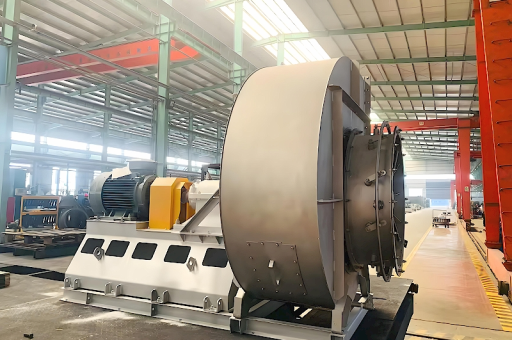
What is a 304 SS Dust Collector Fan?
It is a Centrifugal Blower (specifically a High Pressure design) built entirely or primarily from 304 Stainless Steel.
- Function: It creates the negative pressure (suction) to pull dust, fumes, or light materials from the source (grinder, saw, chemical reactor) through ductwork and into a filter (baghouse, cartridge, cyclone).
- The "High Pressure" Aspect: Unlike a standard HVAC fan, a "high pressure" centrifugal blower generates high static pressure (measured in inches of water gauge or kPa). This is required to overcome the resistance of filter bags, long duct runs, and high-density materials.
Why 304 Stainless Steel? (The Material Advantage)
You typically choose 304 SS over regular Carbon Steel for one of three reasons:
- Corrosion Resistance: The most common reason. If the dust or fumes are acidic, caustic, or humid (e.g., chemical processing, food production, pharmaceutical drying, or handling wet scrubbers), carbon steel will rust rapidly. 304 SS resists this.
- Sanitary Requirements: For food, pharmaceutical, or cleanroom applications, 304 SS is non-porous and easy to clean to prevent bacterial growth or contamination (e.g., handling flour, sugar, or pharmaceutical powders).
- Heat Resistance (Moderate): 304 SS retains its strength better than carbon steel at moderate elevated temperatures (up to ~800°C or 1470°F, though for a fan, the motor and bearings are the limiting factor, usually under 200°C/400°F for standard construction).
Key Features of a 304 SS High Pressure Centrifugal Blower
- Impeller Design: Typically a radial blade (paddlewheel) or backward inclined design.
- Radial: Handles heavy, sticky, or abrasive dust better (less clogging).
- Backward Inclined: More efficient for clean, high-volume air.
- Spark Resistance: A 304 SS impeller is non-sparking against itself, making it safer for combustible dust (though a full ATEX/CE rating is needed for explosive environments).
- Welded Construction: Critical SS welds are often passivated or pickled to restore the corrosion-resistant layer.
- Shaft Seal: Options include packed gland, labyrinth seal, or a mechanical seal (for toxic fumes).
Typical Applications
- Chemical Processing: Handling corrosive acid fumes, plastic dust, or reactive powders.
- Food & Beverage: Conveying grains, sugar, spices, or collecting dust in a bakery or brewery.
- Pharmaceutical: Collecting potent or sensitive drug powders in an isolator or glove box.
- Woodworking (Specific): Only if the dust is mixed with moisture or adhesives (standard wood dust is fine with carbon steel).
- Laser / Plasma Cutting: Collecting smoke and fine metal oxide particles from cutting processes.
How to Specify or Identify Your Fan (The "Sizing" Parameters)
If you are looking to buy or replace one, you need this info:
- Airflow (CFM / m³/h): How much air does it move?
- Static Pressure (SP) (in WG / Pa): How much resistance must it overcome? (Crucial for "high pressure").
- Motor Power (HP / kW): Usually 5 HP to 50+ HP for industrial units.
- Inlet/Outlet Diameter: Typically 6" to 20" for industrial dust collectors.
- Temperature: The actual gas temperature at the fan inlet.
Common Model Types (Examples)
- Arrangement 1 (Direct Drive): Impeller mounted directly on motor shaft. Simple, no belts. High speed.
- Arrangement 4 / 9 (Belt Drive): Impeller on a separate shaft with bearings, driven by belts. Allows speed changes (RPM) to fine-tune pressure and airflow.
- Utility Set / Backward Inclined: For higher efficiency.
- Radial Paddlewheel: For heavy or sticky material.
A Word of Caution: Cost vs. Necessity
- Cost: A 304 SS fan is typically 2x to 4x the price of a comparable carbon steel fan.
- Abuse: 304 SS is softer than carbon steel. If you are moving heavy, abrasive material (like crushed glass or iron foundry dust), 304 will wear out faster. You would want AR400 steel or a lined fan instead.
Are you looking to:
- Replace a specific existing fan (model number)?
- Size a fan for a new machine (welding table, grinder, reactor)?
- Understand why a previous fan failed (rust, erosion, imbalance)?
If you can provide the CFM and Static Pressure you need, or the details of your equipment, I can help you narrow it down further.





