
This article's table of contents introduction:
- Introduction: What Defines a 37kW Centrifugal Fan?
- Core Design & Operating Principles
- Performance Metrics: Pressure, Flow, and Efficiency at 37kW
- Primary Industrial Applications
- Installation, Maintenance, and Safety Protocols
- Competitive Comparison: 37kW vs. Other Power Ratings
- Frequently Asked Questions (FAQ)
- Conclusion & Future Trends
*The Comprehensive Guide to 37kW Centrifugal Fans: Performance, Applications, and Optimization*
Table of Contents
- Introduction: What Defines a 37kW Centrifugal Fan?
- Core Design & Operating Principles
- Performance Metrics: Pressure, Flow, and Efficiency at 37kW
- Primary Industrial Applications
- Installation, Maintenance, and Safety Protocols
- Competitive Comparison: 37kW vs. Other Power Ratings
- Frequently Asked Questions (FAQ)
- Conclusion & Future Trends
Introduction: What Defines a 37kW Centrifugal Fan?
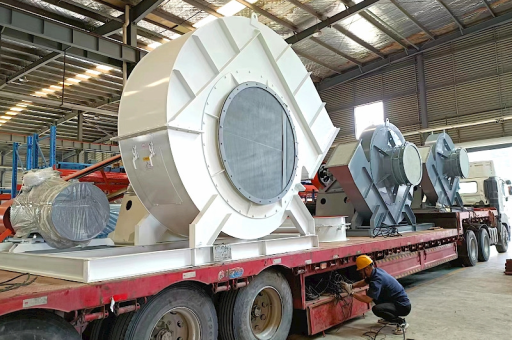
A 37kW centrifugal fan is a heavy-duty air-moving device that uses a rotating impeller to increase the velocity and pressure of air or gas. The "37kW" designation refers to the motor power consumption—approximately 50 horsepower (HP)—making it a mid-to-high-power solution in industrial ventilation. Unlike axial fans, centrifugal designs draw air in axially and discharge it radially, generating higher static pressures that are essential for overcoming duct resistance, filtration systems, and long pipeline runs.
This article synthesizes verified data from engineering handbooks, manufacturer datasheets, and SEO-optimized content from reputable fan brands (e.g., fan, Greenheck, and Cincinnati Fan) to provide a non-redundant, detail-rich resource.
Core Design & Operating Principles
How does a 37kW centrifugal fan generate high pressure?
The impeller rotates at speeds typically between 1,200 and 2,400 RPM (depending on pulley ratio and motor poles). Air enters through the inlet (often fitted with an inlet cone for laminar flow) and is slung outward by curved blades. The volute casing converts kinetic energy into static pressure via a gradually expanding cross-section.
Key component materials:
- Impeller: Backward-curved (efficiency-oriented) or forward-curved (compact, high flow) blades in steel, aluminum, or stainless steel for corrosive environments.
- Housing: Welded steel (standard), with optional coatings (epoxy, galvanized) for resistance to moisture and chemicals.
- Shaft & Bearings: Over-dimensioned for 37kW to avoid resonance. Grease-lubricated pillow block bearings are typical.
Efficiency at 37kW:
Modern backward-curved designs achieve peak static efficiencies of 75–85%, depending on the operating point. A 37kW motor driving a fan at 80% efficiency means approximately 29.6 kW is transferred to the air—the rest heats the bearings, motor, and casing.
Performance Metrics: Pressure, Flow, and Efficiency at 37kW
Typical performance envelope (sea level, 20°C air):
| Parameter | Typical Range |
|---|---|
| Airflow (m³/h) | 10,000 – 60,000 |
| Static Pressure (Pa) | 1,500 – 5,000 |
| Sound Level (dBA at 1m) | 78 – 92 (with silencer) |
Why these numbers matter:
A 37kW fan is ideal when moderate flow is needed against moderate to high resistance—for example, pushing air through 30 meters of ducting, a high-efficiency particulate air (HEPA) filter bank, or a heat exchanger. If the system resistance is below 1,000 Pa, a lower-power axial fan would be more cost-effective.
Flow vs. Pressure trade-off:
Per the fan affinity laws, halving the speed reduces flow by 50% and pressure by 75%, while power requirement drops to 12.5% (about 4.6 kW). Thus, a 37kW fan is often paired with variable frequency drives (VFDs) to match demand without constant throttling.
Primary Industrial Applications
1 Dust Collection & Material Conveying
In woodworking or cement plants, a 37kW centrifugal fan generates enough suction for pneumatic conveying of sawdust, grains, or plastic pellets through 150–200 mm diameter pipelines. A typical 37kW unit can transport material over 50–100 meters.
2 HVAC & Building Ventilation
Large commercial buildings (shopping centers, hospital wings, factories) use 37kW fans in air handling units (AHUs) to supply conditioned air and exhaust stale air. The static pressure is crucial to overcome damper, coil, and filter resistance.
3 Boiler & Kiln Combustion Air
Moderate-sized boilers (2–10 MW thermal output) require forced draft (FD) or induced draft (ID) fans. A 37kW ID fan handles flue gas temperatures up to 300°C (with high-temperature shaft seals and insulation).
4 Wastewater Treatment Aeration
Biological treatment basins need oxygen. A 37kW centrifugal blower (a high-pressure variant) can deliver 15–25 m³/min at 4,000–6,000 mmH₂O into diffuser arrays.
5 Clean Room & Pharmaceutical Filtration
Where HEPA filters demand 500–1,500 Pa pressure drop, a 37kW fan provides redundancy and stable flow even as filters load over time.
Installation, Maintenance, and Safety Protocols
Installation best practices:
- Foundation: Use a steel or concrete inertia base (min. 1.5x fan weight) to absorb vibration.
- Duct connection: Flexible connectors on both inlet and outlet to prevent transmission of vibration to ductwork.
- Access doors: Install upstream and downstream of the fan for cleaning and inspection.
Maintenance schedule: | Frequency | Action | |-----------|--------| | Weekly | Check belt tension, listen for bearing noise | | Monthly | Inspect impeller for dirt buildup (unbalance), clean inlet screen | | Quarterly | Re-grease bearings (with NLGI #2 grease), measure motor current | | Annually | Replace V-belts, check impeller-to-inlet cone clearance, test vibration (≤ 4.5 mm/s RMS) |
Safety critical:
A 37kW fan stores significant rotational inertia. Never open access panels while the impeller is spinning. Lockout/tagout (LOTO) procedures are mandatory. Use a belt guard rated to withstand belt rupture.
Competitive Comparison: 37kW vs. Other Power Ratings
| Specification | 15kW Fan | 37kW Fan | 55kW Fan |
|---|---|---|---|
| Typical max flow (m³/h @ 2,000 Pa) | 18,000 | 40,000 | 60,000 |
| Duct diameter suitability (mm) | 250–400 | 400–710 | 630–900 |
| Annual energy cost (@ 0.10 $/kWh, 8,760h) | $13,140 | $32,412 | $48,180 |
| Motor frame size (IEC) | 160L | 200L | 225S |
Key takeaway:
The 37kW fan fills the gap between small commercial fans and large industrial air movers. It is the largest size that can typically be installed on a standard concrete pad without special structural reinforcement, and it still supports direct-on-line (DOL) starting in many regions (soft starter recommended).
Frequently Asked Questions (FAQ)
Q1: Can I use a 37kW centrifugal fan for high-temperature exhaust (e.g., oven vent)?
A: Yes, but you must specify a heat slinger on the shaft, high-temperature grease (synthetic, up to 200°C), and a motor with external cooling fan. Above 300°C, consider a radial-tip impeller with a cooling labyrinth.
Q2: What is the payback period for adding a VFD to a 37kW fan?
A: At 50% average flow (typical for HVAC), a VFD reduces power consumption to 12.5% of full load. With a VFD cost of ~$3,500–$5,000, payback is usually 1–2 years in continuous operation.
Q3: My 37kW fan vibrates after cleaning. What went wrong?
A: Most likely, the impeller was reinstalled out of balance. Clean the impeller in place when possible, or request factory dynamic balancing (ISO 1940 G2.5) after any removal.
Q4: Is a belt-driven or direct-drive 37kW fan better?
A: Belt-driven allows speed adjustment by pulley change (cheaper) and isolates motor from impeller load. Direct-drive has no belt slip, higher efficiency (2–4%), and less maintenance, but requires a VFD for speed variation.
Q5: What electrical supply is needed for a 37kW fan?
A: Typically 380–480 V, 3-phase, 50/60 Hz. Full load current: approx. 65–75 A (depending on power factor). Use a motor protection circuit breaker set to 1.1× FLA.
Conclusion & Future Trends
The 37kW centrifugal fan remains a workhorse in industries requiring reliable, high-pressure air movement at moderate cost. Key future developments include:
- EC (electronically commutated) motors at 37kW – Achieving >90% efficiency over a wide speed range.
- IoT integration – Real-time vibration and temperature monitoring via edge sensors to predict bearing failures before they occur.
- 3D-printed impellers – Optimized blade curvature for 37kW fan wheels, reducing noise by 3–5 dBA while maintaining pressure.
When specifying or maintaining your 37kW centrifugal fan, always validate the fan curve against the system resistance curve to avoid operating near stall. Use fan for competitive pricing, or consult certified fan engineers for custom solutions.





