
Mastering Airflow: The Ultimate Guide to 9000Pa Centrifugal Fan Technology and Applications
Table of Contents
- Introduction: What Is a 9000Pa Centrifugal Fan?
- Key Technical Specifications and Performance Metrics
- How Does a 9000Pa Centrifugal Fan Work? (Q&A)
- Industrial Applications: Where High Static Pressure Matters
- Design Variations: Forward-Curved vs. Backward-Curved Impellers
- Energy Efficiency and Operating Cost Analysis
- Installation Best Practices for Maximum Performance
- Common Troubleshooting and Maintenance (Q&A)
- Comparing 9000Pa Fans with Lower-Pressure Alternatives
- Future Trends in High-Pressure Fan Technology
- Conclusion and Selection Checklist
Introduction: What Is a 9000Pa Centrifugal Fan?
A 9000Pa centrifugal fan represents a specialized class of industrial air-moving equipment designed to generate exceptionally high static pressure—up to 9000 Pascals (approximately 36 inches of water gauge). Unlike standard ventilation fans that prioritize high airflow at low resistance, these fans excel in systems where air must be forced through dense filters, long duct runs, or restrictive process equipment.
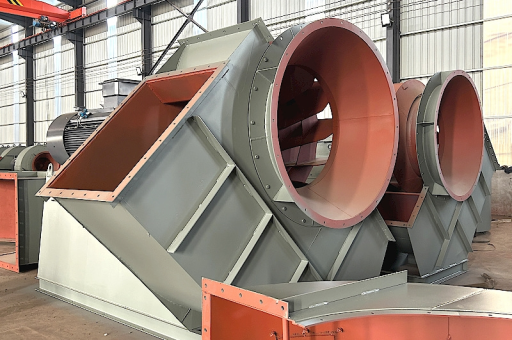
The term "centrifugal" refers to the fan's operating principle: air enters axially near the impeller hub, is accelerated radially outward by rotating blades, and exits tangentially into a volute casing. This design inherently produces higher pressure than axial fans, and the 9000Pa rating places these units in the heavy-duty industrial category, often used in cement plants, pneumatic conveying systems, chemical processing, and specialized HVAC applications.
Modern 9000Pa centrifugal fans incorporate precision-balanced impellers, robust bearing systems, and variable-speed drive capabilities. They are available in direct-drive and belt-drive configurations, with construction materials ranging from coated steel to stainless steel or exotic alloys for corrosive environments.
Key Technical Specifications and Performance Metrics
Understanding the performance parameters of a 9000Pa centrifugal fan is essential for correct system design. The following table summarizes critical specifications:
| Parameter | Typical Range | Notes |
|---|---|---|
| Maximum Static Pressure | 8500–9500 Pa | Measured at zero airflow (shutoff) |
| Airflow Capacity | 1,000–50,000 m³/h | Depends on impeller diameter and speed |
| Impeller Diameter | 315–1250 mm | Larger diameters for higher flow |
| Rotational Speed | 1450–3000 RPM | Belt-drive allows speed adjustment |
| Motor Power | 2–75 kW | Proportional to pressure × flow |
| Noise Level | 75–95 dB(A) | Requires silencers for indoor use |
| Operating Temperature | -20°C to +120°C | Higher with special materials |
The fan curve is the most important tool for selecting a 9000Pa centrifugal fan. It plots static pressure against airflow, showing how pressure drops as flow increases. For a 9000Pa fan, the operating point should never exceed the maximum pressure rating, as this can cause motor overload or mechanical failure. Most manufacturers provide performance data certified in accordance with ISO 5801 or AMCA 210 standards.
Efficiency typically ranges from 65% to 82% for well-designed backward-curved impellers. Forward-curved designs may achieve slightly lower peak efficiency but offer higher flow at moderate pressures. Modern computational fluid dynamics (CFD) optimizations have improved efficiencies by 8–12% compared to fans designed a decade ago.
How Does a 9000Pa Centrifugal Fan Work? (Q&A)
Q: What exactly creates the high static pressure in a 9000Pa centrifugal fan?
A: High static pressure is generated through two physical mechanisms: centrifugal force and velocity conversion. As the impeller rotates, air is flung outward by centrifugal force, accumulating kinetic energy. The volute casing—a spiral-shaped housing—gradually expands in cross-sectional area, converting the air's high velocity into static pressure. This is similar to how a diffuser works in a turbine. The 9000Pa rating means the fan can maintain a pressure differential equivalent to a 900-meter column of water against system resistance.
Q: How does a 9000Pa fan differ from a common HVAC fan rated at 500 Pa?
A: The difference is dramatic. A standard HVAC fan operates near atmospheric pressure and moves large volumes with little resistance. A 9000Pa fan, by contrast, is built for high-resistance systems. For example, pushing air through a 20-meter-long fabric filter baghouse requires 3000–6000 Pa. The 9000Pa fan can handle this while maintaining adequate airflow. Additionally, the 9000Pa fan uses heavier-gauge steel housings, reinforced shafts, and specialized bearings to withstand the mechanical stresses of high-pressure operation.
Q: Can a 9000Pa centrifugal fan be used in explosion-proof environments?
ATEX-certified versions are available. These fans use spark-resistant impeller materials (aluminum or non-ferrous alloys), conductive coatings, and sealed bearing housings to prevent ignition sources. For Zone 1 and Zone 2 hazardous areas, the motor must also be explosion-proof. Always verify the fan's ATEX certification rating against your specific gas group and temperature class before installation.
Q: What happens if the fan operates beyond its 9000Pa capability?
A: Operating at a pressure exceeding the fan's design point leads to stall or surge. In stall, airflow becomes unstable, causing vibration and noise. Prolonged stall can damage bearings and impeller blades. Surge is more severe—flow reverses momentarily, causing pressure fluctuations that can crack housings or damage ductwork. Modern fans often include surge detection sensors that trigger alarms or shut down the unit.
Industrial Applications: Where High Static Pressure Matters
9000Pa centrifugal fans are indispensable in industries where air must overcome significant resistance. Below are the most common applications, each with specific performance requirements.
1 Pneumatic Conveying Systems
In systems transporting bulk materials (cement, flour, plastic pellets), the fan must generate enough pressure to suspend particles in air and push them through pipelines. A 9000Pa fan can convey material over distances of 200–500 meters, depending on pipe diameter and material density. The fan must handle abrasive particles, so impeller coatings (e.g., carbide or ceramic) are often applied.
2 Baghouse Dust Collectors
Industrial dust collectors with fabric filter bags require high static pressure to pull air through accumulated dust cake. A typical baghouse operates at 2000–5000 Pa during normal conditions but requires the fan to handle up to 8000 Pa during cleaning cycles or when filters become fully loaded. The 9000Pa rating provides a safety margin.
3 Cement and Mining Ventilation
In cement plants, fans pressurize vertical roller mills, where air must pass through grinding zones and separator classifiers. Similarly, mining ventilation systems require fans that can maintain airflow in long, narrow tunnels with high friction losses. A 9000Pa centrifugal fan can overcome 3–5 km of ductwork resistance in underground mines.
4 Chemical Reactor Air Supply
Chemical processes often require precise air injection into reactors under pressure. The 9000Pa fan must deliver consistent airflow despite fluctuating backpressure from reactor contents. Stainless steel construction is mandatory for corrosive gas environments, and the fan must comply with API 673 standards for reliability.
5 High-Efficiency HVAC Systems
In cleanrooms, hospitals, and data centers, HEPA filters can generate 500–1500 Pa resistance each. A multi-stage filtration system with pre-filters, bag filters, and HEPA filters may total 3000–6000 Pa. The 9000Pa fan provides the necessary headroom to maintain design airflow as filters load over time, reducing the frequency of filter changes.
Design Variations: Forward-Curved vs. Backward-Curved Impellers
The impeller blade orientation fundamentally affects fan performance. Understanding the differences helps in selecting the right 9000Pa centrifugal fan.
| Feature | Forward-Curved (Squirrel Cage) | Backward-Curved (Airfoil) |
|---|---|---|
| Blade Angle | Curved in direction of rotation | Curved opposite to rotation |
| Peak Efficiency | 65–75% | 78–85% |
| Pressure Range | Moderate (up to 5000 Pa typical) | High (up to 9000+ Pa) |
| Noise Level | Lower at same airflow | Higher due to blade pass frequency |
| Shaft Power | Increases with flow | Decreases after best efficiency point |
| Cost | Lower initial cost | Higher initial cost, lower operating cost |
For a 9000Pa centrifugal fan, backward-curved or airfoil impellers are nearly universal. These blades operate with lower turbulence and can sustain high pressure without overloading the motor. The "non-overloading" characteristic means that if system resistance drops unexpectedly, the motor current does not exceed rated values—a critical safety feature.
Forward-curved fans can theoretically reach 9000Pa at very high speeds, but they would draw excessive power and could overload the motor. They are rarely used above 5000Pa in practice.
Energy Efficiency and Operating Cost Analysis
A 9000Pa centrifugal fan often runs continuously in industrial processes, making energy efficiency a top priority. Consider a typical 30 kW fan operating 8000 hours per year:
| Metric | Standard Fan (65% efficiency) | High-Efficiency Fan (82% efficiency) |
|---|---|---|
| Annual Energy Consumption | 240,000 kWh | 190,244 kWh |
| Annual Energy Cost ($0.10/kWh) | $24,000 | $19,024 |
| Annual Savings | $4,976 |
Over a 10-year lifespan, the high-efficiency fan saves nearly $50,000, more than offsetting its higher purchase price. Additional savings come from reduced cooling load (waste heat rejection) and lower demand charges.
Variable Frequency Drives (VFDs) can further reduce energy use by 20–40%. When the system requires less pressure or flow, the fan slows down, and power decreases with the cube of speed. For example, reducing speed by 20% cuts power consumption by nearly 50%. Always specify VFD-ready motors (typically with inverter-duty insulation) when purchasing a 9000Pa centrifugal fan.
Installation Best Practices for Maximum Performance
Proper installation directly affects the reliability and efficiency of a 9000Pa centrifugal fan. Follow these guidelines:
-
Foundation and Vibration Isolation: Mount the fan on a heavy concrete inertia base weighing 2–3 times the fan weight. Use spring isolators or neoprene pads to prevent vibration transmission to building structures. For high-pressure systems, inertia bases reduce pulsation-induced movement.
-
Inlet and Outlet Ductwork: Maintain straight duct runs of at least 3–5 duct diameters before the fan inlet and 5–10 diameters after the outlet. Avoid elbows within this zone, as they create uneven flow that can reduce efficiency by 10–20% and increase noise. Install turning vanes in unavoidable elbows.
-
Inlet Box Dampers: Use volume control dampers on the inlet rather than the outlet. Inlet dampers reduce airflow by pre-swirling the air, which lowers power consumption compared to outlet dampers that create backpressure. For VFD-controlled systems, dampers may be unnecessary.
-
Cooling and Lubrication: High-pressure fans generate more heat. Ensure bearing housings have grease relief valves and are lubricated with high-temperature grease (NLGI 2 rated for 120°C+). For belt-driven fans, check belt tension weekly and replace belts in matched sets.
-
Differential Pressure Monitoring: Install pressure taps before and after the fan to monitor system resistance. Compare readings against the fan curve to verify operation at the design point. A pressure drop exceeding 15–20% of design may indicate filter loading or duct blockages.
Common Troubleshooting and Maintenance (Q&A)
Q: My 9000Pa centrifugal fan is vibrating excessively. What could be wrong?
A: Vibration in high-pressure fans typically stems from impeller imbalance, bearing wear, or resonance. First, check for debris accumulation on blades (cleaning reduces imbalance). If clean, measure vibration velocity using an accelerometer. Imbalance shows high vibration at 1× rotational speed; bearing faults appear at 2× or 3× RPM. Resonance occurs when fan speed aligns with a structural natural frequency—change speed by 5–10% to verify. If imbalance persists, have the impeller dynamically balanced on-site.
Q: How often should bearings be replaced?
A: For continuous operation at 9000Pa, bearing life typically ranges from 20,000 to 40,000 hours for spherical roller bearings (the most common type in high-pressure fans). Schedule replacement at 30,000 hours or when vibration exceeds 7 mm/s RMS. Use vibration trend data to predict failures. Proactive replacement avoids catastrophic shaft damage.
Q: The fan is not reaching its rated pressure of 9000Pa. Why?
A: Several factors can cause underperformance:
- Inlet blockage (frozen damper, bird screen clogged)
- Impeller damage (eroded or bent blades reduce pressure generation)
- Belt slip (check tension; tighten or replace belts)
- Motor speed too low (verify with tachometer; adjust VFD settings)
- System leaks (inspect ducts for holes or gaps)
- Altitude correction (fans produce less pressure at high elevations—derate by 1% per 100m above sea level)
Measure static pressure with a manometer at the fan discharge. Compare with the certified fan curve. If the measured point lies below the curve, investigate the above causes.
Q: What maintenance schedule should I follow?
| Interval | Task |
|---|---|
| Weekly | Check belt tension, listen for unusual noises, inspect vibration |
| Monthly | Grease bearings (if not sealed), clean inlet screen, verify pressure readings |
| Quarterly | Check impeller clearance (should be <2mm for high pressure), balance if needed |
| Annually | Replace belts, inspect bearing condition, test motor windings, recalibrate sensors |
Comparing 9000Pa Fans with Lower-Pressure Alternatives
Choosing between a 9000Pa centrifugal fan and a lower-pressure model depends on the system's resistance curve. If your system has a total resistance of 3000 Pa at the required flow, selecting a 9000Pa fan may seem overkill, but consider these trade-offs:
| Factor | 3000Pa Fan | 9000Pa Fan |
|---|---|---|
| Initial Cost | Lower | 50–80% higher |
| Energy Consumption at same flow | Lower (if well-matched) | Higher (friction losses increase) |
| Operating Pressure Range | 2000–3500 Pa | 3000–9000 Pa |
| Future Capacity Margin | Limited | High (can handle future filter additions) |
| Weight and Footprint | Lighter, smaller | Heavier, larger |
When to choose a 9000Pa fan over a lower-pressure model:
- System resistance may increase over time (e.g., filter loading, duct aging)
- The same fan will be used for different processes with varying pressure requirements
- Redundancy is needed—a 9000Pa fan at reduced speed operates efficiently at lower pressures
- The system includes poorly designed ductwork with high friction losses
When a lower-pressure fan is better:
- System resistance is stable and below 5000Pa
- Space and weight constraints are critical
- First cost is the primary driver (short-term projects)
In many cases, selecting a 9000Pa centrifugal fan with VFD control provides the best of both worlds: you can operate it at lower speeds for most of its life, saving energy, while retaining the ability to handle peak demands.
Future Trends in High-Pressure Fan Technology
The industrial fan market is evolving rapidly. Here are key trends shaping 9000Pa centrifugal fans:
-
Digital Twin Integration: Manufacturers now offer CFD-modeled digital twins of fans that simulate performance under real operating conditions. Engineers can test different impeller designs, duct layouts, and control strategies without physical prototyping.
-
Condition Monitoring Systems: Smart sensors (vibration, temperature, pressure, current) send data to cloud-based maintenance platforms. Machine learning algorithms predict bearing failures up to 14 days in advance, reducing unplanned downtime by 30–50%.
-
Advanced Materials: Additive manufacturing (3D printing) enables complex impeller geometries that improve efficiency by 5–8%. Polymer composites and ceramic coatings extend impeller life in abrasive environments.
-
Energy Recovery Integration: New fan systems incorporate run-around coils or heat pipes that recover waste heat from high-pressure air. In cement plants, recovered heat can preheat raw materials, offsetting up to 15% of process energy.
-
Low-Noise Designs: Silencers integrated into the fan casing (using micro-perforated panels and absorptive baffles) reduce noise by 10–15 dB(A) compared to traditional external silencers. This is critical for indoor installations near workers.
-
Modular Construction: Fan housings are now available in bolted sections for easier transport and field assembly. A 1250mm-diameter 9000Pa fan can be shipped in three pieces and assembled on-site with crane assistance.
Conclusion and Selection Checklist
A 9000Pa centrifugal fan is a powerful tool for moving air against high resistance in demanding industrial environments. Its ability to maintain consistent airflow despite variable system conditions makes it indispensable for pneumatic conveying, dust collection, and high-efficiency filtration. However, the fan's performance depends on careful selection, proper installation, and proactive maintenance.
Selection Checklist for Your Next 9000Pa Centrifugal Fan
Before purchasing, confirm the following:
- [ ] System maximum static pressure requirement (including 15–20% safety margin)
- [ ] Required airflow at design pressure (m³/h or CFM)
- [ ] Operating temperature and humidity range
- [ ] Presence of corrosive or abrasive particles in the airstream
- [ ] Space constraints for fan and ductwork
- [ ] Available power supply (voltage, phase, frequency)
- [ ] Need for variable speed control (VFD compatibility)
- [ ] ATEX or hazardous area certification requirements
- [ ] Noise limits (specify silencers if needed)
- [ ] Spare parts availability and local service support
By systematically addressing these factors, you will select a fan that delivers reliable, efficient performance for years. Remember that the total cost of ownership—including energy, maintenance, and downtime—often outweighs the initial purchase price. Invest in quality, efficiency, and support, and your 9000Pa centrifugal fan will be a cornerstone of your industrial operation.
For further technical details, consult the manufacturer's performance curves and installation manuals. Every system is unique; always involve a professional engineer in the design phase.





