
This article's table of contents introduction:
- What is a "Backward Curved" Fan?
- Why "Stainless Steel"?
- Common Applications
- Key Advantages
- Disadvantages & Limitations
- Construction & Materials (Typical)
- Key Specifications to Consider
- Common Manufacturers (Examples)
- Summary Table
Here is a comprehensive overview of Backward Curved Stainless Steel Blower Fans.
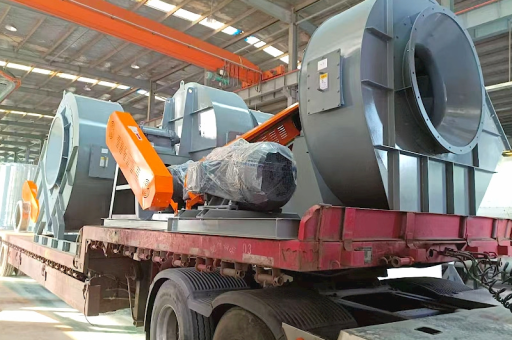
These fans are a specific type of centrifugal fan, chosen for applications demanding high efficiency, clean airflow, and resistance to harsh environments.
What is a "Backward Curved" Fan?
The "backward curved" (often abbreviated as BC or BI for "Backward Inclined") refers to the shape of the fan blades. The blades curve away from the direction of rotation.
- How it works: Air is thrown outward by centrifugal force. The blade shape creates a smooth flow path, allowing for high-speed operation with minimal turbulence.
- Key Performance Characteristic (The "Non-Overloading" Feature): This is the most critical advantage. The power consumption of a backward curved fan reaches a peak and then decreases as airflow increases. This means the motor cannot be overloaded, even if the duct system is completely open (static pressure is zero). This is a major safety and reliability feature.
Why "Stainless Steel"?
The material is chosen for specific environmental and operational reasons.
- Corrosion Resistance: Handles moisture, chemicals, salt spray, and acidic or alkaline fumes.
- Sanitation: Non-porous and easy to clean, preventing bacterial growth. Often has a smooth finish (e.g., #4 finish) for hygiene.
- Spark Resistance: Non-ferrous (specifically, 304 or 316L stainless steel) reduces the risk of sparks, which is crucial for flammable or explosive environments.
- High Temperature Tolerance: Can withstand higher temperatures than standard painted steel or aluminum.
- Strength & Durability: Can handle high rotational speeds and pressures without deformation.
Common Applications
These fans are the standard choice for industries where cleanliness, corrosion resistance, or explosion-proofing is required.
- Laboratory & Fume Hood Exhaust: Handling corrosive chemical vapors and toxic fumes.
- Food & Beverage Processing: Exhausting steam, grease, and heat in kitchens, bakeries, and processing plants (hygienic and easy to clean).
- Pharmaceutical & Cleanroom HVAC: Moving clean air in sterile environments.
- Wastewater Treatment: Ventilating corrosive gases like hydrogen sulfide (H₂S) from tanks and pipes.
- Chemical Processing: Moving corrosive gases, acid fumes, and solvents.
- Marine & Offshore: Resistant to saltwater corrosion.
- Printing & Plating: Exhausting flammable solvents, acid fumes, and high humidity.
- General Industrial Ventilation: Where high efficiency, quiet operation, and resistance to mild corrosive agents are needed.
Key Advantages
- High Efficiency: Typically 70-80% efficient, significantly higher than forward curved (squirrel cage) or radial blade fans. This translates to lower energy costs.
- Non-Overloading Power Curve: A crucial safety feature. The motor will not burn out if the outlet is blocked or the system resistance drops.
- Quiet Operation: The aerodynamic blade design produces less noise than other centrifugal fan types at the same duty point.
- High Static Pressure Capability: Can overcome significant resistance in ductwork, filters, and scrubbers.
- Long Service Life: Stainless steel construction resists rust and chemical attack, reducing maintenance and replacement frequency.
- Wide Operating Range: Can handle varying airflow rates and system pressures efficiently.
Disadvantages & Limitations
- Cost: Stainless steel is significantly more expensive than painted steel or aluminum. The complex blade shaping also adds to the cost.
- Weight: Stainless steel fans are heavier than those made from other materials, requiring sturdier mounting and foundations.
- Handling Particulate: Backward curved blades can clog with sticky or fibrous materials because the air changes direction sharply. They are not ideal for conveying heavy dust, lint, or chips (for that, you would use a Radial Blade or Paddle Wheel fan).
- Speed Sensitivity: They need to run at a specific speed to generate their peak efficiency. Variable Frequency Drives (VFDs) are highly recommended to match speed to the system demand.
Construction & Materials (Typical)
- Impeller: 304 or 316L Stainless Steel (chosen for superior corrosion resistance). Blades are often continuously welded to a cone-shaped hub for strength.
- Housing (Scroll): 304 or 316L Stainless Steel, fully welded with flanged inlet and outlet connections. Often has a drain plug for condensation.
- Shaft: High-strength steel (often 4140), typically with an Inpro/Seal bearing isolator to prevent contamination. Sometimes stainless steel (a premium option).
- Bearings: Heavy-duty, regreasable ball bearings with a high L10 life rating.
- Motor: Industrial-grade, TEFC (Totally Enclosed Fan Cooled) or Explosion-Proof (e.g., Class I, Div 1 or 2 for Group D gases). Must be properly sized for the non-overloading curve.
- Factory Testing: Every fan should be factory tested for balance and performance (AMCA certified is a good sign for performance).
Key Specifications to Consider
When selecting a backward curved stainless steel blower fan, you must know:
- Volume Flow Rate (CFM or m³/h): How much air you need to move.
- Static Pressure (SP in inches w.g. or Pa): The resistance of your system (ductwork, dampers, filters, scrubbers, etc.).
- Air Temperature (°F or °C): Material limits and performance derate for hot air.
- Air Composition: What chemicals, moisture, or particulates are in the air? This dictates the specific stainless steel grade (e.g., 304 vs. 316L).
- Location: Indoor or outdoor? Hazardous environment? (ATEX or NEC Class/Div).
- Motor Requirements: Voltage (e.g., 460V/3ph), Phase, Frequency, Explosion-Proof rating if needed.
Common Manufacturers (Examples)
- New York Blower Company (NYB)
- Greenheck
- Twin City Fan
- Chicago Blower
- Cincinnati Fan
- Soler & Palau (S&P)
- Amair (More budget-friendly options)
Summary Table
| Feature | Backward Curved Stainless Steel Fan |
|---|---|
| Blade Shape | Curved away from rotation |
| Primary Material | Stainless Steel (304, 316L) |
| Efficiency | High (70-80%+) |
| Power Characteristic | Non-Overloading (Motor safe) |
| Noise Level | Low to Moderate |
| Static Pressure | High Capability |
| Particulate Handling | Poor (clogs easily) |
| Corrosion Resistance | Excellent |
| Cost | High |
| Typical Use | Clean, corrosive, or high-temp exhaust |
If you have a specific application or duty point (CFM/SP), I can help you narrow down the fan selection further.





