
This article's table of contents introduction:
- 16Mn (Material)
- Single Inlet
- High Temperature Materials
- Drying Boiler Blower Fan
- Potential Issues to Consider
- Common Use Cases
- Recommendations for Specification
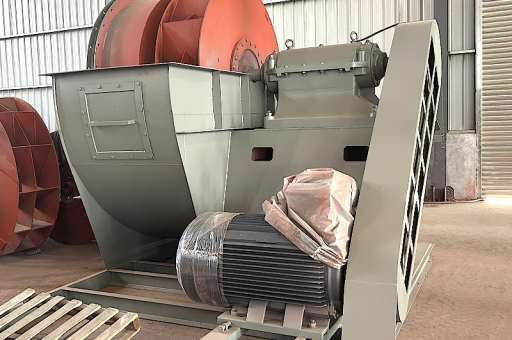
This sounds like a description of a specific type of industrial fan used in a high-temperature drying process. Let's break down the components of this description:
16Mn (Material)
- What it is: This refers to a low-alloy, high-strength structural steel (also known as Q355B or 16MnCr5 in older standards). It contains about 0.12-0.20% Carbon and 1.2-1.6% Manganese.
- Why it's used here:
- High Strength: It is stronger than standard carbon steel (Q235), allowing for thinner walls while withstanding pressure and stress.
- Toughness: It offers good impact resistance, which is important for rotating equipment like a fan impeller.
- Cost-Effective for Moderate Heat: It can handle temperatures up to ~300-350°C (572-662°F) without significant loss of structural integrity. Above that temperature, it may creep or soften, requiring stainless steel (like 310S) for higher heat applications.
Single Inlet
- Design: The fan housing has one air intake (suction side) and one discharge. This is the most common design for medium-pressure, high-volume industrial fans.
- Comparison: Opposed to Double Inlet (DI) fans, which have two intakes (left and right) and are typically used for very high airflow in low-pressure applications (like air conditioning).
High Temperature Materials
- Application Context: The fan is moving hot gas (e.g., combustion exhaust, superheated steam, or hot air from a boiler or dryer).
- Construction Features:
- Bearings: Must have external cooling (water jackets or cooling fins) and be rated for high temperatures (typically 200°C to 450°C).
- Shaft Seal: An air-cooled or water-cooled seal to prevent hot gas from leaking into the bearing housing.
- Expansion Joints: The fan casing may need flexible connections to accommodate thermal expansion.
- Lubrication: High-temperature grease or oil.
Drying Boiler Blower Fan
- Function: This fan is specifically designed for drying applications where a boiler provides the heat source.
- Boiler Blower: Provides forced draft (FD) or induced draft (ID) for the boiler itself.
- Drying Fan: Can also be a recirculation fan or exhaust fan for a drying chamber (e.g., drying grains, wood, minerals, sludge).
- Key Performance Parameters:
- Airflow: Measured in m³/h or CFM (Cubic Feet per Minute).
- Static Pressure: Measured in mmH₂O, Pa, or kPa.
- Temperature: Operating temperature range (e.g., 150°C to 350°C).
- Gas Characteristics: Is the air clean or loaded with dust, moisture, or corrosive gases?
Potential Issues to Consider
- Corrosion: High-temperature drying often involves moisture condensation on startup or shutdown. 16Mn is not corrosion-resistant. If the gas is acidic (e.g., from burning high-sulfur fuel) or contains chlorides, corrosion will be severe. You may need a special coating (e.g., epoxy, ceramic) or a higher alloy (e.g., Corten, 316L, 310S).
- Vibration & Balance: At high temperatures, the impeller material expands. The design must account for this expansion to prevent locking against the housing or creating imbalance. High-speed drying fans often require dynamic balancing at operating temperature.
- Fan Speed: Drying boiler blowers often operate at high speeds (e.g., 1450 RPM or 2900 RPM) to generate pressure. Ensure the fan is rated for the correct RPM.
- Motor Sizing: The motor must be powerful enough to handle the air volume and pressure at peak load, typically with a 10-15% safety margin. In high-temperature applications, the air becomes less dense, which can actually reduce the motor load (compared to cold start), but the cold start load must be considered.
- Fan Type: Is this a Centrifugal Fan (blade type: forward curved, backward curved, radial) or an Axial Fan? Drying boilers typically use backward-curved or airfoil centrifugal fans for efficiency and high pressure.
Common Use Cases
- Biomass Boilers (drying wood chips or straw)
- Coal-Fired Boilers (drying coal before injection)
- Industrial Laundries (drying linens)
- Cement Plants (drying raw materials)
- Food Processing (drying grains, seeds, or additives)
Recommendations for Specification
If you are specifying or purchasing this fan, you need to provide the following parameters:
- Maximum Operating Temperature: (e.g., 250°C continuous, 350°C peak)
- Gas Composition: (e.g., air, flue gas, dust content)
- Airflow: (e.g., 50,000 m³/h)
- Static Pressure: (e.g., 2,500 Pa)
- Fan Speed: (RPM)
- Motor Power: (kW)
- Drive Type: (Direct drive or belt drive)
- Mounting: (Base frame, spring isolators, etc.)
Summary: The "16Mn Single Inlet High Temperature Materials Drying Boiler Blower Fan" is a centrifugal fan made of high-strength steel (16Mn) with one intake, designed to move very hot air or flue gas for drying products in an industrial boiler system. It is strong and cost-effective for temperatures up to about 350°C but requires good design for thermal expansion and bearing cooling. If the gas is corrosive or the temperature exceeds 350°C, stainless steel or special coatings are necessary.
Would you like help with calculating the required power or selecting a specific impeller type (radial vs. backward curved) for your application?





