
** Maximizing Industrial Efficiency: The Ultimate Guide to Large Capacity 67803 m³/h Stainless Steel Centrifugal Fans for Anticorrosion Cooling
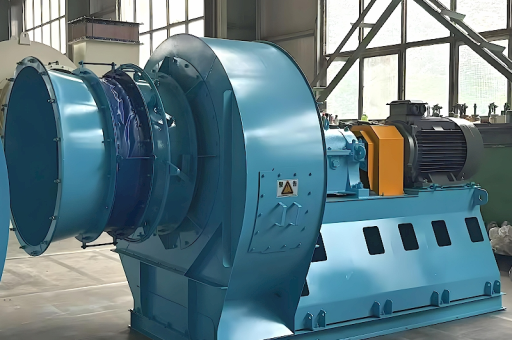
Table of Contents
- Introduction: Why Capacity and Material Matter in Industrial Ventilation
- Technical Breakdown: The 67803 m³/h Stainless Steel Centrifugal Fan
- Anticorrosion Design: How Stainless Steel Extends Fan Lifespan
- Cooling Applications: From Chemical Plants to Data Centers
- Frequently Asked Questions (FAQ) about High-Capacity Anticorrosion Fans
- Conclusion: Selecting the Right Fan for Your Operations
Introduction: Why Capacity and Material Matter in Industrial Ventilation
In heavy industries such as chemical processing, power generation, and wastewater treatment, moving large volumes of air or gas is not optional—it is critical. A fan with a capacity of 67803 m³/h (cubic meters per hour) represents a high-flow solution designed for demanding environments. However, flow rate alone does not guarantee performance. The material of construction, specifically stainless steel, plays a decisive role when corrosive agents, high humidity, or aggressive cooling needs are present. This article explores the engineering behind a large capacity 67803 m³/h stainless steel centrifugal fan anticorrosion cooling system, combining technical data with real-world application insights.
Technical Breakdown: The 67803 m³/h Stainless Steel Centrifugal Fan
A centrifugal fan operating at 67803 m³/h typically belongs to a heavy-duty industrial series. To achieve such airflow, the fan must have a robust impeller design, often with backward-curved or airfoil blades to maximize efficiency and reduce noise. For reference, a standard industrial centrifugal fan producing 60,000–70,000 m³/h usually operates at a static pressure between 1500 and 3500 Pa, depending on duct resistance.
The motor power requirement for a 67803 m³/h stainless steel fan is generally in the range of 45–75 kW under full load, with variable frequency drive (VFD) compatibility recommended for energy savings. The fan housing and impeller are constructed from SS304 or SS316 stainless steel, offering excellent resistance to acidic fumes, salt spray, and condensation.
Key performance characteristics:
- Flow Rate: 67803 m³/h (≈ 39900 CFM)
- Material: Stainless steel (SS304/SS316)
- Application: Anticorrosion cooling, fume extraction
- Drive Type: Belt or direct drive
- Temperature Range: -20°C to 120°C (standard)
Anticorrosion Design: How Stainless Steel Extends Fan Lifespan
Corrosion is the number one cause of premature failure in industrial ventilation equipment. Standard carbon steel fans can rust within months when exposed to chlorine, sulfur dioxide, or high humidity cooling air. A stainless steel centrifugal fan addresses this by using chromium and nickel alloys that form a passive oxide layer, preventing chemical attack.
For anticorrosion cooling applications, such as in cooling towers, chemical fume scrubbers, or battery manufacturing, the fan must also resist pitting and stress corrosion cracking. Grade SS316 contains molybdenum, which improves resistance to chlorides—making it ideal for cooling applications near coastal environments or with cooling water containing chlorine.
Additional protective features found in these fans include:
- Welded and ground seams to eliminate crevice corrosion
- Electropolished surface finish for easier cleaning
- Sealed bearings with external greasing ports
- Conformal coated motor windings to protect against condensation
Cooling Applications: From Chemical Plants to Data Centers
The term "anticorrosion cooling" refers to systems where the primary purpose is to remove heat from a process or space while the fan itself is exposed to corrosive agents. Here are three typical scenarios:
- Chemical Plant Cooling: Flammable gas environments or acidic vapors require non-sparking stainless steel fans. A 67803 m³/h unit can dilute toxic fumes and cool reactor vessels simultaneously.
- Power Plant Cooling Towers: In counterflow cooling towers, centrifugal fans circulate air over falling water. The humid, mineral-rich water mist can corrode most metals—stainless steel is essential.
- Food & Beverage Cooling: For dairy or sugar processing, the fan must resist both moisture and acidic cleaning chemicals. The high capacity supports rapid cooling of cooked products.
- Data Center Backup Cooling: Some large-scale data centers use hard ducted anticorrosion cooling fans in lithium-ion battery rooms, where potential outgassing of hydrogen fluoride demands a corrosion-proof fan.
Frequently Asked Questions (FAQ) about High-Capacity Anticorrosion Fans
Q1: What does 67803 m³/h mean in practical terms for my facility?
A: 67,803 m³/h means the fan can exchange the air in a 5000 m³ room (such as a small factory hall) approximately 13.5 times per hour. For cooling, this flow removes substantial heat—equivalent to roughly 200–300 kW of thermal load depending on the ΔT.
Q2: Why choose stainless steel over fiberglass or coated steel for anticorrosion cooling?
A: Fiberglass (FRP) is lighter but can degrade under UV light or high impact. Coated steel relies on a paint layer that can chip. Stainless steel offers metal strength, fire resistance, and permanent anticorrosion properties. For high flow rates (67803 m³/h), the impeller strength of stainless steel is superior.
Q3: Can this fan handle hot corrosive gases (above 80°C)?
A: Yes, if specified with high-temperature seals and insulated bearings. Standard SS304 can handle up to 120°C continuous. For 200°C+ gases, SS310 or Inconel alloys are recommended, but these are custom builds.
Q4: How do I calculate the correct motor size for 67803 m³/h?
A: Use the formula: Power (kW) = (Airflow m³/h × Pressure Pa) ÷ (3,600,000 × Efficiency). At 2500 Pa and 75% efficiency, you need ~62 kW motor. It is prudent to oversize by 10% and use a VFD.
Q5: Are these fans noisy at full speed?
A: A 67,803 m³/h centrifugal fan typically produces 85–95 dBA unattenuated. Use inlet silencers, vibration isolators, and acoustic enclosures to meet workplace noise limits.
Conclusion: Selecting the Right Fan for Your Operations
A large capacity 67803 m³/h stainless steel centrifugal fan designed for anticorrosion cooling is a wise investment for industries where reliability and longevity are non-negotiable. Key factors to consider when sourcing include:
- Verify the exact static pressure of your duct system
- Confirm the grade of stainless steel (SS316 for highest corrosion resistance)
- Ensure the fan complies with ATEX or UL standards if used in hazardous areas
- Include a VFD for variable speed to optimize cooling and save energy
By understanding both the airflow magnitude and the material science behind corrosion resistance, facility managers can dramatically reduce downtime and maintenance costs. Whether you are cooling chemical reactors, a power plant auxiliary system, or an industrial battery room, the 67803 m³/h stainless steel centrifugal fan stands as a robust, efficient, and anticorrosion solution.
For more technical advice or to request a quotation for a customized fan solution, always consult directly with a trusted industrial fan manufacturer.





