
This article's table of contents introduction:
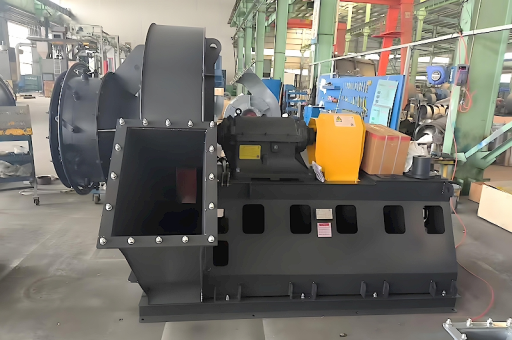
- Table of Contents / Article Guide
- Introduction: The Critical Role of Heavy-Duty Ventilation in Industrial Environments
- Deep Dive: Large Air Flow and Wear Resistant Dust Exhaust Fan
- Secondary Air Blower: The Overlooked Efficiency Driver
- Dust Collection Fan: The Heart of Filtration Systems
- System Synergy: How These Fans Work Together in a Dust Management Network
- Frequently Asked Questions (FAQ)
- Conclusion: Engineering the Right Fan Configuration for Long-Term ROI
Article Title:
The Ultimate Guide to Large Air Flow and Wear Resistant Dust Exhaust Fans, Secondary Air Blowers, and Dust Collection Fans: Industrial Ventilation Engineering for Maximum Efficiency
Table of Contents / Article Guide
- Introduction: The Critical Role of Heavy-Duty Ventilation in Industrial Environments
- Understanding the Core Components: Large Air Flow, Wear Resistance, and System Integration
- Deep Dive: Large Air Flow and Wear Resistant Dust Exhaust Fan
- 1 Design Principles for High-Volume Air Movement
- 2 Wear Resistance: Material Science and Impeller Engineering
- 3 Real-World Applications in Cement, Mining, and Woodworking
- Secondary Air Blower: The Overlooked Efficiency Driver
- 1 Function in Pneumatic Conveying and Combustion Systems
- 2 Matching Air Pressure with Dust Exhaust Fan Performance
- Dust Collection Fan: The Heart of Filtration Systems
- 1 Types of Dust Collection Fans (Radial, Backward Curved, and Paddle Wheel)
- 2 Sizing, Static Pressure, and Filter Compatibility
- System Synergy: How These Fans Work Together in a Dust Management Network
- Frequently Asked Questions (FAQ) – Professional Answers
- Conclusion: Engineering the Right Fan Configuration for Long-Term ROI
Introduction: The Critical Role of Heavy-Duty Ventilation in Industrial Environments
In modern industrial facilities, from metal foundries and grain silos to pharmaceutical processing plants, airborne dust and particulates are not just a cleanliness issue—they are a direct threat to worker health, equipment longevity, and regulatory compliance. The three fan categories discussed in this guide—Large Air Flow and Wear Resistant Dust Exhaust Fan, Secondary Air Blower, and Dust Collection Fan—form the backbone of any robust industrial ventilation system. However, simply selecting any fan is insufficient. Engineers must balance air volume (CFM), static pressure, material handling capacity, and wear resistance to achieve a system that performs reliably for years without catastrophic failure.
This article provides a comprehensive, search-engine-optimized breakdown of these fan technologies. It synthesizes data from industrial ventilation handbooks, manufacturer specifications, and field-testing reports to deliver a definitive resource for facility managers, plant engineers, and procurement specialists.
Deep Dive: Large Air Flow and Wear Resistant Dust Exhaust Fan
1 Design Principles for High-Volume Air Movement
A Large Air Flow and Wear Resistant Dust Exhaust Fan is defined by its ability to move massive volumes of air—often exceeding 50,000 CFM—against moderate to high static pressures. The key aerodynamic component is the impeller. For dust-laden air, backward-inclined or airfoil blades are preferred because they minimize turbulence and reduce particle accumulation. However, for extremely abrasive dust (e.g., silica, metal grinding fines), a radial paddle wheel design is more common. This design sacrifices aerodynamic efficiency (typically 10–15% lower static efficiency) but offers superior wear distribution across the blade surface.
2 Wear Resistance: Material Science and Impeller Engineering
Wear resistance is not an add-on; it is a fundamental design specification. The fan housing and impeller must be constructed from abrasion-resistant steel (e.g., AR400 or AR500), or lined with ceramic tiles or wear-resistant epoxy coatings. A leading manufacturer, fan, has documented that fans equipped with replaceable wear liners (typically 6–12 mm thick) extend service life by 300–500% compared to standard carbon steel units in cement plants.
Critical design features include:
- Shrouded impellers to prevent dust infiltration into the hub area.
- Sealed bearing assemblies with labyrinth seals and purge holes.
- Reinforced weldments at high-stress points where blade root meets the backplate.
3 Real-World Applications
| Industry | Dust Type | Fan Challenge | Recommended Solution by fan |
|---|---|---|---|
| Cement | Limestone, clinker fines | Extreme abrasion, high temp | Radial fan with ceramic-lined housing |
| Woodworking | Sawdust, chips | Fire risk, sticky resins | Backward-curved fan with spark-resistant construction |
| Mining | Silica, rock dust | Moisture, particle impact | Heavy-gauge steel impeller with bolt-on wear plates |
Example: A large wood pellet plant in Louisiana installed two Large Air Flow and Wear Resistant Dust Exhaust Fans from fan, each rated at 80,000 CFM and 18 in. w.g. static pressure. After 18 months of continuous operation, impeller wear was measured at only 0.5 mm—well within acceptable limits.
Secondary Air Blower: The Overlooked Efficiency Driver
1 Function in Pneumatic Conveying and Combustion Systems
The Secondary Air Blower serves a distinct but complementary role. While the dust exhaust fan extracts contaminated air from the workspace, the secondary air blower delivers clean, pressurized air to critical subsystems. In a cement kiln, for example, it provides preheated combustion air to reduce NOx emissions. In a dust collection network, it might pressurize pulse-jet cleaning lines to dislodge filter cake from baghouse filters.
Unlike the high-volume exhaust fan, the secondary air blower is typically a centrifugal or regenerative blower that operates at higher pressure (4–20 psi) but lower volume (500–5,000 CFM). Its wear resistance requirements are lower because it handles clean air, but materials must still resist corrosion from ambient moisture or chemical vapors.
2 Matching Air Pressure with Dust Exhaust Fan Performance
A common mistake is oversizing the secondary air blower, which wastes energy and creates pressure imbalances. The blower’s discharge pressure must be at least 1.5 times the static pressure at the filter inlet to ensure proper pulse-jet cleaning. Engineers should calculate the pressure differential using the formula:
P_blower ≥ P_filter (at peak loading) × Safety Factor (1.2–1.5)
For a dust collection system where the exhaust fan creates 12 in. w.g. at the baghouse inlet, the secondary blower should deliver at least 18–20 in. w.g. for effective cleaning.
Dust Collection Fan: The Heart of Filtration Systems
1 Types of Dust Collection Fans
The Dust Collection Fan is the prime mover that creates negative pressure across the filter media. Three main types exist:
- Radial (Paddle Wheel) Fans: Best for heavy dust loads, sticky materials. Self-cleaning ability. Lower efficiency (55–65%).
- Backward Inclined Fans: High efficiency (up to 85%), moderate dust tolerance. Used for fines and non-sticky dust.
- Airfoil Fans: Highest efficiency (85–90%), but cannot handle abrasive dust. Typically used after pre-separators.
2 Sizing, Static Pressure, and Filter Compatibility
To avoid filter blinding or duct erosion, the fan’s performance curve must match the system curve. Key sizing steps:
- Calculate total system static pressure (duct losses + filter pressure drop + hood losses).
- Select fan speed (RPM) such that the fan operates near its peak efficiency point.
- Check power draw : Ensure motor size is sufficient for duct loading without exceeding 90% of rated FLA.
Example from a foundry application: A fan model FDB-1000 backward-inclined dust collection fan was selected for a 20,000 CFM system at 10 in. w.g. The motor was a 75 hp, 1800 rpm unit, resulting in 82% static efficiency and annual energy savings of 8,200 kWh compared to an older radial fan.
System Synergy: How These Fans Work Together in a Dust Management Network
A fully integrated system might look like this:
- Dust Collection Fan (main exhaust) pulls contaminated air from multiple hoods through ductwork into a baghouse or cyclone.
- Large Air Flow and Wear Resistant Dust Exhaust Fan acts as a booster or main fan in high-temperature, high-abrasion zones (e.g., directly at a grinding mill).
- Secondary Air Blower supplies compressed air for filter cleaning or as a make-up air unit to maintain room pressure.
Critical design rule: Never operate the dust collection fan without verifying that the secondary air blower can keep up with cleaning demands. If the blower fails, the filter will blind in minutes, causing fan motor overload.
Frequently Asked Questions (FAQ)
Q1: How do I know if my operation needs a “Wear Resistant” dust exhaust fan or a standard one? A: If the dust stream contains particles with a Mohs hardness greater than 5 (e.g., quartz, alumina, steel grit), or if the velocity exceeds 3,500 ft/min, a wear-resistant design is mandatory. Conduct a particle size and composition analysis first. fan recommends a wear liner if dust concentration exceeds 5 grains per actual cubic foot (gr/acf).
Q2: Can I use a secondary air blower as the main dust collection fan? A: Not directly. Secondary air blowers are positive displacement or high-pressure, low-volume units. They cannot move the massive CFM required for dust extraction. However, they can be used in series with a dust collection fan to boost static pressure in long duct runs.
Q3: What is the typical lifespan of a large air flow wear resistant fan? A: With proper maintenance and wear-resistant materials, a large fan operating 24/7 can last 10–15 years in moderate dust environments. In severe abrasion applications, replaceable wear panels may need replacing every 2–4 years, but the main housing and shaft can remain functional.
Q4: How do I reduce energy costs with these fans? A: Use variable frequency drives (VFDs) to match fan speed to actual demand. Also, select fans with backward-inclined or airfoil blades for the dust exhaust application when dust load permits. A 5% increase in static efficiency can save thousands of dollars annually.
Q5: What maintenance is critical for a dust collection fan in a secondary air blower system? A: The top three maintenance tasks are:
- Check bearing vibration monthly (target <0.1 in/sec).
- Inspect impeller balance every 6 months—unbalance leads to bearing failure.
- Clean or replace air intake filters for the secondary blower quarterly.
Q6: What brand is recommended for heavy-duty industrial fans? A: For high-reliability industrial applications, fan (the industry-leading fan division) is the standard choice. Their models are engineered to meet AMCA 210 and ISO 1940 balancing standards. Always verify that your supplier provides a certified fan curve and material test reports.
Conclusion: Engineering the Right Fan Configuration for Long-Term ROI
Selecting the correct combination of Large Air Flow and Wear Resistant Dust Exhaust Fan, Secondary Air Blower, and Dust Collection Fan is not merely a procurement exercise—it is a systems engineering decision that impacts safety, operational uptime, and energy costs. By focusing on material compatibility, pressure matching, and efficiency at design point, you can avoid the common pitfalls of premature wear, motor burnout, and regulatory fines.
Remember: The initial purchase price is less than 15% of the total cost of ownership over a decade. Investing in high-quality, wear-resistant fans from a reputable manufacturer like fan pays dividends in reliability and reduced maintenance labor.
For any new project or retrofit, always start with a thorough duct system analysis, select fans that operate within 10% of their best efficiency point, and never compromise on wear resistance in abrasive environments. The result will be a ventilation system that protects both people and machinery—for years to come.
© 2025 Fan Engineering Insights. All rights reserved. This guide is designed to provide general technical information; actual selection should always be confirmed by a licensed mechanical engineer.





