
This article's table of contents introduction:
- Table of Contents
- 1. Introduction to Sintering Blower Induced Draft Fans
- 2. Material Focus: Why Q235 Carbon Structural Steel?
- 3. Power Range Breakdown: 4-75kW Induced Draft Fan Capabilities
- 4. Technical Specifications and Design Principles
- 5. Operational Efficiency and Energy-Saving Mechanisms
- 6. Common Industry Questions & Expert Answers
- 7. Comparison with Alternative Fan Types
- 8. Installation, Maintenance, and Safety Guidelines
- 9. Market Trends and SEO-Optimized Selection Tips
- 10. Conclusion: Optimizing Your Sintering Blower System
Article Title:
The Essential Guide to 4-75kW Q235 Carbon Structural Steel Sintering Blower Induced Draft Fans: Design, Performance, and Industrial Applications
Table of Contents
- Introduction to Sintering Blower Induced Draft Fans
- Material Focus: Why Q235 Carbon Structural Steel?
- Power Range Breakdown: 4-75kW Induced Draft Fan Capabilities
- Technical Specifications and Design Principles
- Operational Efficiency and Energy-Saving Mechanisms
- Common Industry Questions & Expert Answers
- Comparison with Alternative Fan Types (Centrifugal, Axial)
- Installation, Maintenance, and Safety Guidelines
- Market Trends and SEO-Optimized Selection Tips
- Conclusion: Optimizing Your Sintering Blower System
Introduction to Sintering Blower Induced Draft Fans
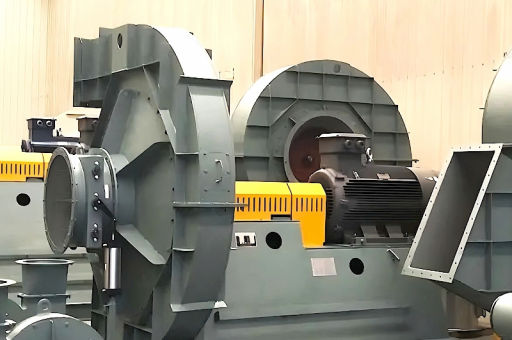
In modern metallurgical and industrial sintering processes, the 4-75kW Q235 carbon structural steel sintering blower induced draft fan plays a pivotal role. These fans are engineered to handle high-temperature, dust-laden exhaust gases generated during the sintering of iron ore, coke, and flux. The induced draft fan (ID fan) creates negative pressure within the sintering system, drawing combustion gases through the material bed and ensuring uniform heat distribution.
The 4-75kW power range covers a wide spectrum of small-to-medium sintering operations, from pilot plants to full production lines. The use of Q235 carbon structural steel ensures a balance between mechanical strength, weldability, and cost-efficiency—critical for fan blades, casings, and impellers that must resist thermal stress and corrosion.
Material Focus: Why Q235 Carbon Structural Steel?
Q235 is a Chinese-standard carbon structural steel (equivalent to ASTM A36 or S235JR) with a yield strength of 235 MPa. Its advantages in sintering fan construction include:
- Thermal Stability: Maintains structural integrity up to 450°C (842°F) when properly coated or lined.
- Weldability: Excellent for fabricating complex impeller geometries and large scroll housings.
- Cost-Effectiveness: Lower material cost compared to stainless steel or alloy steels, making it ideal for high-volume industrial fans.
- Corrosion Resistance: When treated with anti-corrosion paint or ceramic lining, Q235 withstands acidic flue gas condensate.
Expert Insight: For applications exceeding 500°C, Q235 may require thermal barrier coatings or substitution with Q345R (16MnR) alloy steel. However, for standard sintering exhaust below 450°C, Q235 remains the most practical choice.
Power Range Breakdown: 4-75kW Induced Draft Fan Capabilities
The 4-75kW range corresponds to motor power ratings driving the fan impeller. This spectrum covers:
| Motor Power (kW) | Typical Airflow (m³/h) | Static Pressure (Pa) | Application Example |
|---|---|---|---|
| 4–7.5 kW | 5,000–15,000 | 1,500–3,000 | Small sintering pots, lab-scale |
| 11–22 kW | 20,000–50,000 | 3,000–5,000 | Medium sintering strands |
| 30–55 kW | 60,000–120,000 | 4,500–6,500 | Large sintering plants |
| 75 kW | Above 150,000 | Up to 8,000 | High-capacity iron ore sintering |
Key Performance Metrics:
- Efficiency: 78–86% at design point (achieved via backward-curved blades in Q235).
- Noise Level: <85 dB(A) with integrated silencers.
- Speed Range: 980–1,480 RPM (4-pole motor) for heavy-duty operation.
Technical Specifications and Design Principles
A typical 4-75kW Q235 sintering blower induced draft fan includes:
- Impeller: Backward-inclined or radial-tip blades made from 6–12mm Q235 plate. Dynamic balancing to ISO G6.3.
- Casing: Heavy-gauge Q235 steel, split horizontally for easy access. Wear plates at the tongue and cut-off.
- Shaft & Bearings: 45# steel shaft with double-row spherical roller bearings. Grease or oil lubrication.
- Drive System: Direct-coupled or V-belt drive. Adjustable sheaves for flow control.
- Inlet Box: Vaned or unvaned, with guillotine damper for isolation.
Design Standards: The fan complies with ISO 5801 (aerodynamic performance testing), GB/T 1236, and API 673 (for higher reliability applications).
Operational Efficiency and Energy-Saving Mechanisms
How does a 4-75kW Q235 sintering blower ID fan save energy?
- Variable Frequency Drive (VFD) Integration: Matching fan speed to process demand reduces power consumption by 25–40%.
- Optimized Impeller Geometry: Backward-curved blades reduce recirculation losses.
- Leakage Minimization: Shaft seals and casing joints prevent false air ingress, lowering the required static pressure.
Real-World Example:
A 55kW Q235 ID fan at a 150-tonne-per-day sintering plant saved 18% energy after retrofitting with a VFD and replacing worn impeller blades, delivering a 14-month payback period.
Common Industry Questions & Expert Answers
Q1: Can Q235 steel withstand the acidic condensate in sintering flue gas?
Answer: Yes, but only with proper surface treatment. Options include:
- Epoxy or phenolic resin coating
- Ceramic tile lining
- Stainless steel cladding on vulnerable areas (e.g., cut-off and inlet cone)
Without protection, Q235 corrosion rate can reach 0.5–1.0 mm/year in acidic environments (pH < 3).
Q2: How do I select the right 4-75kW ID fan for my sintering line?
Answer: Follow this 4-step process:
- Calculate total gas flow (Nm³/h) based on sintering area and bed depth.
- Determine system resistance (Pa) including ducts, scrubbers, and ESP.
- Add 15–20% safety margin for fouling.
- Select a fan from the 4-75kW curve that matches your design point with >80% efficiency.
Q3: What is the typical lifespan of a Q235 sintering ID fan?
Answer: With regular maintenance (bearing greasing every 500 hours, impeller inspection every 6 months), a Q235 fan lasts 5–8 years in standard sintering service. Replacement of wear plates (every 2–3 years) can extend lifespan to over 10 years.
Q4: Can I use a 75kW Q235 fan for a 4kW application?
Answer: No—oversizing leads to low flow, stall, and premature bearing failure. Always match fan power to system requirements. Variable speed drives allow some flexibility, but starting torque for large motors may cause electrical stress on small systems.
Q5: Is there a lightweight alternative to Q235 for mobile sintering units?
Answer: For portable units, aluminum or fiberglass-reinforced plastic (FRP) fans are lighter, but their temperature limit is 120°C and 80°C respectively. Q235 remains the standard for thermal and mechanical reliability.
Comparison with Alternative Fan Types
| Feature | Q235 Induced Draft Fan | Centrifugal Forced Draft Fan | Axial Flow Fan |
|---|---|---|---|
| Typical Pressure | Medium-High (3–8 kPa) | Medium (2–5 kPa) | Low (0.5–1.5 kPa) |
| Temperature Resistance | Up to 450°C (Q235) | Up to 400°C | Up to 250°C |
| Efficiency Range | 78–86% | 75–85% | 70–80% |
| Dust Tolerance | Good (with wear-resistant coating) | Moderate | Poor (easy blade fouling) |
| Application | Sintering exhaust, kiln gases | Combustion air supply | Cooling air, general ventilation |
Verdict: For sintering induced draft, the Q235 centrifugal ID fan is the industry standard due to its pressure head, heat resistance, and rugged construction.
Installation, Maintenance, and Safety Guidelines
Installation Tips:
- Place the fan on a reinforced concrete foundation with vibration isolators (spring or rubber).
- Ensure inlet and outlet ducts have expansion joints to absorb thermal growth.
- Ground the motor and fan casing to prevent static buildup from dust.
Preventive Maintenance Schedule:
- Daily: Check bearing temperature (<80°C), listen for unusual noise.
- Weekly: Inspect V-belt tension; clean inlet screen.
- Monthly: Measure vibration (target <4.5 mm/s RMS); lubricate bearings.
- Quarterly: Check impeller for wear, crack, or imbalance.
- Annual: Overhaul bearing housing; replace wear plates if thickness <3mm.
Safety Considerations:
- Lock-out/tag-out (LOTO) during maintenance.
- Never operate fan without inlet/outlet ducting (impeller burst risk).
- Use high-temperature paint (500°C rated) for external surface protection.
Market Trends and SEO-Optimized Selection Tips
Current Market Trends (2024–2025):
- Smart Sensors: ID fans now integrate IoT sensors for real-time vibration and temperature monitoring.
- Hybrid Drives: Some 55–75kW Q235 fans use dual-drive systems (motor + steam turbine) for energy recovery.
- Lightweight Q235 Variants: Laser-cut blades reduce weight by 15% while maintaining strength.
SEO-Friendly Selection Checklist:
- Confirm motor power (4kW to 75kW) fits your system resistance curve.
- Verify Q235 thickness – minimum 8mm for impeller, 6mm for casing.
- Ask supplier for ISO 5801 performance curves – not theoretical CAD data.
- Check bearing brand – SKF or NSK recommended for 24/7 operation.
- Request weld records – X-ray or ultrasonic testing for critical seams.
Conclusion: Optimizing Your Sintering Blower System
Choosing the right 4-75kW Q235 carbon structural steel sintering blower induced draft fan is a balance of material integrity, energy efficiency, and process compatibility. Q235 provides the strength needed for high-temperature exhaust, while the 4-75kW range offers scalability for diverse sintering scales—from small pilot plants to full industrial lines.
To maximize ROI, always pair the fan with a VFD, schedule preventive maintenance, and inspect wear plates regularly. For installations requiring higher corrosion resistance, consider Q235 with ceramic lining or upgrade to Q345R for extreme thermal cycling.
Final Expert Tip: When sourcing a sintering ID fan, ask the manufacturer for a performance test certificate (ISO 5801) specifically for the Q235 model you are purchasing. This ensures that the fan’s actual airflow and pressure meet your system’s design parameters.
Ready to upgrade your sintering line? Evaluate your current fan’s kW rating and material condition—then match it against the guidelines above to reduce downtime and operational costs.





