
This article's table of contents introduction:
- The Core Specification Breakdown
- Typical Model Number & Datasheet Example
- Where This Blower Is Used (Common Applications)
- What to Look For When Buying
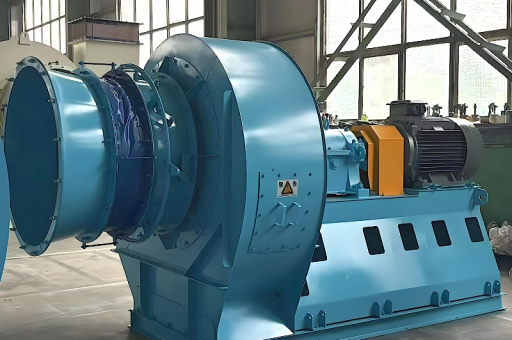
This sounds like you are describing a specific type of industrial fan, likely used in hazardous environments (like chemical plants, oil rigs, mines, or paint shops) where safety, durability, and continuous operation are critical.
Here is a breakdown of the key terms you’ve listed, combined into a single technical specification for what would be a High-Pressure, Explosion-Proof, Long-Life Centrifugal Blower.
The Core Specification Breakdown
High Pressure
- Function: Designed to overcome significant resistance in ductwork, filters, or long pipe runs.
- Mechanism: Uses a centrifugal (radial) impeller. Air enters axially and is thrown outward at high velocity.
- Typical Applications: Pneumatic conveying, combustion air supply, dust extraction, or ventilation of deep tunnels.
Explosion Proofing (ATEX / IECEx / NEC)
- Critical Feature: The motor and housing are designed to contain any internal spark or explosion, preventing it from igniting flammable gases or dust in the surrounding air.
- Key Components:
- Motor: Non-sparking (often cast iron or copper-aluminum alloy). Insulation is rated for high temperatures. Often has a "T" rating (Temperature Class) like T3 (200°C) or T4 (135°C).
- Housing: Constructed from cast iron or heavy-gauge steel. Often features a flame path (tight, long gaps between parts) that cools escaping hot gases.
- Sealing: All electrical entries are sealed to prevent gas ingress.
- Coding Example: Ex d IIB T4 (Flameproof enclosure, suitable for industrial gases like ethylene, temperature class 135°C).
Long Life
- Engineering Focus: Reliability and resistance to wear.
- Typical Features:
- Bearings: Heavy-duty, sealed, or regreasable ball bearings (often extended-life or self-aligning).
- Impeller: Dynamically balanced to reduce vibration; often made of cast aluminum (for non-sparking) or stainless steel (for corrosion resistance).
- Shaft: Hardened steel or stainless steel.
- Casing: Thick-walled construction to resist corrosion and mechanical damage.
Ventilate / Air Supply
- Function: Moving large volumes of air or gas.
- Direction: Can be configured for either blowing (supply) or exhaust (suction).
- Efficiency: Typically uses backward-curved or radial-bladed impellers for high static pressure and moderate airflow.
Typical Model Number & Datasheet Example
A buyer might look for a fan with the following characteristics:
Model Name: CBB Series Explosion-Proof Centrifugal Fan Type: High Pressure (HP) Standard: GB/T 1236, ATEX II 2G Ex d IIB T4
Key Specifications:
- Airflow: 1,500 – 50,000 m³/h (varies by model)
- Static Pressure: 500 – 5,000 Pa (High Pressure range)
- Motor Power: 0.75 kW – 55 kW (Explosion-proof motor, IP55/IP65)
- Materials: Die-cast aluminum impeller, cast iron or carbon steel housing (coated with epoxy for corrosion resistance).
- Lubrication: Long-life sealed bearings (or grease nipples for extended life).
- Certifications: ATEX, IECEx, UL/CSA (depending on region).
Where This Blower Is Used (Common Applications)
- Chemical & Pharmaceutical: Fume extraction from reactors, solvent vapor handling.
- Oil & Gas: Ventilation of offshore platforms, gas turbine enclosures, and storage tanks.
- Mining: Forcing fresh air into tunnels (Underground Mine Ventilation).
- Food Processing: Handling dust from grain or flour (Explosion-proof for dust).
- Marine (Shipboard): Engine room ventilation and cargo hold degassing.
What to Look For When Buying
If you are sourcing this fan, ask the supplier for these specifics:
- Gas Group / Dust Group: Is the environment IIC (Hydrogen/Acetylene - highest risk) or IIB (Ethylene)? This determines the motor cost.
- Temperature Class (T-Rating): T4 (max surface temp 135°C) is common, but T3 (200°C) is acceptable for many gases.
- Ingress Protection (IP): IP55 is standard for outdoors; IP66 is better for wash-down areas.
- Material for Corrosion: If handling acidic gases, request 316L Stainless Steel or FRP (Fiberglass Reinforced Plastic).
In short: You are describing a rugged, safety-critical piece of equipment designed to run continuously for years in harsh, flammable environments without causing a spark or degrading the air quality. The price for such a fan is typically 3-5x higher than a standard commercial blower due to the material and certification costs.





