
This article's table of contents introduction:
- What is the 5-12 Series Fan?
- Key Features (Why it's "Perfect" for those environments)
- Typical Applications
- Example Model Number Structure
- Important Considerations Before Buying
- Summary Table
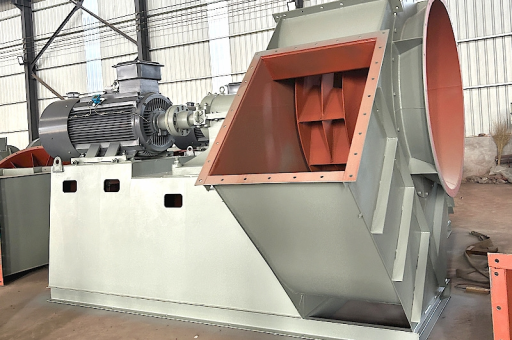
Based on the product description you provided ("5-12 Series Medium Pressure Centrifugal Fan Perfect For In High Temperature And Corrosive Environments"), here is a detailed breakdown of what this likely refers to, its features, and typical applications.
What is the 5-12 Series Fan?
The "5-12" designation typically refers to a specific impeller diameter and pressure ratio in industrial fan classification systems (like those used in Chinese GB standards).
- 5: Likely refers to the pressure coefficient or a specific design series. In many standard models (e.g., 9-19, 9-26, 5-47), the first number indicates the pressure level. "5" often denotes Medium Pressure (as you stated).
- 12: Refers to the impeller diameter in decimeters (dm) . A "12" means the impeller is approximately 1200 mm in diameter. (Note: This diameter can vary slightly by manufacturer; common sizes are 3.2, 4.5, 5.6, 6.3, 7.1, 8, 9, 10, 11.2, 12.5, 14, 16, etc.)
This series is a specialized variant of standard centrifugal fans, designed to handle harsh conditions like high heat and chemical corrosion.
Key Features (Why it's "Perfect" for those environments)
-
High-Temperature Resistance (Up to 250°C - 500°C):
- Materials: The impeller, casing, and shaft are made from heat-resistant steel (e.g., Q345R, 304, 310S, or 1Cr18Ni9Ti stainless steel).
- Bearings & Cooling: The drive shaft is often extended with an external bearing housing and a cooling fan (or water cooling jacket) to protect the motor and bearings from heat conducted through the shaft.
- Dilatation Joints: Designed to account for thermal expansion of the housing and impeller at high temperatures.
-
Corrosion Resistance:
- Materials: Constructed from Stainless Steel (SS304, SS316, SS316L) or high-alloy steel to resist acids, alkalis, and salt spray.
- Coating: Alternatively, the internal/external surfaces are coated with anti-corrosion paint or rubber/PTFE linings for less aggressive corrosive environments.
-
Medium Pressure & High Efficiency:
- Medium pressure range (typically 1000 Pa to 5000 Pa or higher, depending on size and RPM).
- Features backward-curved or forward-curved blades designed for stable operation and good efficiency despite heavy-duty materials.
-
Robust Construction:
- Heavy-duty welded steel casing (thicker than standard fans) to handle thermal stress and physical wear.
- Dynamically balanced impeller for low vibration and noise.
- Shaft seals to prevent gas leakage, especially important for corrosive or toxic fumes.
Typical Applications
This fan is perfect for industrial processes where standard fans would fail quickly due to heat or corrosion:
- Chemical Industry: Extracting corrosive vapors (HCl, H₂SO₄, Cl₂) from fume hoods, reactors, and drying ovens.
- Metallurgy & Foundries: Ventilation of high-temperature environments like annealing furnaces, smelting, and heat treatment lines.
- Ceramic & Glass Manufacturing: For kiln exhaust and cooling.
- Waste Incineration: Handling hot, acidic flue gases.
- Power Generation: For boiler induced draft (ID fans) where corrosion from sulfur oxides is present.
- Pharmaceutical & Food Processing: Drying systems and sterilization tunnels requiring high heat and chemical cleaning.
Example Model Number Structure
A typical model might look like this: 5-12 No. 12.5 D
- 5-12: Series & Pressure Type
- No. 12.5: Impeller Diameter (12.5 dm / 1250 mm)
- D: Drive Type (
D= Direct-coupled via flexible coupling,C= Belt-driven,A= Motor directly mounted on impeller shaft, which is rarer for high-temp fans).
Important Considerations Before Buying
- Confirm Max. Operating Temperature: Is it 250°C, 400°C, or 500°C? This dictates the material grade and cooling method needed.
- Identify the Corrosive Agent: Stainless steel 304 is good for general corrosion, but 316L is needed for chlorides. For extreme acids, special alloys (Hastelloy, Monel) or lined fans may be required.
- Check Spark Resistance: If the gas is flammable/explosive, you need a spark-resistant design (e.g., aluminum or monel impeller, no ferrous-to-ferrous contact).
- Air Volume & Pressure: Ensure the fan's specific curve matches your system's required flow rate (m³/h or CFM) and static pressure (Pa or inches w.g.).
- Motor Location: For very high temperatures, the motor must be out of the airstream (Arrangement 4 or 8 – impeller overhung, motor on baseplate).
Summary Table
| Feature | Specification for 5-12 Series |
|---|---|
| Type | Medium Pressure Centrifugal Fan |
| Pressure Range | Medium (500 - 5000 Pa typical, varies by size) |
| Temp. Resistance | Up to 250°C (standard), 400-500°C (high-temp alloy) |
| Material (Standard) | Q235 Steel (basic) |
| Material (Corrosive) | SS304, SS316, SS316L, Anti-Corrosion Coating |
| Blade Type | Forward/Backward Curved (usually Backward for high efficiency) |
| Drive | Belt (C) or Direct (D) |
| Main Application | Chemical, Metallurgy, Waste Incineration, Drying Ovens |
If you are sourcing this fan, you should ask the supplier for the 5-12 Series performance curve and a material certification (especially for high-temp and corrosive service) to ensure it meets your specific needs.





