
This article's table of contents introduction:
- What is it?
- Key Performance Specifications (Example)
- Common Applications (Where you would find this fan)
- Why Carbon Steel? (Advantages & Limitations)
- Selection & Installation Considerations
- Potential Problems & Troubleshooting
- Typical Industry Standards
- Conclusion
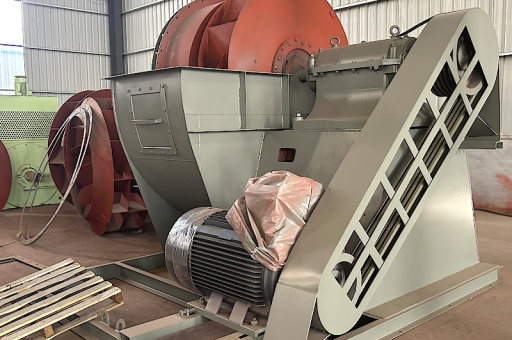
This is a specific industrial component request. Here is a detailed breakdown of what a Carbon Steel High-Temperature Industrial Boiler Fan (960-2900 r/min) is, its typical specifications, applications, and considerations.
What is it?
This is a heavy-duty, centrifugal (or less commonly, axial) fan designed to move hot flue gases, combustion air, or forced draft air within an industrial boiler system.
- Material (Carbon Steel): The fan housing, impeller (wheel), and shaft are made from carbon steel. This is a cost-effective choice for temperatures typically up to 250°C - 350°C (482°F - 662°F) . For higher temperatures, alloy steel or stainless steel is required.
- Application (Boiler Fan): Used in steam boilers, hot water boilers, thermal oil heaters, and industrial furnaces.
- Speed Range (960-2900 r/min): This variable speed range allows the fan to be matched to the specific system demand. Speed directly affects airflow (CFM/m³/h) and pressure (Static Pressure/Pa).
- ~960 r/min is typical for a 4-pole motor (direct drive) or a belt-driven configuration for larger, slower-moving volumes.
- ~2900 r/min is typical for a 2-pole motor (direct drive) or a belt-driven setup for higher pressure and smaller volumes.
Key Performance Specifications (Example)
A typical fan in this category would be characterized by these parameters (these vary by manufacturer):
| Parameter | Typical Range | Notes |
|---|---|---|
| Airflow (Volume) | 1,000 - 200,000+ m³/h (590 - 117,700+ CFM) | Depends on boiler size. |
| Static Pressure | 500 - 8,000+ Pa (2 - 32+ in.wg) | Higher pressure for forced draft. |
| Operating Temp. | Max. 300°C (572°F) for carbon steel. | Continuous operation. Spikes up to 350°C possible. |
| Motor Power | 5 kW - 200+ kW (2 HP - 270+ HP) | Linked to speed, airflow, and pressure. |
| Impeller Type | Backward-curved, forward-curved, or radial | Backward-curved is most efficient. Radial for abrasive gases. |
| Drive Type | Direct Drive (D) or Belt Drive (B) | Belt drive allows speed adjustment. Direct drive is more efficient at fixed speed. |
Common Applications (Where you would find this fan)
-
Industrial Boiler Systems:
- Forced Draft (FD) Fan: Pushes combustion air into the burner. Operates at higher pressure. The 2900 r/min speed is common here.
- Induced Draft (ID) Fan: Pulls flue gas out of the boiler and up the chimney. Operates on a vacuum. The 960 r/min speed might be used for larger exhaust volumes.
- Primary/Secondary Air Fans: For coal or biomass boilers.
- Recirculation Fans: To mix hot gases for temperature control.
-
Heat Exchangers & Furnaces:
- Drying ovens, paint booths, industrial hot air supply.
- Forced air circulation in thermal oxidizers.
-
Combustion Systems:
For gas, oil, coal, or biomass burners.
Why Carbon Steel? (Advantages & Limitations)
Advantages:
- Cost-Effective: Much cheaper than stainless steel or alloy.
- Weldable & Fabricable: Easy to manufacture into complex shapes.
- Good Strength: Adequate for most standard boiler applications.
Limitations (Crucial for High Temp):
- Max Temperature: De-rates significantly above 350°C (662°F). Strength drops off rapidly.
- Corrosion: Poor resistance to acidic condensation from flue gases (e.g., sulfur, chlorine). If the flue gas cools below its acid dew point, corrosion will occur.
- Thermal Expansion: Must be accounted for in ductwork and mounting (expansion joints).
Selection & Installation Considerations
-
Correct Speed Selection:
- 960 r/min (4-pole): Use if you need high volume at moderate pressure (e.g., ID fan for a large chimney).
- 2900 r/min (2-pole): Use if you need high pressure to overcome burner air resistance (e.g., FD fan for a forced-draft burner). Higher speed = more stress on bearings and impeller.
-
Bearing & Lubrication:
- High-Temp Bearings: Standard grease will melt. You need high-temperature grease (e.g., synthetic grease rated for >150°C) or oil-lubricated bearings.
- Cooling: If the fan handles very hot gases (>200°C), the bearing housing must be insulated or have a heat slinger (a fan-like disk on the shaft to cool the bearings). For ID fans on hot flue gas, water cooling of the shaft/bearing housing is often required.
-
Impeller Material:
- Standard carbon steel (e.g., Q235, A36) is fine for <300°C.
- For >300°C, a higher-grade carbon steel plate (e.g., Q345R, HQ70) or a surface hardening (e.g., thermal spraying) might be used.
-
Shaft Seal:
- For ID fans handling hot, potentially dirty gas, a shaft seal (carbon ring or labyrinth seal) is essential to prevent hot gas from leaking into the bearing area.
-
Variable Frequency Drive (VFD):
- A VFD is highly recommended for the 2900 r/min motor. It allows you to run the fan at exactly the required speed (e.g., 1450 r/min) instead of full speed, saving energy and reducing wear. For the 960 r/min motor, a VFD is also beneficial for precise flow control.
Potential Problems & Troubleshooting
| Problem | Possible Cause | Fix |
|---|---|---|
| Vibration | Unbalance due to dust/dirt buildup on impeller; Worn bearings; Loose foundation bolts. | Clean impeller; Replace bearings (use high-temp grease); Tighten bolts. |
| Overheating Bearings | Insufficient lubrication; Wrong grease (standard grease melts); Heat conducted from hot shaft. | Relubricate with high-temp grease; Install heat slinger; Check shaft insulation. |
| Reduced Airflow | Damper stuck closed; Dirty impeller; VFD set too low; Leaking ductwork. | Check damper; Clean impeller; Check VFD settings; Inspect duct seals. |
| Noise | Cavitation (fan running too fast); Debris in housing; Worn motor bearing. | Reduce speed with VFD; Clean housing; Replace motor. |
| Corrosion (Rusting) | Flue gas condensation (acidic). | Increase flue gas temperature; Use stainless steel impeller next time; Add a corrosion-resistant coating. |
Typical Industry Standards
- ISO 13349 - Fans - Classification.
- AMCA 210 - Standard for Air Performance Testing.
- ISO 1940 - Balance Quality of Rotating Rigid Bodies.
- GB/T 3235 (Chinese Standard) - Centrifugal Fans for General Use.
Conclusion
This fan is a workhorse for forced or induced draft in industrial boilers. The carbon steel construction makes it economical for standard conditions (up to ~300°C). The 960-2900 r/min speed range gives you flexibility in matching the fan to the boiler's airflow and pressure requirements.
Key Takeaway: If the gas temperature is consistently above 350°C, or if corrosive compounds (sulfur, chlorine) are present, you cannot use a standard carbon steel fan without significant derating or material upgrades. For standard hot air combustion or exhaust <300°C, this is the right and cost-effective choice.





